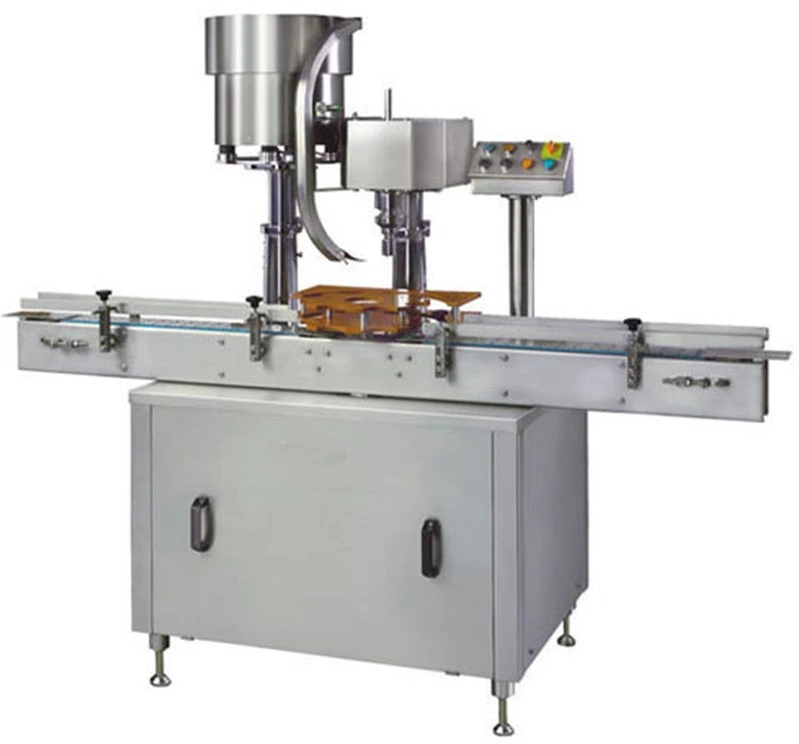
If you’ve ever wondered what is a capping machine & how it works, you’re not alone. Capping machines are essential pieces of equipment in packaging lines, especially for industries dealing with liquids, powders, tablets, or granules. From beverages to chemicals and pharmaceuticals, these machines ensure that every bottle or container is securely sealed, leak-proof, and tamper-evident. Understanding what a capping machine is and how it works can help businesses make smarter decisions when choosing the right packaging equipment.
A capping machine is a type of packaging equipment designed to place and tighten caps onto containers automatically or semi-automatically. It ensures consistent torque, precise placement, and fast production speeds—something manual labor simply cannot achieve at scale.
Secure bottles and jars during filling and sealing
Prevent leaks and contamination
Improve product shelf life
Increase productivity
Maintain professional, uniform packaging
Whether operating in food, beverages, cosmetics, pharmaceuticals, or household chemicals, a capping machine guarantees that every product leaving the factory is safely sealed.
The most common type. They apply threaded caps to bottles and containers using torque.
Popular in:
– Water bottling
– Juices
– Personal care products
– Pharmaceuticals
These machines press snap-on caps securely into place. Ideal for containers with simple “push-down” lids.
Used for:
– Food packaging
– Cosmetics
– Household goods
ROPP stands for Roll-On Pilfer Proof. These machines create tamper-evident aluminum caps, commonly used in wine, spirits, and medicines.
Designed for high-speed production lines, spindle cappers tighten caps using a series of spinning wheels.
Uses a chuck head that descends, grips the cap, and tightens it with controlled torque. Highly accurate and suitable for premium products.
To understand what is a capping machine & how it works, let’s break down a typical automated process:
Bottles enter the capping section via a conveyor system.
Caps are fed to the machine through a cap sorter or bowl feeder.
The machine orients them correctly and moves them to the capping head.
The capping head places each cap onto the container with precision.
Depending on the type of machine, it may:
Apply torque (screw caps)
Press down (snap caps)
Roll and seal (ROPP caps)
Torque settings ensure that the seal is tight enough without damaging the cap.
Bottles exit the capping station and may pass through:
Torque testers
Leak detectors
Visual inspection systems
This guarantees consistent quality and safety.
Food & Beverage: sauces, water, energy drinks, oils
Pharmaceutical: syrups, tablets, supplements
Cosmetics: lotions, shampoos, creams
Chemical: cleaning products, solvents
Agriculture: fertilizer liquids, pesticides
Any business that seals a container benefits from a reliable capping machine.
Higher production efficiency
Precise and repeatable torque
Reduced labor costs
Better product safety
Improved pack appearance
Increased output consistency
Looking for a reliable capping machine solution for your business?
Our team can help you choose the right system based on your product, speed requirements, and budget.
Let our experts guide you through your full packaging automation needs. Contact us today!
Its purpose is to seal bottles or containers accurately, efficiently, and consistently.
Some advanced machines can—especially spindle and chuck cappers—but this depends on the cap and bottle design.
Yes, regular maintenance ensures torque accuracy, longevity, and proper cap feeding.
Consider the product type, container size, cap style, speed requirements, and budget.