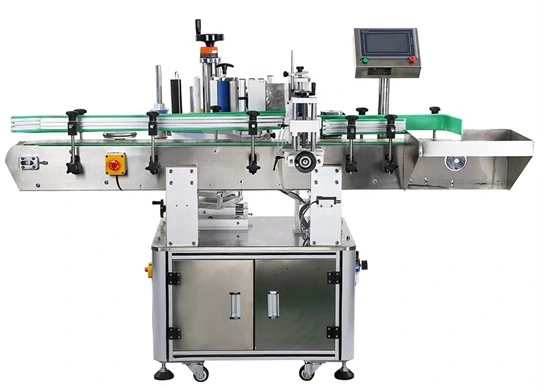
What is a Labeling Machine is a common question for manufacturers looking to improve packaging speed and accuracy. A labeling machine is a device that automatically applies labels to products, bottles, containers, boxes, and packaging materials. These machines ensure consistent placement, reduce manual labor, and support quality control across various industries such as food, beverage, cosmetic, pharmaceutical, and household goods.
In any production environment, labels play a critical role. They provide product information, ingredients, safety warnings, branding elements, and compliance details. A labeling machine ensures these labels are applied accurately, efficiently, and at high speed—something manual labeling can rarely achieve.
Modern production lines require speed, precision, and consistency. Labeling machines meet all three needs while reducing human error and operational delays.
Labeling machines help businesses:
Keep up with high-volume production
Maintain consistent branding
Meet regulatory standards
Reduce labor costs
Improve packaging accuracy
Increase productivity and efficiency
Their impact is especially noticeable in industries where speed and compliance are essential, such as pharmaceuticals and FMCG (Fast-Moving Consumer Goods).
Although each system differs based on design and application, most labeling machines follow these basic steps:
Product Feeding – The product enters the labeling line via conveyor.
Label Dispensing – The machine prepares the label and peels it from its backing.
Label Application – The label is applied through pressure, wiping, rolling, or air-blowing.
Verification (Optional) – Vision systems check label placement or barcode readability.
Exit Conveyor – The labeled product moves to the next packaging stage.
This automated process ensures speed, accuracy, and professional results every time.
Used mainly for round containers such as:
Bottles
Jars
Tubes
Cans
They apply labels around the circumference of the product.
Ideal for products requiring two labels:
Cosmetics
Body care bottles
Household products
These machines place labels on the front and back in a single pass.
Designed for flat or slightly curved surfaces like:
Food trays
Boxes
Pouches
They ensure perfect placement on the top of the product.
Used when barcodes or date codes must be applied underneath the packaging.
These machines print variable data such as:
Batch numbers
Expiry dates
Barcodes
Lot codes
They are commonly used in warehousing and logistics.
Labeling machines provide several operational advantages:
Labels are positioned correctly every time, improving product appearance and compliance.
Automated systems significantly boost output.
Once automated, businesses save on labor and reduce rework.
Branding and regulatory information remain uniform.
Less mislabeling means fewer rejected packs and lower material costs.
Before selecting a machine, evaluate:
Product shape and size
Required label material
Production volume
Speed requirements
Integration with existing packaging lines
Budget
Need for printing or coding features
Choosing the right machine ensures better performance and long-term cost savings.
Need help choosing the right labeling machine for your production line?
📞 Contact us today for expert guidance, product recommendations, and tailored automation solutions.
Nearly all industries use them, including food, beverage, cosmetics, pharmaceuticals, chemicals, and logistics.
Costs vary depending on the level of automation. Semi-automatic machines are more affordable, while high-speed automatic units cost more but offer higher output.
Yes. Many machines can apply wrap-around, front-and-back, or multi-panel labels in a single cycle.
Routine maintenance is required to ensure consistent performance and avoid downtime.
Print-and-apply machines can print variable information such as expiry dates, serial numbers, and barcodes.