Horizontal Pouch Packaging Machine for Pet Food: The 2026 “Production Upgrade” for Brands Scaling Fast

If you’re packing pet food in 2026 and your orders are growing, the question usually becomes simple:

How do we pack faster without compromising seal quality, weight consistency, and shelf presentation?

That’s where a horizontal pouch packaging machine enters the conversation—especially for brands moving from manual pouch filling or slow semi-automatic setups into a more scalable packaging workflow.

See the machine in action below:

Why Pet Food Brands Look at a Horizontal Pouch Packaging Machine in 2026

Pet food packaging gets complicated as you scale because you’re balancing three pressures at once:

  • Speed: hitting daily order volumes reliably

  • Accuracy: consistent pack weights (protecting margin and compliance)

  • Seal integrity: avoiding leaks, returns, and stale product

A horizontal pouch packaging machine is often considered when you want a packaging process that runs in a steady rhythm—especially for dry products like kibble, pellets, treats, and powders.

Even when buyers describe it as an “HFFS pre-made bag machine,” what they usually mean is: a horizontal pouch workflow that can pack pet food at higher volume with repeatable results.
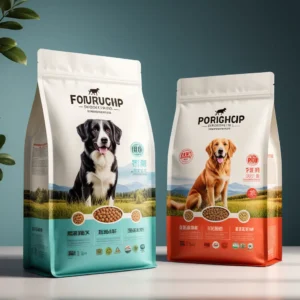
horizontal Pouch Packaging Machine

What a Horizontal Pouch Packaging Machine Does in a Pet Food Operation

In a typical pet food setup, a horizontal pouch packaging machine supports a streamlined process:

  1. Product feeds from hopper

  2. Dosing system measures the correct portion

  3. Pouch is presented/handled in a horizontal workflow

  4. Product is dropped/filled

  5. Pouch is sealed consistently

  6. Output moves to coding, inspection, and packing

The benefit buyers care about most is repeatable speed—not just “maximum packs per minute,” but speed you can actually sustain across full shifts.


Where a Horizpntal Pouch Packaging Machine Works Best for Pet Food

1) Kibble and pellets

Kibble is usually the best candidate because it flows well and packages fast when paired with the right dosing method.

Buyers commonly prioritise:

  • consistent weights

  • minimal product breakage

  • clean seals without crumbs in the seal area

2) Treats

Treats vary more in shape and can create crumbs. Buyers should think about:

  • controlled drop height (to avoid crushing brittle products)

  • seal area cleanliness

  • pouch stability during fill and seal

3) Powders and supplements

Powders can work well, but the seal zone becomes critical. Buyers should confirm:

  • dust control around the mouth/seal

  • consistent dosing (often auger-based)

  • seal integrity under dusty conditions

A horizontal pouch packaging machine can pack all of these—if the dosing system and sealing approach are chosen for your product behaviour.


The Big Buyer Decision: The Dosing System (Not the Frame)

Many buyers focus on the machine body. In reality, your dosing system determines whether your packaging line is profitable.

For pet food, buyers typically choose between:

  • Multihead weigher (best for kibble/treats, strong speed + accuracy)

  • Linear weigher (simpler, lower speed)

  • Auger filler (best for powders/supplements)

Your supplier should recommend the dosing system based on your pet food type, pack weights, and speed targets. A vertical pouch packaging machine without the right dosing will either be slow, inaccurate, or messy.


What Buyers Must Confirm Before Purchasing (The “Shift Test”)

Instead of asking “how fast is it,” buyers should ask:

“Will this machine run cleanly for a full shift?”

Here are the real shift-killers in pet food packaging:

1) Seal failures caused by crumbs or dust

If product gets into the seal area, you get weak seals, leaks, and returns. Ask how the system protects the seal zone.

2) Weight inconsistency at scale

If weights drift, you lose margin and create compliance issues. Ask how weight accuracy is maintained across long runs.

3) Too much downtime for cleaning and changeovers

If you run multiple SKUs (chicken, beef, sensitive stomach, etc.), cleaning time matters. Ask what a normal clean-down looks like and how long it takes.

4) Product breakage (kibble and fragile treats)

If the drop and handling damage product, customers notice. Ask how the system controls product drop and flow.

A good horizontal pouch packaging machine recommendation should address these, not just speed.


Add-Ons Many Pet Food Buyers Include in 2026

To sell into retail or distribution, buyers often include:

  • date/batch coding

  • checkweigher

  • metal detection

  • reject system

  • case packing / shrink wrapping

These reduce risk and improve consistency—especially when you scale beyond local direct sales.


Speak to SA Packaging Machinery About Pet Food Packaging

If you’re scaling pet food production and want a reliable packaging setup, SA Packaging Machinery can help you choose the right horizontal pouch packaging machine configuration based on your product type, pack weights, and target output—backed by 3 decades of experience supplying packaging solutions. Contact SA Packaging Machinery Today

Frequently Asked Questions — Horizontal Pouch Packaging Machine for Pet Food (2026)

1) What is a horizontal pouch packaging machine for pet food?

A hotrizontal pouch packaging machine is a packaging system that fills and seals pouches/bags in a vertical workflow, commonly used to pack pet food like kibble, pellets, treats, and powders at higher throughput with repeatable pack weights and consistent sealing.

2) What types of pet food can a horizontal pouch packaging machine pack?

Most commonly:

  • dry kibble and pellets

  • pet treats (biscuits, chews, pieces)

  • powders and supplements (meal toppers, vitamins)
    Your product type affects the dosing system and sealing requirements.

3) What dosing system is best for kibble vs powder?
  • Kibble/treats: usually best with a multihead weigher (fast + accurate) or linear weigher (lower speed)

  • Powders/supplements: often best with an auger filler
    Choosing the correct dosing system is one of the biggest factors in accuracy and speed.

4) How do buyers prevent seal failures caused by crumbs or dust?

Ask about:

  • seal-area protection (keeping product out of the seal zone)

  • dust/crumb management near the pouch mouth

  • consistent seal pressure, temperature, and dwell time

  • options like air blow-off or de-dusting (especially for powders)
    Seal failures are usually caused by product contamination in the sealing area.

5) How many packs per minute can a horizontal packaging machine run?

It depends on pack weight, bag size, product flow (kibble vs powder), and any add-ons. Always request realistic throughput for your exact pet food and pack size, not the maximum speed shown on a brochure.

6) Can it run multiple bag sizes and different SKUs?

Usually yes, within the supported bag size range. Confirm:

  • bag width/length range

  • changeover time between sizes

  • whether change parts are required

  • cleaning time between SKUs (important if you run multiple flavours/formulas)

optional air blow-off or de-dusting features (especially for powders)

7) What bag/pouch styles can it handle for pet food?

This depends on the machine configuration. Many vertical systems are used for standard pouches/bags commonly used in pet food. Share your exact bag style and dimensions with the supplier so they can confirm compatibility.

8) Is a horizontal pouch packaging machine good for fragile treats?

It can be, but buyers should confirm:

  • controlled drop height

  • smooth product flow to reduce crushing

  • correct weigher and chute design
    Fragile products need gentle handling to protect appearance.

9) What add-ons do pet food buyers commonly include in 2026?

Common add-ons include:

  • date/batch coding

  • checkweigher

  • metal detection

  • reject system

  • case packing or shrink wrapping
    These are especially useful for retail and distribution.

10) What should I send to get an accurate quote?

Send:

  • pet food type (kibble/treats/powder)

  • target pack weights (e.g., 250g, 1kg, 2kg)

  • bag/pouch dimensions and material

  • target output per hour/day

  • add-ons required (coding, checkweighing, metal detection, reject)