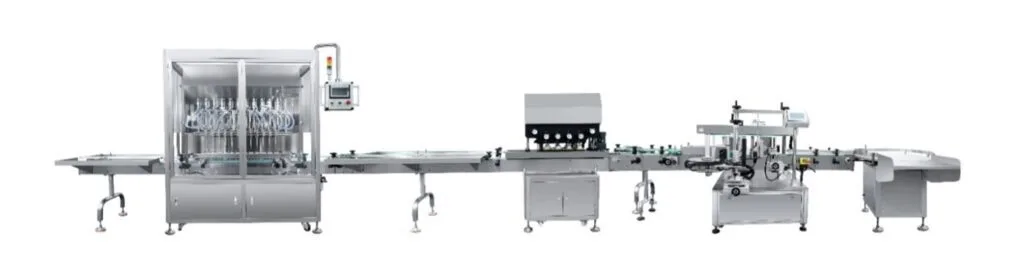
A bottle filler capper labeller machine can be a semi or fully-automated production line machine used to integrate the process of dosing or filling, screw capping, and labelling various viscous and non-viscous products efficiently and cost-effectively.
Our bottle filler capper labeller machines cover several applications and can be customised according to your production needs. For example, auxiliary equipment like airtight protective covers, bottle rinsers, feeding and collection turntables, temperature and abrasion-proof tubes, and date coders can be supplied on request according to your production requirements.
The bottle filler capper labeller machine, also known as a compact filling line, is widely used in pharmaceutical, chemical, medical, veterinary, food and beverage, cosmetic, and automotive industries for the packaging of goods like sauces, drinks, viscous medication, cosmetics, toiletries, cleaning chemicals, oil and lubrication products, greases, etc.
Equipped with a bottle-feeding turntable, this machine uses dual-track conveying and a pneumatic bottle positioning system to align bottles accurately in the filling station. Depending on the product used for filling, multiple piston pump filling valves or peristaltic pumps will fill containers in various quantities.
Fitted with an additional pneumatic shut-off valve to prevent overfilling or spilling, the containers are moved along by automatic rail controls to be capped. The advanced auto-feeding star-wheel capper then places caps onto multiple containers before they are simultaneously pressed and screwed down. Once complete, the sealed containers are transported to a microcomputer-controlled labeller that accurately regulates the label application stage for optimal label adherence. After that, the high-tech driving system moves the finished containers through an out-feeder to a collection turntable for bulk packaging and distribution.
A Bottle Filler-Capper-Labeller machine is an integrated packaging system that automatically fills bottles, applies caps, and labels containers in one continuous production process, reducing labour and increasing efficiency compared to standalone equipment.
The machine typically combines three stages:
Filling – accurately doses your product into bottles.
Capping – places and tightens caps consistently.
Labelling – applies adhesive or wrap-around labels precisely as bottles exit the line.
These steps are controlled by PLC and automated sensors to ensure smooth, synchronized operation.
This machine is versatile and can handle:
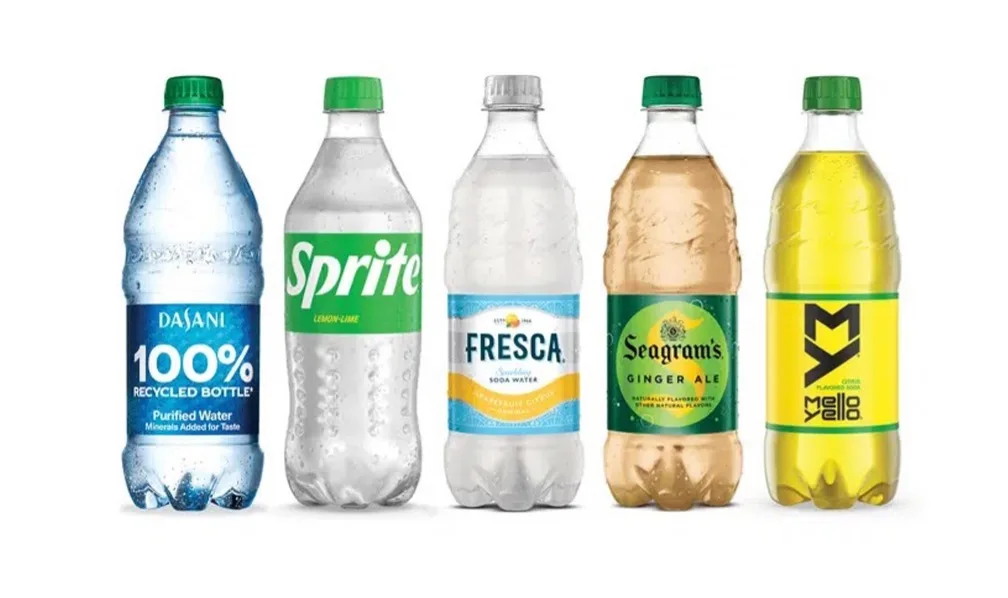
Beverages, juices, and soft drinks
Sauces, oils, syrups and condiments
Cosmetics and personal care liquids
Chemical and cleaning liquids
Pharmaceuticals and veterinary products
Automotive fluids like lubricants and greases
Suitable product types depend on the specific filling system chosen.
Bottle Filler-Capper-Labeller machines can typically handle:
Plastic, PET, HDPE & glass bottles
Round, square or uniquely shaped containers
Small bottle sizes to larger industrial containers
Change parts and adjustment tools may be required for different bottle dimensions.
These machines can be configured to apply a range of caps, including:
Screw caps
Snap-on caps
Press-on caps
Sports or flip-top caps
Advanced systems may include torque control for consistent sealing quality.
Production speeds vary based on machine configuration, bottle size, and product viscosity. Typical systems can run from dozens to over 100 bottles per minute, with higher speeds possible on fully automated lines.
Yes. The machine can be made with food-grade stainless steel and designed to meet strict hygiene and compliance standards, making it appropriate for food, beverage, and pharmaceutical production environments.
Yes — with the correct filling technology (such as piston or peristaltic pump fillers), the system can reliably handle foamy or viscous products and reduce spillage or filling errors.
These systems range from semi-automatic to fully automatic lines, depending on your production volume, budget, and space. Fully automatic solutions minimise labour and maximise consistency.
Yes. It can be combined with bottle unscrewers, conveyors, rinsers, date coders, shrink sleevers, and cartoning machines, forming an end-to-end packaging line that boosts throughput.
Routine maintenance typically includes cleaning nozzles and conveyors, checking seals and labelling sensors, and lubricating moving parts. SA Packaging Machinery also offers installation, training, and after-sales support to ensure reliable performance.
Consider these factors:
Product characteristics (viscosity, foam)
Bottle size and material
Desired output speed
Required level of automation
A packaging specialist consultation can help match your needs to the ideal configuration.