
If you’re producing juice in South Africa—whether it’s fresh juice, fruit blends, concentrates, or flavoured drinks—your bottling setup can either limit your growth or unlock serious scale.
A Bottle Filler-Capper-Labeler Machine is one of the most efficient ways to streamline the full bottling process: filling, capping, and labelling—in one integrated system. For juice producers, that means less labour, fewer mistakes, faster output, and cleaner, more professional packaging.
In this guide, we’ll explain exactly how a Bottle Filler-Capper-Labeler Machine works for juice bottling, what to look for when buying in South Africa, and how to choose the right configuration for your production goals.
A Bottle Filler-Capper-Labeler Machine is an integrated bottling line that performs three essential steps:
Filling – accurately doses juice into bottles
Capping – applies and tightens caps consistently
Labelling – applies labels for retail-ready presentation
Instead of using separate machines (or manual steps), this type of machine runs the process in a smooth sequence—ideal for growing businesses that need speed and consistent quality.
Juice is one of the trickier products to bottle properly because it can be:
Foamy (especially fresh juices)
Sticky (high sugar)
Variable (pulp levels or thickness depending on fruit)
Sensitive to hygiene and contamination
A Bottle Filler-Capper-Labeler Machine helps solve those problems by creating a controlled system that improves accuracy and consistency.
✅ Cleaner production (less spillage + less handling)
✅ Faster output compared to manual bottling
✅ Consistent fill levels (important for retail trust)
✅ Consistent cap torque (reduces leaks and returns)
✅ Professional labelling (smoother labels, fewer reworks)
✅ Easier scaling as orders grow
A properly configured Bottle Filler-Capper-Labeler Machine can handle many juice types, such as:
Fresh fruit juice (orange, apple, pineapple, etc.)
Juice concentrates (depending on viscosity)
Flavoured drinks and blends
Smooth juices with light pulp
Syrup-based beverages (with the correct filling system)
If your juice contains heavy pulp or chunky content, you’ll want to ensure the filling system is compatible (we’ll cover that below).
When you’re bottling juice, the machine choice is less about “any bottling machine” and more about the right filling method, hygiene design, and label quality.
For juice, the filling method depends on thickness, foam, and pulp.
Common filling options:
Piston filling – great for thicker juices, accurate dosing, works well for many food products
Peristaltic pump filling – excellent for hygienic filling and controlled dosing, often used where cleanliness is crucial
Flow-based filling – good for thinner, non-viscous juices at higher speeds
If your juice foams heavily, you’ll also want:
anti-drip nozzles
adjustable filling speed
controlled bottle positioning
For juice, your system should support food-grade production, typically including:
stainless-steel contact parts
easy cleaning access
leak-proof piping and fittings
options for rinsing and controlled bottle handling
Juice products often travel long distances across South Africa. Your capping needs to prevent leakage and ensure consistent closure.
A good capping system helps with:
consistent torque
reduced leakage
smoother line speed
better customer experience
This is a big one for juice.
Juice bottles often go into fridges, and labels can lift or wrinkle if:
the bottle surface is cold or slightly wet
label alignment is off
label pressure isn’t consistent
A Bottle Filler-Capper-Labeler Machine with a properly tuned labeller improves:
label placement accuracy
adhesion consistency
overall retail appearance
Your production goals should guide your choice.
you’re starting out
you bottle smaller batches
you want lower upfront cost
you have manual labour available
you bottle daily or multiple days per week
you want to scale production efficiently
you need consistent high output
you supply retailers or distributors
If your juice brand is growing, a Bottle Filler-Capper-Labeler Machine becomes one of the highest ROI investments you can make because it reduces labour and increases output without sacrificing consistency.
Yes — many systems support multiple bottle sizes, but you should confirm:
bottle diameter range
bottle height range
changeover time and adjustment method
Often yes. Most systems can handle standard screw caps, and many can be configured for special cap shapes.
Some juice products require hot-fill processes. Whether this is possible depends on your filling system and your packaging process. If hot filling is part of your product, it should be considered during machine selection.
If you’re ready to upgrade your juice production with a Bottle Filler-Capper-Labeler Machine, the next step is choosing a system that matches your product, bottle type, cap style, and desired output speed.
SA Packaging Machinery has 3 decades of experience supplying bottling and packaging solutions to South African businesses—helping manufacturers improve output, reduce labour, and produce retail-ready packaging with consistent quality.
Contact SA Packaging Machinery today for a quote or recommendation. Share with us:
your juice type (thin, thick, pulpy)
bottle size and material (plastic or glass)
target bottles per hour
cap and label requirements
You’ll get guidance on the best configuration for your operation—so you can bottle faster, cleaner, and with confidence.
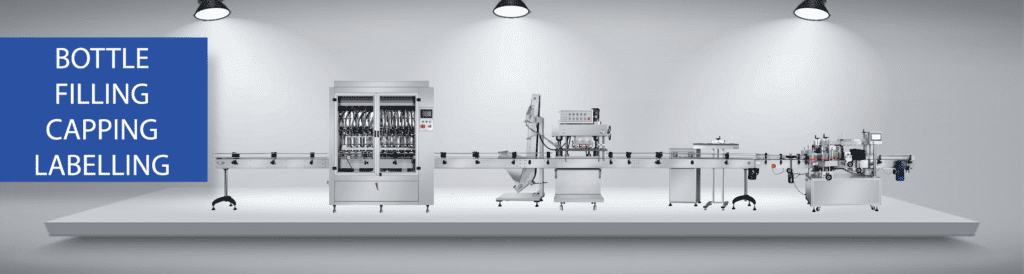
Integrates filling, screw capping, and labelling of various products.