In 2026, more South African brands are moving into bottled products—from water and juice to sauces, oils, detergents, and cosmetics. The difference between a side-hustle bottling setup and a scalable production line often comes down to one piece of equipment: the bottle filling machine.
If you’re researching a bottle filling machine this year, you’re probably asking the same questions most buyers ask:
Which filling method is best for my product?
How fast do I need to fill per hour?
What makes a machine “food-grade” or reliable long-term?
How do I avoid spills, foam, and inconsistent fill levels?
This guide breaks down what matters in 2026—so you can choose the right bottle filling machine and avoid expensive mistakes.
See the machine in action below:
Customers expect consistent fill levels, neat presentation, and leak-free packaging. Retailers and distributors also expect production to be reliable and repeatable.
A good bottle filling machine helps you:
Reduce labour and manual errors
Increase speed without sacrificing accuracy
Improve hygiene and reduce contamination risk
Minimise waste from spills and overfills
Scale production as demand grows
The best bottle filling machine depends on what you’re filling. In 2026, buyers are choosing based on viscosity, foam, pulp/particles, and cleaning requirements.
If your product pours easily (water, thin juice, iced tea), look for:
Flow-based or gravity filling options
Fast changeovers and stable throughput
Anti-drip nozzles to keep bottles clean
Juice can foam, splash, or vary by batch—especially fresh or blended juices.
A bottle filling machine for juice should support:
Adjustable fill speed (to control foaming)
Clean, controlled nozzles (anti-drip is key)
Easy cleaning access between flavours/batches
Oil needs clean filling to avoid messy bottles and label issues.
Prioritise:
Drip-free nozzles
Consistent fill accuracy (important for compliance and customer trust)
Thick products usually need:
Piston filling or pump-assisted filling
Nozzles designed for thicker flow (reduces stringing and mess)
Strong seals and components built for higher viscosity
For cleaning products, your bottle filling machine should be matched to:
Product chemistry (corrosion resistance where needed)
Foam control (some detergents foam heavily)
Reliable seals and safe operation
This is one of the biggest decisions for 2026 buyers.
Best if you:
Bottle in batches (a few times per week)
Have staff to feed bottles and manage flow
Want a lower upfront cost
Are validating demand before scaling
Best if you:
Bottle daily or supply retailers/distributors
Need consistent high throughput
Want fewer staff involved per shift
Plan to scale (and need repeatable quality)
A simple way to decide: if you’re already turning away orders or spending too many labour hours bottling, you’re probably ready for automation.
When comparing any bottle filling machine, use this checklist:
Does it hit the same fill level bottle after bottle?
Can it handle different bottle sizes without constant recalibration?
How many bottles per hour can it realistically fill with your product?
Can staff clean it quickly between batches?
Are contact parts food-grade where required?
Anti-drip nozzles and stable bottle positioning matter a lot for label quality.
Can you add capping and labelling later?
Can the machine grow with your output needs?
Sometimes, yes—but it depends on viscosity and cleaning requirements. A machine set up for water won’t always be ideal for thick sauce or pulpy juice.
Most machines can, but ask about:
Bottle height/diameter range
Changeover time
Whether tooling/parts are needed
Buying based only on price and ignoring:
product compatibility
cleaning time
spill control
support/spares availability
If you want the best recommendation, you’ll get faster, more accurate quotes if you prepare these details:
What are you filling (and is it foamy, thick, or pulpy)?
Bottle size range (ml) and bottle type (plastic/glass)
Target output (bottles per hour)
Do you need future capping/labelling integration?
A bottle filling machine is one of the most important production upgrades you can make in 2026—because it directly affects speed, consistency, and the professional look of your final product.
If you’re looking for the right bottle filling machine for your product and production goals, SA Packaging Machinery can help you choose the best setup—whether you’re starting small or scaling into a full bottling line.
Contact SA Packaging Machinery today for a quote
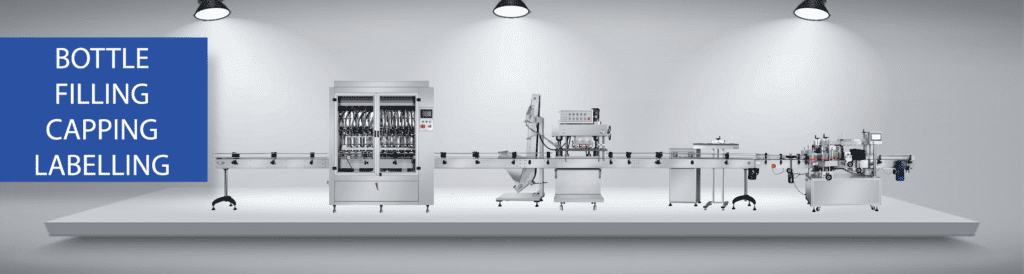
Integrates filling, screw capping, and labelling of various products.