
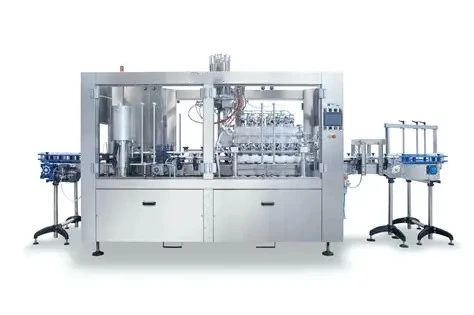
Canning Machines in Food Industry play a crucial role in ensuring food safety, product consistency, and long-term preservation. As consumer demand for ready-to-eat and shelf-stable products grows, manufacturers rely on canning machinery to maintain high production standards. In this guide, we explore how modern canning machines work, their benefits, types, applications, and what to consider before investing in canning equipment.
Canning machines in food industry settings are designed to seal food products in airtight containers to ensure long shelf life and protection from contamination. These machines automate the process of filling, sealing, sterilizing, and packaging various food items in metal, glass, or composite cans. Whether you are packing vegetables, meats, sauces, or beverages, canning machines help maintain quality and extend product availability.
These machines offer high-speed production with minimal manual input. They are best suited for large manufacturers who need maximum output and consistent sealing quality. Features often include automated filling, lid placement, vacuum sealing, and quality checks.
Semi-automatic systems combine manual handling with machine-assisted operations, making them ideal for growing businesses. They offer affordability while still improving efficiency compared to fully manual canning lines.
These machines are used in small-scale operations and for specialty products. While slower, they are cost-effective and allow close quality inspection per unit.
Rotary systems enable high-speed can sealing with continuous motion, making them perfect for large production plants handling thousands of cans per hour.
These remove air prior to sealing, extending the product’s shelf life and reducing oxidation — essential for items such as meats and high-value foods.
Canning prevents bacterial growth and maintains food quality for long periods.
Airtight sealing protects against contamination and ensures compliance with food safety regulations.
Automated canning lines significantly reduce labor costs and improve consistency.
Accurate filling systems ensure minimal product loss, saving time and money.
Canning machines handle liquids, semi-liquids, solids, sauces, soups, fruits, vegetables, and proteins.
Preparation: Raw materials are washed, cut, cooked, or processed.
Filling: Product is dispensed into cans using volumetric, piston, or gravity fillers.
Sealing: Lids are placed and sealed via seamers or vacuum sealing systems.
Sterilization: Cans are heated at high temperatures to kill bacteria.
Cooling and Drying: The cans are cooled and dried before labeling.
Labeling & Packing: Finished cans are labeled and packed for distribution.
Production speed (cans per minute)
Can size compatibility
Automation level (manual, semi-automatic, full automatic)
Material compatibility (metal cans, glass jars, composite packaging)
Hygiene & safety design
Ease of maintenance
Energy efficiency
After-sales support and spare parts availability
Choosing the right canning system ensures long-term productivity and operational reliability.
Vegetable processors
Meat & poultry manufacturers
Seafood producers
Beverage and juice companies
Soup & sauce manufacturers
Pet food manufacturers
Ready-to-eat meal producers
Looking for the right Canning Machines in Food Industry for your production line?
We can help you choose the best option for your product, budget, and production capacity. Contact us today!
To fill, seal, and preserve food in airtight containers for longer shelf life and safety.
With proper maintenance, industrial canning machines can last 10–20 years or more.
Anything from liquids to solids — such as vegetables, fruits, sauces, meat, fish, beans, and beverages.
Yes, especially for high-volume production where speed and consistency are essential.
Absolutely. Semi-automatic and manual machines are affordable options for smaller operations.