
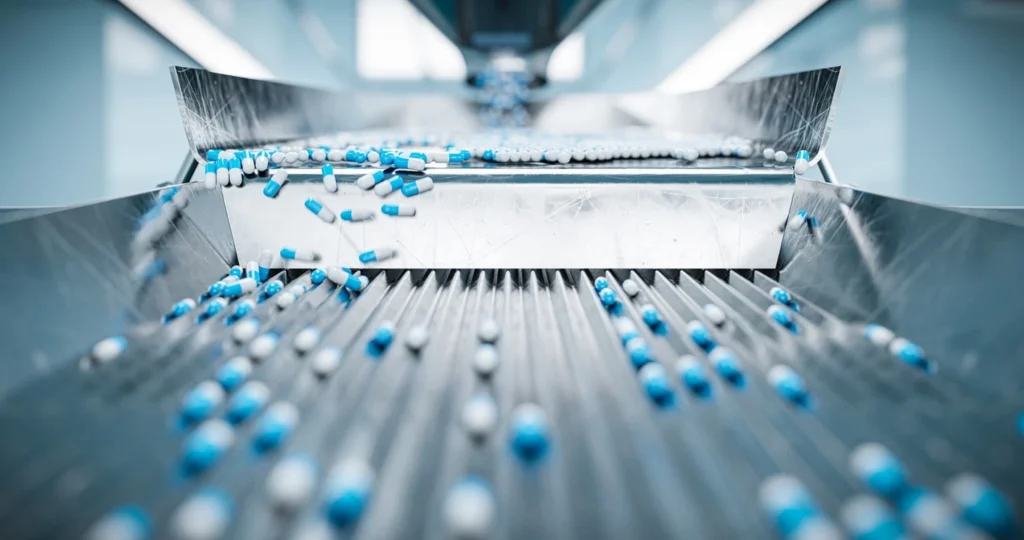
Pharma Packaging: Capsule Filling Explained is one of the most important topics for manufacturers who want accuracy, compliance, and efficiency in capsule production. In the pharmaceutical industry, even the smallest mistake in dosage or packaging can affect patient safety. That’s why understanding how capsule filling works—and how it integrates into modern pharma packaging systems—is essential for businesses looking to scale responsibly and efficiently.
Capsule filling is the process of accurately measuring, dispensing, and sealing powders, granules, pellets, or liquids into hard-shell capsules. This step forms a critical part of pharma packaging, ensuring that medication is:
Consistent in dosage
Protected from contamination
Packaged for stability and shelf life
Ready for downstream packaging like blister packs or bottles
Pharmaceutical manufacturers use specialized equipment, ranging from manual fillers to sophisticated fully automatic capsule filling machines that can handle thousands of capsules per hour.
Accurate capsule filling is not just about speed—it’s about compliance, quality, and safety. The pharmaceutical industry is governed by strict international regulations, including:
GMP (Good Manufacturing Practice)
FDA requirements
ISO quality standards
A well-calibrated capsule filling process ensures:
Every capsule must contain the exact amount of active pharmaceutical ingredient (API). Automated filling technology greatly reduces the risk of human error.
Modern capsule fillers feature dust extraction, anti-cross-contamination protections, and stainless-steel designs to maintain hygienic conditions.
High-volume manufacturers rely on automated capsule fillers to meet tight deadlines without compromising accuracy.
Once filled, capsules move on to further pharma packaging steps such as weighing, polishing, inspection, and final packing.
To better understand how modern capsule production flows, here is a breakdown of the typical stages within a capsule filling machine:
Empty capsules are delivered into the machine from a hopper. The system separates the cap from the body and aligns them for filling.
Capsules are gently separated using suction or mechanical motion. This creates an open capsule body ready for formulation filling.
This is the heart of the capsule filling process. Dosing technologies include:
Tamping pin dosing (for powders)
Dosator systems (for small fill weights)
Liquid filling nozzles
Pellet/ micro-tablet dosing plates
Machines are programmed to achieve consistent weight and volume, essential for complying with pharma standards.
The active ingredients—powders, granules, or liquids—are dispensed into the capsule body with extreme precision.
The cap is placed back onto the body and firmly locked. Advanced machines do this without damaging the capsule structure.
Completed capsules exit the machine for the next stage of pharma packaging, such as:
Capsule polishing
Visual inspection systems
Counting and bottling
Blister packing
Suitable for small batches, R&D, and startups.
Ideal for mid-volume production and consistent quality.
Used by large manufacturers, capable of producing tens of thousands of capsules per hour.
When choosing capsule filling equipment for your pharma packaging line, consider:
Your required output volume
Capsule sizes you will be working with
Product types (powders, pellets, liquids)
Automation level
Cleaning and maintenance requirements
Budget
Working with a reputable supplier ensures you get machines that meet compliance standards and long-term reliability.
Need assistance selecting the right capsule filling or pharma packaging machinery?
Our team is ready to help you choose the perfect solution for your production line.
📩 Contact us today for expert guidance and quotes.
It ensures accurate dosage and prepares capsules for downstream packaging such as bottling or blistering.
Fully automatic capsule fillers are the best choice for large-scale production.
Yes. Most modern machines handle powders, granules, pellets, and even liquids.
Regular cleaning, lubrication, calibration, and replacing worn parts keep machines operating efficiently.