
Industries using flow wrap machines in 2025 are rapidly expanding across multiple sectors, thanks to growing automation, sustainability goals, and packaging efficiency. In this post, we’ll explore which industries are investing in flow wrap technology, why they’re doing so, and what to expect moving forward.
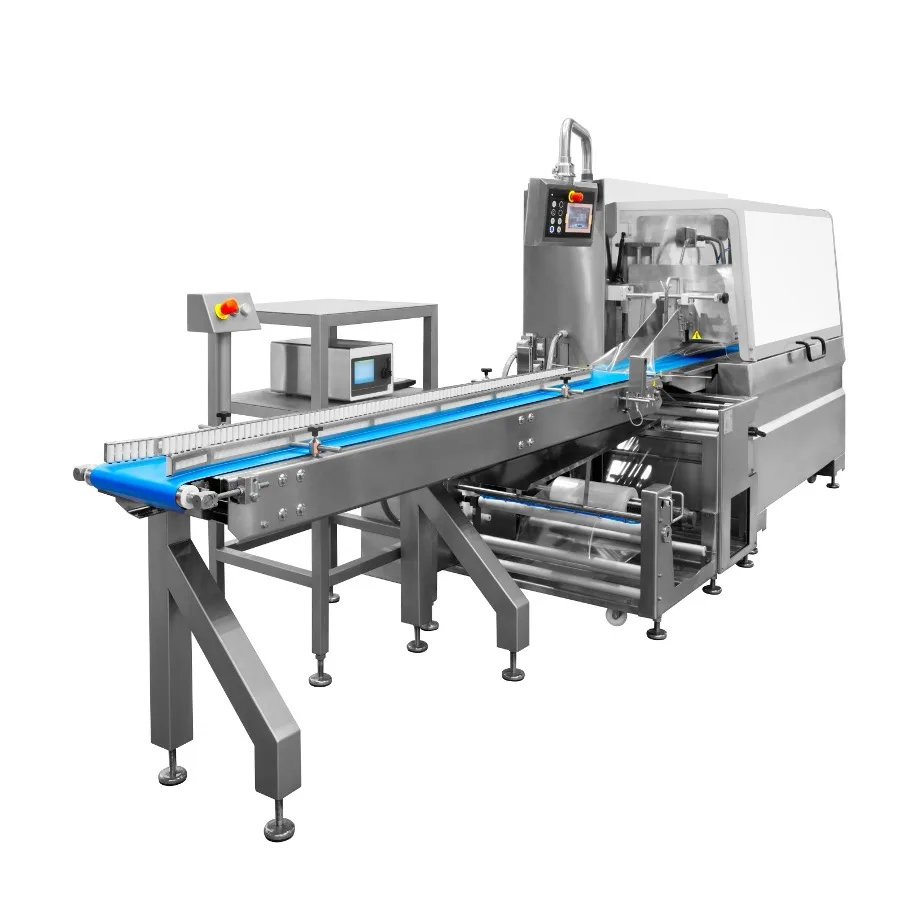
The food industry continues to lead adoption of flow wrap machines. As of 2025, food manufacturers—especially snack, bakery, frozen, and ready-to-eat producers—account for around 60% of global usage (flowwrappers.co.za+13Verified Market Reports+13QYResearch+13). Horizontal flow wrappers dominate due to their ability to run high-speed continuous operations (up to 300 packs per minute) with strong sealing and minimal waste (Global Growth Insights+1FMIBlog+1.)
Pharmaceutical and wound healing care sectors are expanding their use of flow wrap solutions—especially horizontal and servo-driven systems—to meet strict hygiene, tamper-evidence, and traceability standards. Over 50% of pharma installations now use servo-driven machines with AI-based predictive maintenance and precision sealing (Global Growth Insights.)
Cosmetics, personal care, and consumer goods companies increasingly rely on flow wrap machines to package small products like creams, lotions, wipes, and single‑unit goods. The flexibility and automation compatibility make flow wrapping ideal for scalable production runs while reducing contamination risks (FMIBlog+14Future Market Insights+14SA Packaging Machinery+14.)
Beyond food and pharma, consumer goods and light industrial sectors (stationery, hardware, automotive parts, confectionery, medical accessories) are adopting flow wrapping for flexible product geometries and batch changeovers. SMEs favor compact, modular systems that support multiple formats with fast changeover times (Global Growth Insights.)
Industries using flow wrap machines in 2025 are accelerating the move to AI-enabled and IoT-compatible systems for real‑time quality control, predictive maintenance, and remote diagnostics. Automation reduces labor costs and increases uptime (Future Market Insights)
Demand for recyclable mono‑films, compostable materials, and minimal-waste formats is driving machine customization. Companies across food, pharma, and personal care are prioritizing recyclable film compatibility in their flow wrap setups (Global Growth Insights.)
Asia‑Pacific leads global growth in flow wrap uptake, supported by rapid industrialization and e‑commerce expansion. North America and Europe follow closely, with growth in automation investments and regulatory influence (Future Market Insight.)
SMEs, in particular, are opting for compact, dual‑format flow wrappers that can run multiple packaging formats with minimal downtime—ideal for fast‑changing product lines and smaller facilities (FMIBlog.)
Between 2025 and 2033, the global flow wrap machine market is expected to grow from roughly USD 2.0 billion to USD 2.9 billion, at a CAGR of ~3.9% Verified Market Reports+1Dataintelo+1. Other sources project higher—up to USD 4.15 billion by end‑2025 or beyond, depending on methodology Global Growth Insights. Growth opportunities center on extended adoption in pharma, customizable packaging machines for wound care and cosmetics, and increasing support for bio‑film compatibility.
At SA Packaging Machinery, we specialize in providing high-quality flow wrap machines tailored to meet the unique needs of various industries, including food, pharmaceuticals, cosmetics, and consumer goods. Whether you’re looking to enhance your packaging line or explore automation options, our team is here to assist you every step of the way.
The main industries using flow wrap machines in 2025 include food manufacturing, pharmaceuticals, personal care, cosmetics, consumer goods, and light industrial sectors. These industries rely on flow wrapping for fast, hygienic, and protective packaging of individual products.
The food industry leads adoption because flow wrap machines can package products like snacks, bakery items, confectionery, and frozen foods at high speeds while maintaining freshness and hygiene. Food manufacturers account for a large share of global flow wrap usage due to the need for efficient high-volume packaging.
In pharmaceutical packaging, flow wrap machines are used to pack medical devices, wound care products, tablets, and diagnostic kits. They provide tamper-evident seals, hygienic packaging environments, and reliable barrier protection against contamination.
Yes. The cosmetics and personal care industry uses flow wrap machines to package items such as soaps, wipes, razors, toothbrushes, and trial-size skincare products. Flow wrapping keeps products clean while improving retail presentation.
Absolutely. Flow wrap machines are widely used to package stationery, hardware parts, electronics accessories, household goods, and industrial components, making them a flexible solution across multiple manufacturing sectors.
Key trends include automation, smart packaging technology, sustainable film materials, and increased demand for efficient high-speed packaging lines. Many companies are also adopting machines with IoT connectivity and predictive maintenance features.
Flow wrap machines automate the process of wrapping, sealing, and cutting packages in a continuous operation, allowing manufacturers to achieve higher output, consistent package quality, and reduced labour costs.
Yes. Modern flow wrap systems are available in compact, modular designs, allowing small and medium manufacturers to automate packaging while still supporting multiple product formats and quick changeovers.
Flow wrap packaging works best for individual products or grouped items with a consistent shape, such as chocolate bars, biscuits, medical supplies, stationery items, and personal care products.
Businesses should consider factors such as product size and shape, production speed requirements, packaging film compatibility, and integration with existing packaging lines to determine the most suitable machine for their application.