
Selecting the correct packaging system is critical for production efficiency, product protection, and long-term return on investment. When comparing L Bar and side seal equipment, manufacturers must evaluate output speed, sealing method, product type, and automation level. Investing in the right Shrink Wrap system ensures consistent product presentation, minimal material waste, and reliable operation on your production line.
Both systems are widely used across food, beverage, cosmetics, electronics, and FMCG industries. However, their mechanical design, performance, and ideal applications differ significantly.
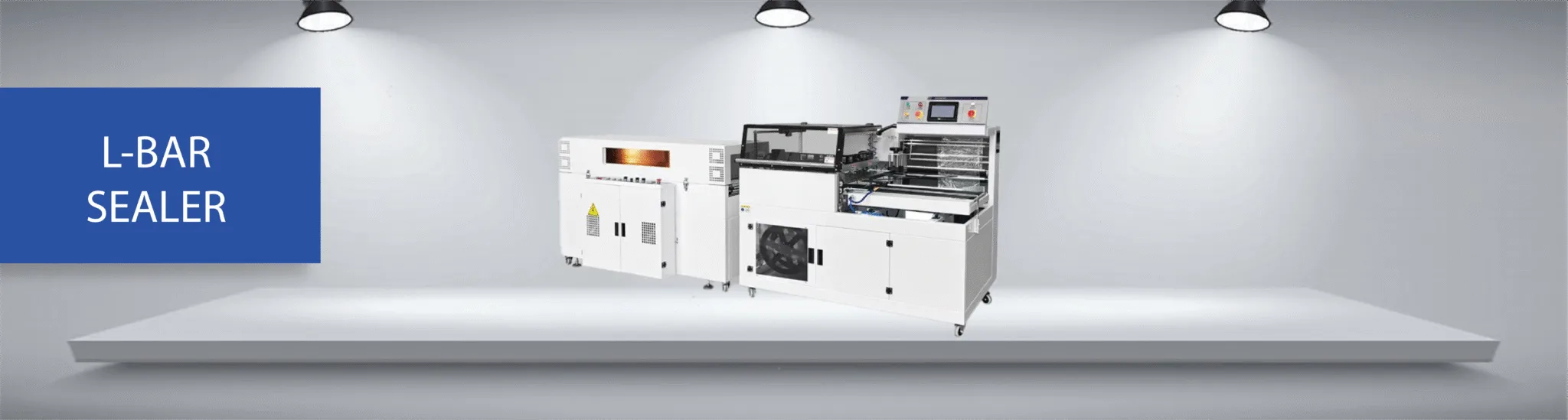
An L Bar sealer uses an L-shaped sealing blade to simultaneously seal and cut film around a product before it enters a heat shrink wrap machine tunnel. The process is typically:
Product placed inside folded film
L-shaped bar seals two sides in one motion
Film is trimmed
Product enters the heat tunnel
Simple mechanical design
Cost-effective for small to medium production
Ideal for single products or smaller multipacks
Compact footprint
L Bar systems are suitable for businesses looking for a shrink wrap machine for sale with moderate production capacity. They are commonly used in bakeries, small beverage plants, and entry-level manufacturing environments. However, output speed is generally lower compared to continuous motion systems.
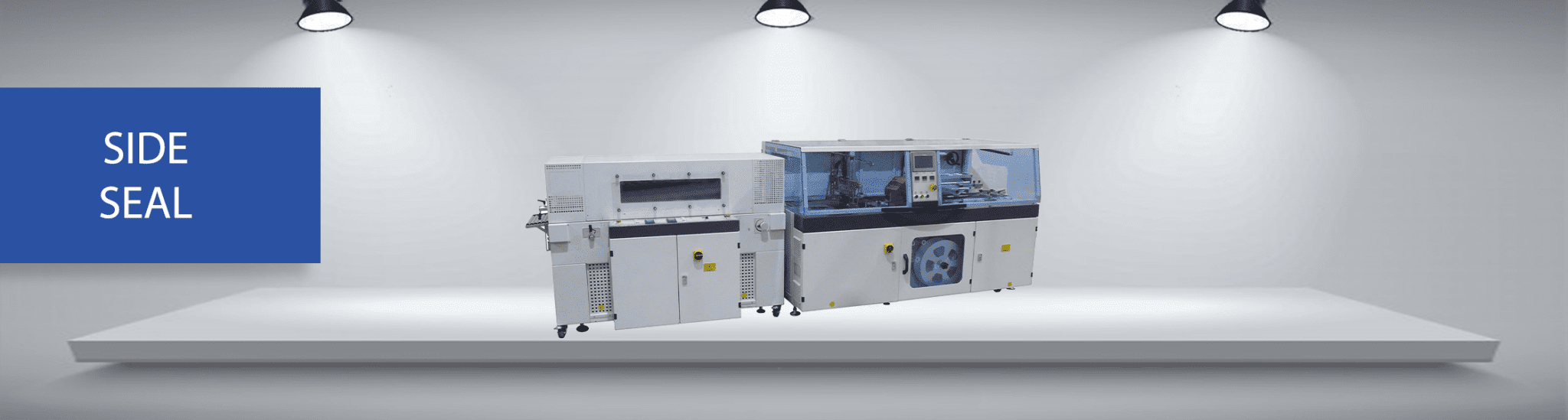
A side seal shrink wrap machine operates differently. Instead of sealing two sides simultaneously, it seals continuously along the side of the product flow. The sealing mechanism runs parallel to the conveyor, making it more efficient for longer products.
Continuous operation
Higher production speed
Better suited for long or irregular products
Reduced film waste
Side seal systems are ideal for integration with a high speed shrink wrap machine. When paired with an automatic feeding system, they maximize throughput and maintain consistent sealing quality.
| Feature | L Bar Sealer | Side Seal Shrink Wrap Machine |
|---|---|---|
| Sealing Method | L-shaped seal closes two sides in one motion | Continuous side sealing system |
| Operating Mode | Intermittent sealing | Continuous motion sealing |
| Production Speed | Moderate output (ideal for low–medium volume) | High output, compatible with high speed shrink wrap machine |
| Product Length Limitation | Limited by sealing frame size | No length limitation (continuous film feed) |
| Film Type Compatibility | POF, PVC | POF, PE, specialized industrial films |
| Automation Level | Semi-automatic or automatic | Fully automatic configurations available |
| Best For | Smaller products, cartons, cosmetics, boxed items | Long products, beverage multipacks, trays, industrial goods |
| Integration with Tunnel | Requires heat shrink wrap machine | Requires heat shrink wrap machine |
| Energy Consumption | Lower compared to continuous systems | Higher due to continuous operation |
| Investment Level | Affordable entry-level solution | Higher capital investment |
| Typical Buyer Profile | SMEs, growing manufacturers | High-volume factories, export-focused production |
| Upgrade Potential | Limited scalability | Easy integration with conveyors & shrink wrap cutting machine systems |
| Food Packaging Suitability | Can integrate with food grade shrink wrap machine configurations | Highly compatible with food-grade and beverage applications |
When evaluating shrink wrap machine price South Africa, consider:
Automation level
Production speed
Tunnel size
Film type compatibility
Integration with existing lines
L Bar machines usually require lower initial investment, making them attractive for SMEs. Side seal systems cost more but are more efficient for high-volume production and provide faster long-term ROI.
Choosing reliable sealer shrink wrap machine suppliers is crucial. Beyond price, factors like technical expertise, spare parts availability, and after-sales support impact total cost of ownership.
Both systems can be configured as a food grade shrink wrap machine when paired with certified film materials. This is essential for food, beverage, and pharmaceutical applications.
For export-oriented manufacturers, global packaging guidance is available from the World Packaging Organisation:
🔗 https://www.worldpackaging.org/
Compliance with international standards ensures packaging stability, product protection, and smoother customs clearance.
Proper installation and maintenance are essential for consistent machine performance. At SA Packaging Machinery:
Professional Chinese technicians provide on-site installation
Complete commissioning and calibration are included
Operator training programs ensure safe and efficient operation
Preventative maintenance schedules are provided
Rapid technical support is available
Our experienced Chinese team ensures every Shrink Wrap system operates efficiently. Our machines are high-quality, reliable, and backed by excellent after-sales support. Compared with local suppliers, our pricing is more competitive without compromising on durability or performance.
L Bar Sealer is ideal for:
Moderate production volumes
Uniform, compact products
Entry-level capital investment
Limited floor space
Side Seal Shrink Wrap Machine is ideal for:
High-volume production
Irregular or long products
Automation integration and high-speed operation
Export-oriented manufacturing
Both machines deliver reliable Shrink Wrap performance when properly installed and maintained.
L Bar uses an L-shaped sealing frame for intermittent sealing, while side sealers operate continuously for higher throughput.
Yes, both systems can meet food safety requirements when used with certified films.
Automation, speed, tunnel size, and integration options all influence pricing.
Yes, both systems require a heat tunnel for proper film contraction.
It trims excess film for precise, clean seals and reduces waste.
Professional Chinese technicians typically complete installation in 3–7 days, depending on complexity.
Yes. Our Chinese team provides technical support, preventive maintenance, and operator training.