
Tube Fill and Seal Machines in South Africa are designed to effectively fill and seal many forms of liquid or paste products within a laminated plastic, polyfoil, or aluminium tube. These machines allow differentiated tube feeding to suit individual requirements. They can be integrated into any new or existing production line to fill and seal tubes of various shapes and sizes.
Our tube fill and seal machines cover various applications and can be customised according to your production needs. Additional stirring devices, saddle folding equipment, or other individual modules comprising our filling and sealing machines are available in manual, semi-automatic, and automatic versions according to your production requirements.
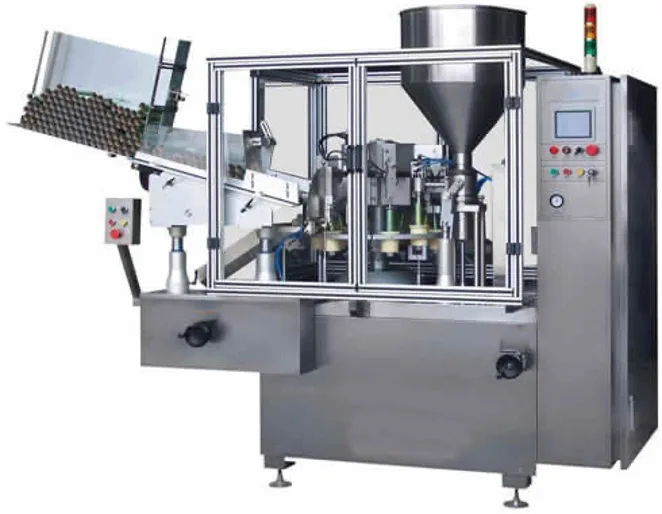
Regardless of the viscosity of the substances or liquid being filled, tube fill and seal machines can easily be integrated into several production sectors such as pharmaceutical, FMCG, cosmetics and chemical industries.
Any viscous substance like an ointment, cream, syrup, sauce and paste, shampoo and liquid soap, lotion, serum, glue, paint, and viscous pesticide are suited to tube fill and seal packaging.
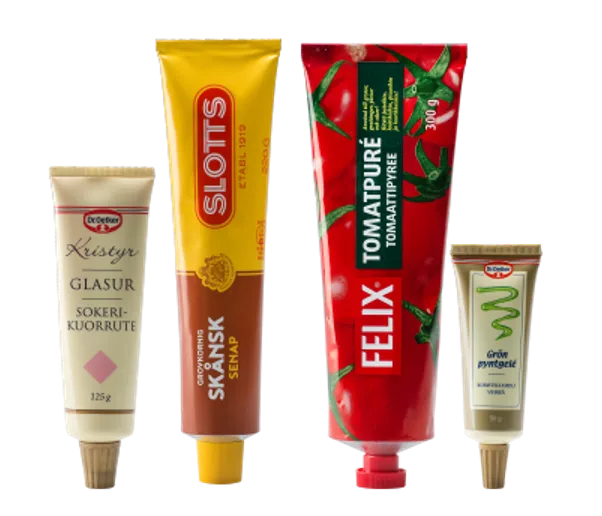
A Tube Fill & Seal machine is specialised packaging equipment designed to automatically fill liquid, paste, or viscous products into tubes and then seal them securely, ensuring consistent packaged products ready for distribution. These machines work with tubes made from materials such as plastic, laminated film or aluminum.
The process typically includes:
Automatic feeding of empty tubes into the machine.
Cleaning and preparation of tubes (e.g., dust aspiration).
Precise filling of product into each tube using a dosing system.
Sealing the tube’s end by heat sealing or crimp sealing, depending on tube material.
Coding printing (e.g., batch or date) and automatic discharge of finished tubes.
These machines can fill and seal a wide variety of products including:
Cosmetic creams, gels and lotions
Pharmaceutical ointments and serums
Food pastes, sauces and syrups
Adhesives and sealants
Shampoo, liquid soap and other viscous liquids
Tube Fill & Seal machines are widely used in industries such as:
Cosmetics & personal care
Pharmaceuticals & healthcare
Food & beverage
Chemical and industrial products
They help deliver clean, consistent packaging for a range of tube-based products.
They are designed to work with various tube materials, including:
Plastic tubes
Laminated tubes
Aluminium tubes
Different sealing methods (heat seal, crimp, etc.) are used depending on the tube material.
Key advantages include:
High efficiency and throughput
Accurate and consistent filling
Reduced product waste
Improved hygiene and sanitation
No-tube, no-fill protection systems
Customisable options for special requirements
These features help boost productivity and product quality.
Yes. Tube Fill & Seal machines can be configured to handle a wide range of product viscosities — from low-viscosity liquids to thick creams or pastes — making them suitable across many product types.
Yes. These machines are modular and flexible, allowing them to be integrated into new or existing production lines, and can be combined with other packaging equipment downstream, such as labellers, cartoners and conveyors.
Tube Fill & Seal machines are constructed with stainless-steel contact parts and offer features like vacuum dust aspiration and easy access for cleaning — making them suitable for cosmetic, pharmaceutical and food production environments where hygiene is critical.
Yes — machines can be supplied in:
Manual / Semi-automatic — for lower production volumes.
Automatic — for higher output and minimal operator interaction.
Custom modules such as agitators, saddle folding units or coding devices can also be added based on production needs.
Yes. Many Tube Fill & Seal machines include coding or marking systems that print batch numbers, manufacturing dates or other traceability information directly on the tube.
SA Packaging Machinery provides full support — from installation and commissioning to operator training and after-sales service — to ensure your tube filling and sealing machine runs reliably and efficiently.