In 2026, the difference between a water brand that survives and a water brand that scales often comes down to one thing: how reliably you can bottle.
A water bottle filling machine isn’t just about speed. It’s about building a process that produces the same result all day—clean bottles, consistent fill levels, tight caps, and a line that doesn’t constantly stop for spills, jams, or rework.
This article isn’t a buyer’s guide. It’s a practical breakdown of what a water bottle filling machine actually changes inside your operation—and why South African producers are investing in better, cleaner, more consistent bottling systems in 2026.
Most water bottling businesses don’t struggle because nobody wants bottled water. They struggle because production becomes messy and inconsistent when demand increases.
Here’s what usually breaks first:
Bottles get wet, labels don’t stick, and packs look cheap
Fill levels vary, which looks bad on shelves and causes complaints
Caps leak during transport
Staff get fatigued and mistakes multiply
The line becomes “stop–start–stop” instead of a smooth flow
A properly configured water bottle filling machine reduces these production problems because it standardises the most important step: the fill.
In South Africa, once you’re supplying stores, wholesalers, gyms, offices, or distributors, you’re selling more than water—you’re selling trust.
Consistent fill levels matter because:
Customers compare bottles side-by-side in the fridge
Retailers hate returns from leaky caps or messy packaging
Even small overfills can destroy margins at volume
A good water bottle filling machine helps you hit uniform volume bottle after bottle, which is one of the fastest ways to make your product look professional.
A common bottling problem isn’t the water—it’s the outside of the bottle.
When bottles come out wet or sticky around the neck:
Dust and residue cling to packaging
Labels wrinkle or lift in cold storage
Bottles look low quality, even if the water is good
A water bottle filling machine that’s set up to reduce drips and splashing will improve your shelf appearance instantly. Cleaner bottles also reduce rework, because staff aren’t wiping bottles down or re-labelling.
In 2026, more producers are designing their plant around a simple idea: keep the bottle moving forward with minimal handling.
A modern bottling flow often looks like this:
Bottle staging / feed
Optional rinsing or sanitising
Water bottle filling machine
Capping
Labelling
Date coding
Packing / shrink wrap / cartons
The key is reducing hand-to-hand bottle contact. The more the process stays “in-line,” the more consistent and scalable it becomes.
Instead of needing extra hands just to keep up, you can allocate staff to packing, QC, or dispatch.
Less spillage, fewer rejected bottles, fewer label failures, and less giveaway from overfilling.
Fill level, cap consistency, and dry bottles create the “professional finish” that helps you win repeat orders.
A consistent system means new staff can learn faster and output remains stable.
Water seems simple—until it’s being moved around South Africa in bulk.
When caps aren’t applied consistently, leaks happen during transport. When bottles are wet, labels lift. When fill levels are inconsistent, retailers notice. When packaging is messy, customers assume the product is cheap.
This is why a water bottle filling machine is often the first serious “industrial” upgrade for a growing water producer: it protects brand reputation at scale.
The biggest misconception is that growth is only about higher bottles-per-hour.
In practice, what actually scales a bottling business is reduced disruption:
fewer stops
fewer spills
fewer rejected bottles
fewer customer complaints
fewer emergency fixes
A water bottle filling machine improves the rhythm of your whole line. When the fill is controlled and repeatable, everything downstream (capping, labelling, packing) becomes easier.
If you’re aiming to scale bottled water production in South Africa, the smartest move is building a system that produces consistent, clean output day after day—with minimal downtime and minimal rework.
SA Packaging Machinery can help you plan the right setup around a water bottle filling machine, whether you’re improving a current line or building a smoother process that’s ready for growth.
Contact SA Packaging Machinery today for a quote
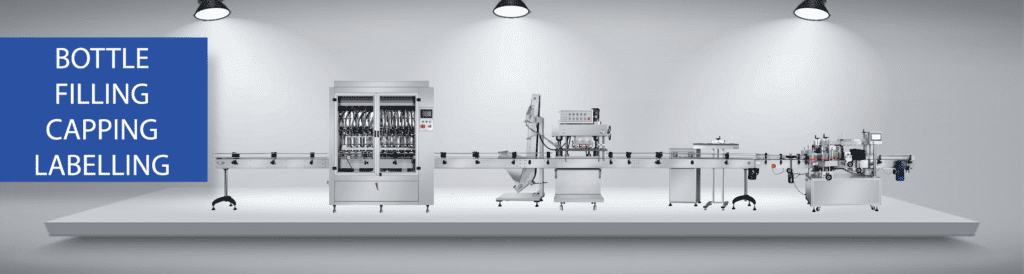
Integrates filling, screw capping, and labelling of various products.
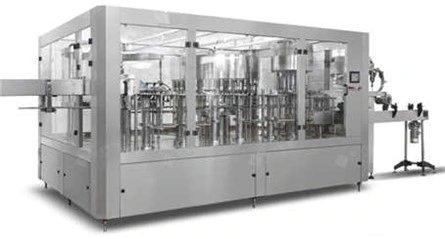
A water bottle filling machine is automated equipment designed to accurately fill bottles with water at consistent volumes before capping and further packaging. It helps producers maintain uniform fill levels, reduce spillage, and improve production efficiency.
In 2026, reliability matters more than raw speed. A water bottle filling machine helps South African bottlers reduce downtime, minimise waste, prevent leaks, and produce clean, professional-looking bottles that meet retail and distributor expectations.
A properly configured water bottle filling machine:
Controls fill volume precisely
Reduces overfilling and underfilling
Minimises drips and splashing
Standardises output across long production runs
This consistency protects margins and strengthens brand presentation on store shelves.
Yes. By automating the filling process, a water bottle filling machine reduces the need for manual filling, wiping, rechecking, and rework. Staff can instead focus on quality control, packing, and dispatch, making labour more predictable and productive.
Retailers and distributors notice uneven fill levels and leaking caps. A reliable water bottle filling machine ensures:
Uniform bottle appearance
Reduced product returns
Fewer transport leaks
Better shelf presentation
This builds trust with stores, gyms, wholesalers, and office supply chains.
Common bottling issues include:
Wet bottles affecting labels
Inconsistent fill heights
Spillage during filling
Stop-start production flow
Cap sealing problems
A properly installed water bottle filling machine standardises the most critical stage of bottling, improving the overall rhythm of the production line.
Yes. Many growing water brands in South Africa invest in a water bottle filling machine as their first major upgrade because it stabilises output and prepares the business for scaling into retail and distribution.
When bottles leak, labels lift, or fill levels vary, customers lose confidence. A consistent water bottle filling machine protects your brand by ensuring clean bottles, tight caps, and professional packaging that withstands transport across South Africa.
Yes. A water bottle filling machine typically works in-line with:
Bottle rinsers or sanitising units
Capping machines
Labelling machines
Date coders
Shrink wrapping or carton packing systems
Integrated systems reduce handling and improve scalability.
You may need an upgrade if:
Your line frequently stops
Staff spend time wiping bottles
Retailers complain about inconsistent fills
Caps leak during transport
Output cannot keep up with demand
Upgrading to a reliable water bottle filling machine improves smoothness rather than just speed — and that’s what truly scales a bottling business.