
What is a Horizontal flow wrap machine? They are highly efficient packaging machines that seal products horizontally with clear or printed PET/PE, or BOPP-based film, making them ideal for packing large quantities of individual products.
Our flow wrap machines are suitable for many applications and can be customised according to your production needs.
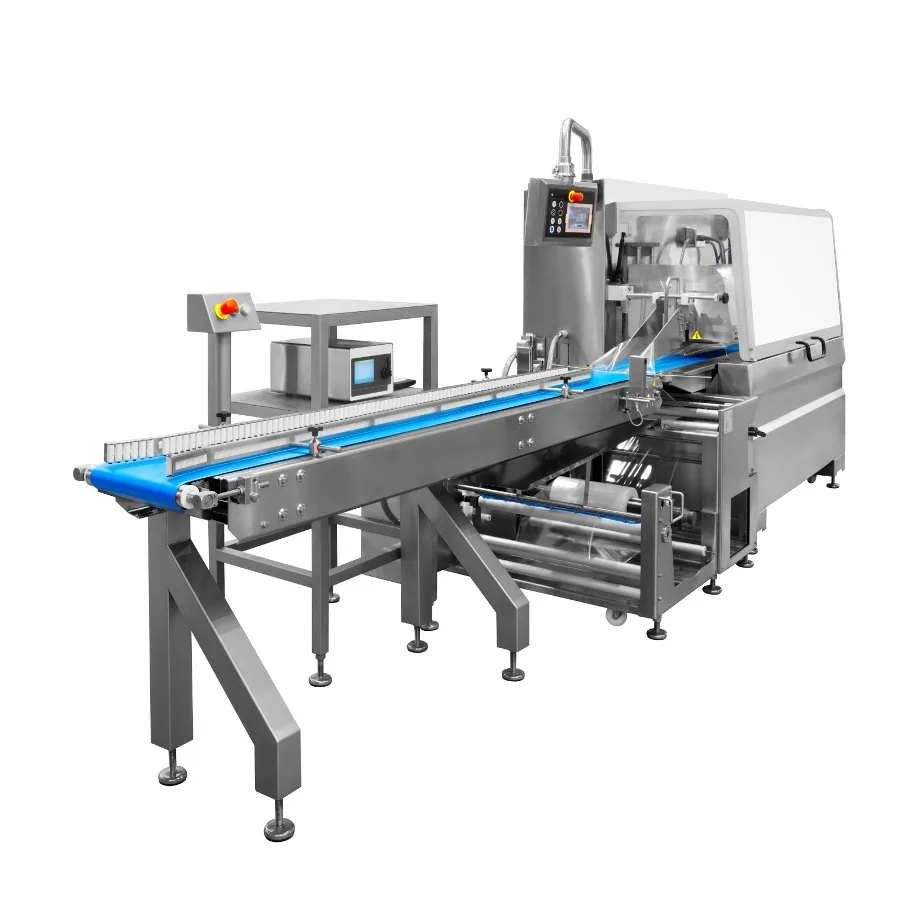
Flow wrap machines are purpose-built machines that can use punnets and trays for the flow wrapping of goods in many industries. Products like fresh produce, pastries, bakery goods, confectionery, consumer goods like scratch cards, stationery, and magazines, and household goods like napkins and disposable cutlery can be flow-wrapped to protect against damage. Additional gas flushing can replace oxygen with nitrogen inside the packaging to preserve goods’ shelf life.
A flow wrapping machine, also known as a horizontal flow wrapper, is a packaging machine designed to wrap products in a continuous flow of material. This type of machine is widely used in various industries, including food, pharmaceuticals, and consumer goods, to package items quickly and efficiently. Here’s how it works and its main components:
Flow wrap machines seal products inside a neat pillow-shaped film or foil package to improve shelf life and guard against contamination. Typically, an infeed conveyor belt transports goods into a forming box that forms a continuous film tube around products. Next, a rotary heat sealer and cutter will separate and crimp seal goods to form individually packaged products that are primarily rectangular or square-shaped with a horizontal back seal and top and bottom vertical seals.
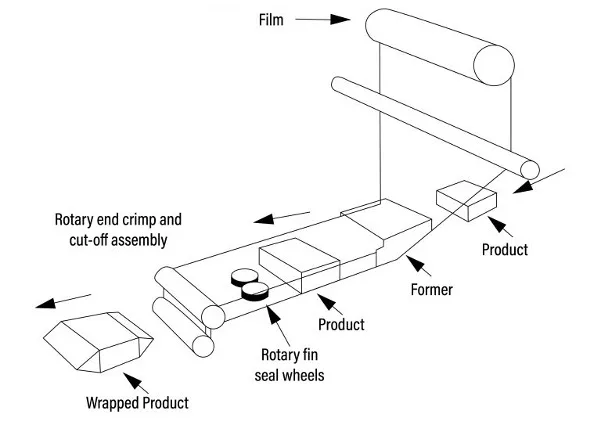
A flow wrap packaging machine — also known as a horizontal flow wrapper — is an automated packaging system that wraps products in a continuous film horizontally. It then seals and cuts the film into neat, individual packages. These machines are widely used for fast, efficient packaging in industries such as food, consumer goods, and pharmaceuticals.
Flow wrap machines feed products into a conveyor, guide a roll of film around them, and then create a longitudinal seal along the back. The ends are then sealed and cut to produce individual packages, often in the classic “pillow pack” shape.
Flow wrap machines can package a wide variety of products, including:
Bakery and confectionery items
Fresh produce and snack bars
Consumer goods like stationery
Pharmaceuticals and medical devices
Household products like napkins or disposable cutlery
These machines are compatible with several film types, such as PET (Polyethylene Terephthalate), PE (Polyethylene), and BOPP (Biaxially Oriented Polypropylene). The choice depends on the product requirements, shelf life needs, and branding considerations.
Yes — flow wrap machines are highly adaptable. They can be custom configured to handle various product sizes and shapes, and can also be integrated with conveyors, trays or punnets for specialised applications.
Key advantages include:
High Production Speed: Packages many products per minute.
Efficiency: Lowers material waste and labour costs.
Versatility: Suitable for many product types.
Protection: Provides moisture and contamination protection for goods.
Professional Appearance: Creates consistent, retail-ready packages.
Gas flushing replaces oxygen inside the package with nitrogen. This slows oxidation and helps products stay fresh longer — especially useful for perishable items like baked goods and fresh produce.
Yes. Flow wrap machines can be integrated with upstream and downstream equipment like conveyors, weighers, printers or inspection systems to create a complete automated packaging line.
Most modern machines feature user-friendly touch screen controls, automatic fault detection and are built from easy-clean stainless steel. Routine maintenance typically includes cleaning and regular checks to ensure optimal performance.
Yes — SA Packaging Machinery provides comprehensive after-sales support including installation assistance, operator training, and technical maintenance support so you can get the most out of your investment.