
As the food industry continues to evolve, packaging plays a crucial role in shaping consumer experiences and meeting sustainability goals. With 2025 ushering in new innovations, brands are adapting to meet the rising demand for eco-friendly materials, smart packaging solutions, and designs that enhance convenience and transparency.
This article explores five major trends influencing the food packaging landscape: the push for sustainable alternatives, the advancement of smart packaging technologies, the rise of health-conscious and transparent packaging, the increasing adoption of flexible packaging, and the growing importance of e-commerce-friendly designs.
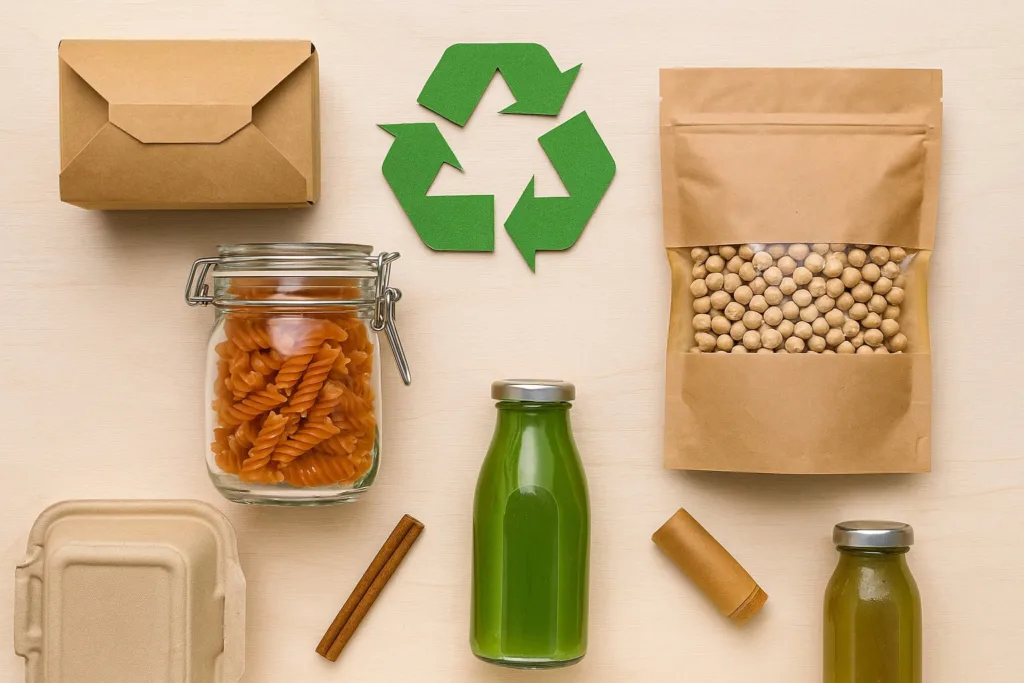
Sustainability has become a key driver in the packaging industry, with businesses and consumers seeking solutions that reduce environmental impact. The movement towards greener materials and waste reduction is gaining momentum, fueled by regulatory changes and consumer preferences. Currently, around 62% of consumers prioritize eco-friendly packaging, a significant increase from 52% in 2023.
Innovative sustainable packaging solutions are emerging, including reusable packaging designed to promote circular economy principles, airless packaging that extends product longevity, and advanced produce packaging that enhances freshness while minimizing waste. As sustainability becomes a priority, these developments align with global environmental objectives and consumer expectations.
Regulatory policies and industry initiatives are further accelerating the shift toward biodegradable, compostable, and recyclable materials. Companies investing in these innovations not only contribute to environmental conservation but also strengthen brand loyalty among eco-conscious consumers.
Technology is revolutionizing packaging, making it more interactive and functional than ever. Smart packaging solutions are enhancing supply chain efficiency, improving product safety, and offering consumers valuable insights through real-time tracking and digital engagement.
IoT-enabled packaging, such as smart containers equipped with sensors, helps monitor factors like temperature, humidity, and location, ensuring product integrity during transit. Additionally, the use of QR codes and NFC (Near Field Communication) technology is creating interactive experiences, allowing consumers to access detailed product information, verify authenticity, and engage with brands.
Markets for active and intelligent packaging are experiencing substantial growth, with demand driven by longer shelf life requirements and enhanced consumer engagement. By incorporating these innovations, brands are responding to industry trends and regulatory standards while creating a more transparent and secure supply chain.
With health and wellness trends shaping consumer behavior, the demand for clear, informative, and honest packaging is rising. Transparency in packaging builds trust, allowing consumers to make informed decisions based on ingredient lists, sourcing details, and product claims.
Brands are now prioritizing transparent packaging that not only highlights product integrity but also complies with evolving labeling regulations. This approach resonates with health-conscious shoppers who value authenticity and quality assurance.
Beyond labeling, packaging materials are also evolving to meet health-conscious needs. The shift towards BPA-free, non-toxic, and allergen-safe packaging is becoming more prevalent as consumers seek safer alternatives that align with their dietary and wellness goals.
Flexible packaging is gaining traction due to its convenience, sustainability benefits, and adaptability across various industries. With its lightweight structure and reduced material usage, it offers a cost-effective and environmentally friendly alternative to traditional packaging.
This packaging format is widely used in the food, beverage, pharmaceutical, and personal care industries. Features such as resealability, easy-open mechanisms, and smart labeling enhance consumer convenience, while advanced materials help preserve product freshness.
As brands continue to embrace flexible packaging, innovations such as compostable films and recyclable laminates are being integrated to support sustainability efforts. The versatility of flexible packaging ensures that it remains a key player in the industry’s future.
With the surge in online grocery shopping and direct-to-consumer sales, packaging designed for e-commerce has become a crucial consideration. Packaging must now be durable enough to withstand shipping, lightweight to reduce logistics costs, and functional to enhance the unboxing experience.
Brands are investing in frustration-free, tamper-evident, and sustainable e-commerce packaging to cater to digital shoppers. Customization, such as smart labels and interactive elements, is also being incorporated to provide engaging brand experiences.
As e-commerce continues to expand, optimizing packaging for online retail will remain a top priority, ensuring product safety, cost efficiency, and a seamless customer experience.
The food packaging industry is undergoing a major transformation in 2025, driven by sustainability, technological advancements, and evolving consumer expectations. Companies that embrace these trends will not only enhance their environmental impact but also build stronger connections with their customers.
By investing in sustainable materials, smart technologies, transparent labeling, flexible packaging, and e-commerce-friendly designs, brands can stay ahead in an increasingly competitive market. As the industry continues to innovate, these packaging trends will shape the future of food distribution and consumption. Contact us today to explore packaging solutions that align with the latest trends and let our experts help you create sustainable, innovative, and market-ready packaging for your products.
In 2025, food packaging trends emphasize sustainability, smart technology, consumer convenience, and transparency. Major developments include eco‑friendly materials, intelligent packaging with digital engagement, flexible and resealable formats, and designs optimised for e‑commerce.
Sustainability continues to lead industry shifts as consumers and regulations demand reduced environmental impact. Brands are adopting biodegradable, recyclable, compostable, and reusable materials to support circular economy goals and meet eco‑conscious consumer expectations.
Smart packaging integrates digital elements like QR codes, NFC tags, sensors, and IoT connectivity. These features improve supply chain visibility, help monitor freshness and temperature, and create interactive consumer experiences — giving brands a competitive advantage.
Transparent packaging helps build consumer trust by clearly showing product contents and nutritional information. Combined with honest, clean labelling, this trend aligns with health‑conscious consumer behaviour and regulatory expectations.
Flexible packaging (like pouches and films) is growing because it’s lightweight, cost‑effective, and versatile. It reduces material use, enhances portability, and often supports resealability — making it ideal for modern food products and sustainability goals.
Yes — with online grocery and direct‑to‑consumer sales booming, packaging must protect products during shipping, reduce logistics costs, and offer a positive unboxing experience. Brands are investing in durable yet eco‑friendly e‑commerce packaging to meet these needs.
Absolutely. Even smaller producers can benefit from sustainable and flexible packaging formats, smart labels (like QR codes), and minimalistic designs — all of which improve shelf appeal and consumer engagement at retail and online.
Brands can start by:
Choosing recyclable or compostable materials
Using smart packaging features to share product info
Incorporating minimalistic and transparent design
Optimising packaging for e‑commerce fulfilment
These shifts help enhance brand reputation, reduce waste, and meet evolving consumer expectations.
Initial costs may rise with new materials or technology integration, but long‑term benefits include reduced waste, stronger customer loyalty, compliance with regulations, and potential savings through material efficiencies and supply chain optimisation.
Speak with a packaging specialist to discuss options for sustainable materials, smart packaging technologies, and flexible formats that fit your product, production scale, and target market.