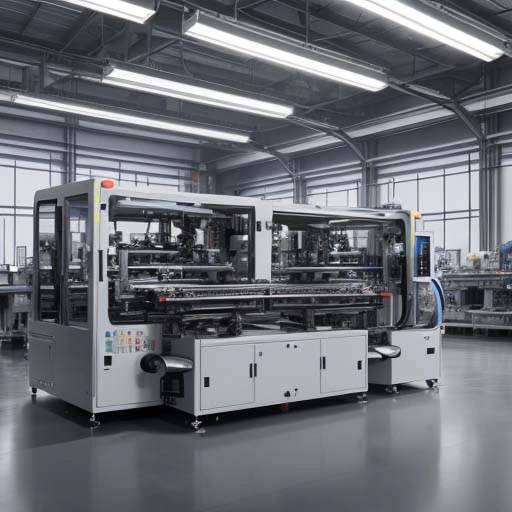
From primary packaging to end-of-line and distribution, packaging automation is transforming operations—boosting efficiency, cutting costs, and supporting sustainability goals.
The packaging industry is rapidly evolving, driven by advancements in automated packaging systems, artificial intelligence, and global ecommerce growth. From addressing labour shortages to enhancing sustainability, packaging machinery is now essential for businesses looking to stay competitive.
Forecasts predict that the global packaging automation market will surge to $161 billion by 2033—highlighting the increasing demand for smart, efficient, and scalable solutions across the supply chain.
With e-commerce booming, many businesses—especially start-ups and SMEs—are turning to automated packaging solutions to manage rising demand and streamline order fulfilment. Labour shortages and high customer expectations are forcing companies to optimise every step of the packaging process.
From automated pack stations to case erectors, labeling machines, and pallet wrappers, automation provides scalable support for fast-growing ecommerce brands.
As AI continues to shape consumer behaviour and expectations, e-commerce brands must invest in automation to lower operating costs and compete effectively.
Employee safety is a critical driver behind automation in warehousing and packaging. Replacing repetitive manual tasks with machines improves ergonomics and reduces the risk of injury.
For example:
These solutions not only enhance safety but also drive down costs, improve morale, and boost long-term productivity.
Modern packaging equipment doesn’t just cut labour—it reduces waste and emissions too. As companies evaluate automation, sustainability is increasingly part of the ROI discussion.
By optimising material usage, businesses can meet environmental goals without compromising profitability. Popular sustainable automation systems include:
When sustainability efforts align with cost savings, adoption rates soar—especially when supported by eco-conscious consumers and regulatory pressure.
While many organisations still take a cautious approach to investing in new machinery, the future points to rapid automation adoption. Inflation, competitive pressures, and rising customer expectations will push companies to act faster.
To succeed, businesses should partner with expert packaging suppliers who offer both automation expertise and deep knowledge of packaging materials. This integrated strategy ensures long-term scalability, safety, and sustainability.
The future of industrial packaging solutions is clear: smarter, safer, and more sustainable. Whether you’re a start-up navigating e-commerce demand or a large enterprise reducing waste and labour costs, now is the time to explore packaging automation tailored to your needs. Contact us today to discuss your packaging goals and let our experts design an automation solution that boosts efficiency, cuts costs, and supports your sustainability objectives.
Want to explore more about packaging automation trends and industry insights? Check out Modula’s Packaging Industry Outlook
Packaging automation refers to the use of machines and automated systems to perform packaging tasks — such as filling, sealing, labelling, case packing, and end-of-line handling — with minimal human intervention. It helps manufacturers increase efficiency, consistency, and throughput while lowering labour and operational costs.
Automation addresses key industry pressures such as labour shortages, rising production demands, and the need for improved efficiency. Automated systems speed up packaging lines and ensure consistent quality — helping businesses stay competitive in fast-moving markets like e-commerce and food production.
With the rise of e-commerce, brands need faster fulfilment and higher throughput. Automated packaging systems — including automated pack stations, labelling machines, and pallet wrappers — help businesses scale up to meet online demand and reduce manual bottlenecks.
Yes. Automating repetitive or physically demanding tasks — such as pallet wrapping and material handling — reduces risk of worker injury and improves overall ergonomics on the production floor, helping maintain a safer working environment.
Sustainability is becoming a key factor in automation decisions. Automated systems can optimise material use, reduce waste, and support eco-friendly packaging materials — helping companies meet environmental goals while lowering costs.
Yes. Latest automated packaging solutions are often modular and designed to handle multiple product types, sizes, and packaging formats, making it easier for manufacturers to adapt lines to new products or market demands.
Automated packaging systems precisely control fill weights, sealing, and material usage — minimising product giveaway and waste. Combined with real-time monitoring and smart controls, these systems help reduce downtime and optimise line performance.
Absolutely. While full automation is common in large factories, many SMEs benefit from semi-automated systems that improve speed, reduce labour dependency, and offer scalable solutions as business needs grow.
Yes. Packaging automation often connects with upstream and downstream systems — such as conveyors, scales, labellers, vision inspection, and warehouse management systems — enabling seamless operation and data-driven management across the production line.
Begin by analysing your production goals, volume, and bottlenecks, then consult with a packaging automation expert to design a solution tailored to your needs — whether that’s a single automated station or a fully integrated line.