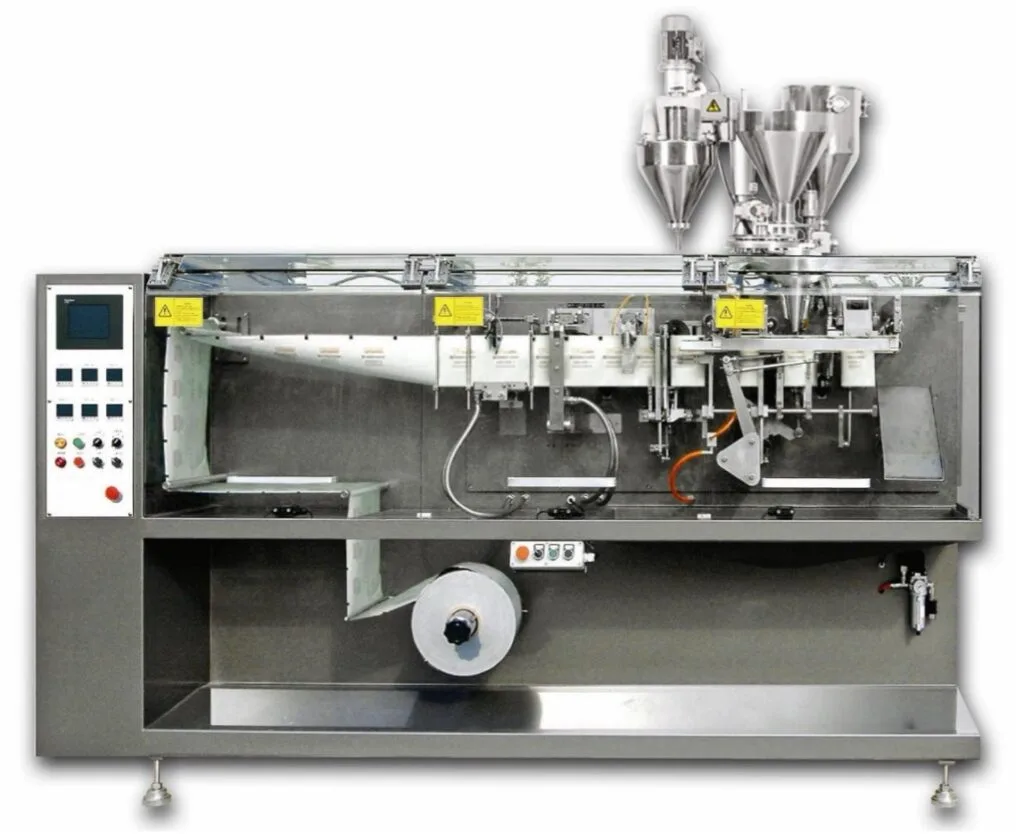
HFFS Packaging for Dry Foods (Horizontal Form Fill Seal Packaging for Dry Foods) is one of the most widely used automated packaging methods in the food manufacturing industry. It is designed to form, fill, and seal products in a continuous horizontal process, making it ideal for high-volume production environments.
In today’s competitive food market, manufacturers need packaging solutions that are fast, cost-effective, hygienic, and scalable. This is exactly where HFFS systems excel, especially when handling dry food products such as rice, pasta, cereals, snacks, sugar, coffee, and powdered goods.
This article explores how HFFS Packaging for Dry Foods works, its benefits, applications, and why it is becoming the preferred choice for modern food production facilities, particularly in South Africa and other growing markets.
HFFS Packaging for Dry Foods is an automated packaging process where a flat roll of film is formed into a pouch horizontally, filled with dry food products, and then sealed—all in one continuous motion.
The system typically consists of three main stages:
This process is highly efficient and reduces the need for manual labor, making it ideal for large-scale production facilities.
One of the biggest advantages of HFFS Packaging for Dry Foods is speed. These machines can produce hundreds of packs per minute depending on the product and machine configuration. This helps manufacturers meet high demand without compromising consistency.
Because the process is highly automated, there is minimal human contact with the product. This significantly reduces contamination risks, which is critical for food safety compliance.
While initial investment in HFFS machinery can be high, long-term operational costs are lower due to reduced labor requirements, lower waste, and improved material efficiency.
HFFS systems can handle a wide range of packaging styles such as pillow packs, gusseted bags, and block-bottom pouches. This flexibility is especially useful for brands that offer multiple product lines.
Modern machines are designed to optimize film usage, reducing excess material waste and contributing to more sustainable production practices.
HFFS Packaging for Dry Foods is widely used across various industries, including:
This versatility makes HFFS systems a strong investment for food manufacturers looking to diversify their product offerings.
Modern consumers demand convenience, freshness, and quality assurance. At the same time, manufacturers need to maintain efficiency and reduce operational costs.
HFFS Packaging for Dry Foods supports both sides by:
For South African manufacturers especially, where production scalability and cost control are key, HFFS systems provide a strong competitive advantage.
While HFFS systems offer many benefits, there are a few considerations:
However, these challenges are typically offset by long-term efficiency gains.
The future of HFFS Packaging for Dry Foods is closely linked to automation, sustainability, and smart manufacturing.
Trends include:
As the industry evolves, HFFS systems will continue to play a critical role in modern food manufacturing facilities.
Looking to upgrade your packaging line with reliable and efficient solutions?
Get in touch with our team today to learn more about HFFS Packaging for Dry Foods systems and how they can improve your production efficiency.
We can help you choose the right machinery for your production needs and budget.
HFFS stands for Horizontal Form Fill Seal, a packaging process where products are formed, filled, and sealed in a horizontal flow.
Products such as rice, pasta, snacks, sugar, flour, coffee, and pet food can all be packaged using HFFS systems.
Yes, it reduces labor costs, improves speed, and minimizes material waste, making it highly cost-effective in the long term.
HFFS operates horizontally and is ideal for stable or fragile products, while VFFS (Vertical Form Fill Seal) is better for free-flowing products like grains and powders.
It is more commonly used in medium to large-scale production, but smaller automated systems are available depending on production needs.