In today’s fast-paced manufacturing and packaging environment, efficiency and consistency are non-negotiable. For businesses packaging food, pharmaceuticals, chemicals, coffee and snacks, adopting automated packaging technology is one of the most transformative decisions you can make. Vertical Form-Fill-Seal machine stands out as a highly versatile and reliable solution for modern packaging lines — delivering speed, accuracy, minimal waste, and improved shelf life.
Our vertical form-fill-seal packaging machines cover various applications and can be customised according to your production needs. All individual unwinder, pouch former, and dosing-sealing modules that comprise our vertical form-fill-seal packaging machinery are available in different versions based on your production requirements.
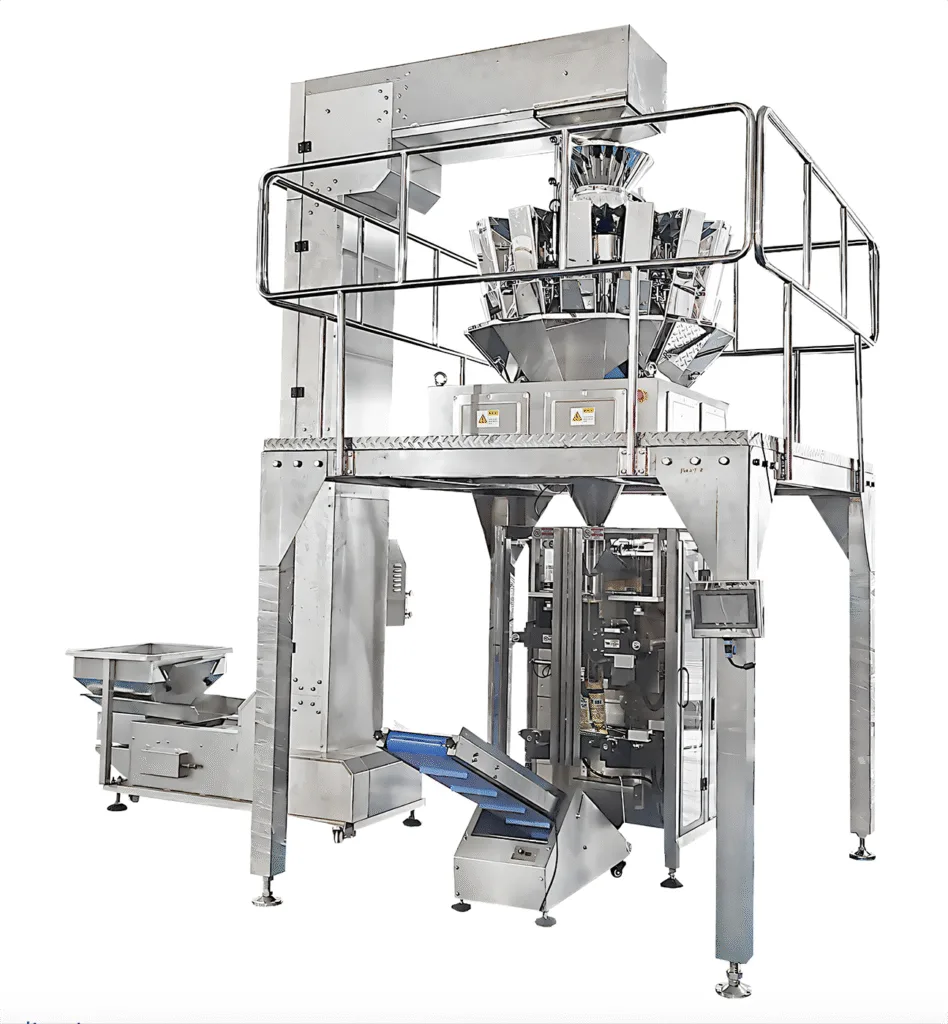
These packaging machines are well-suited to pharmaceutical, confectionery, coffee, dairy, individually quick frozen, and chemical industries for the packaging of various kinds of leavened foodstuff, candies and snacks like peanuts and seeds, dried meats, pet food and treats, coffee, starch, other ground powder products, meat and poultry, etc.
These packaging machines feed a reel of polyethylene terephthalate (PET)/ polyethylene (PE), biaxially-oriented polypropylene (BOPP), or laminated packaging film over a forming tube to set the bag width for forming the film into the desired packaging size. Next, the bottom and vertical seals are applied where the two edges of the film meet. Finally, the bag length is automatically controlled through the machine’s programming, either by printed eye mark or set repeat length.
Since the vertical form-fill-seal machines are synchronised to an auger, multi-head scale, or volumetric filler, dosing and filling are done automatically once a bag is available. Sensors relay when a bag is filled accurately before the top seal is applied and the bag is cut away. Depending on each package’s function, additional batch/expiration dates, tear notches, or hole punches may be applied.
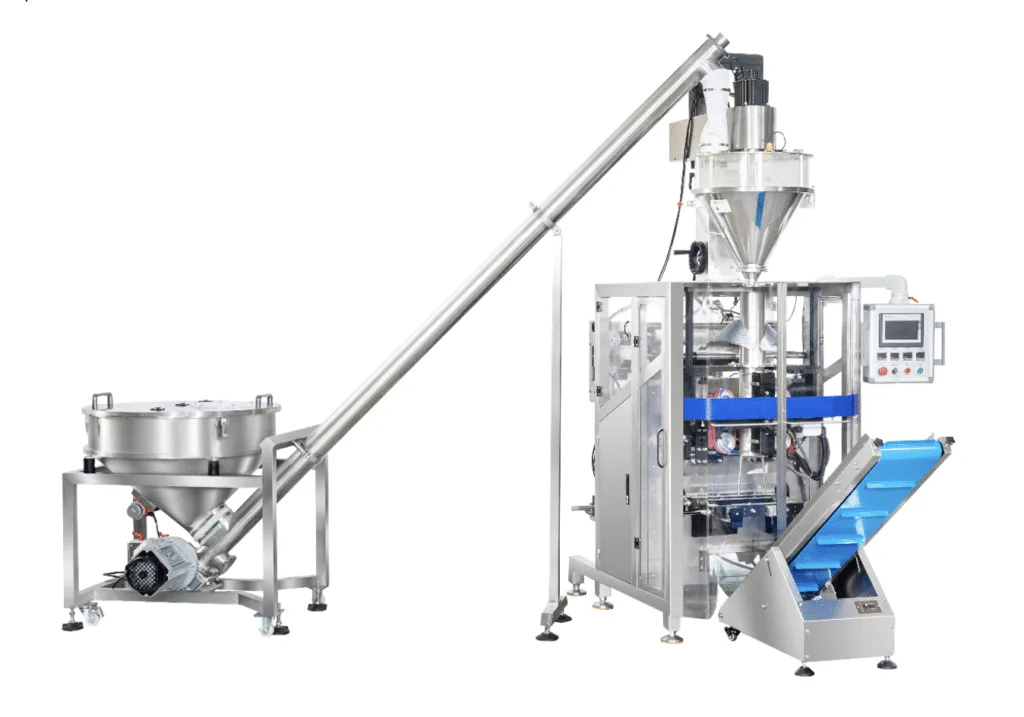
A Vertical Form Fill Seal (VFFS) machine is an automated packaging system that forms bags from roll stock film, fills them with product, and seals them — all in one continuous vertical process. It is widely used for packaging powders, granules, liquids, and solid products efficiently at high speeds.
VFFS machines are highly versatile and can package:
Powders (flour, spices, protein powder, detergent)
Granules (sugar, rice, seeds)
Snacks and confectionery
Coffee and tea
Liquids and sauces
Pharmaceutical powders
Agricultural products
The correct filling system (auger, multi-head weigher, volumetric cup, or liquid pump) is selected based on your product type.
VFFS machines can produce a variety of bag styles, including:
Pillow bags
Gusseted bags
Quad seal bags
Sachets
Stick packs (depending on configuration)
Optional features such as tear notches, euro slots, and date coding can also be integrated.
Production speed depends on:
Product type
Bag size
Filling system
Machine configuration
Entry-level machines typically produce 20–60 bags per minute, while high-speed systems can exceed 100 bags per minute. We assess your production targets before recommending a solution.
Yes. VFFS machinery is scalable. Many businesses start with a semi-automatic or mid-range system and upgrade as demand increases. Investing early in automation can significantly reduce labor costs and improve consistency.
Accuracy depends on the selected dosing system:
Auger fillers – ideal for powders
Multi-head weighers – extremely accurate for snacks and irregular products
Volumetric cup fillers – cost-effective for granules
Liquid pumps – precise liquid dosing
Modern VFFS systems offer high fill accuracy, reducing product giveaway and material waste.
VFFS machines typically support:
Laminated films
PET/PE
BOPP
Metallized films
Food-grade films
We help determine the best film structure based on your product, shelf-life requirements, and budget.
Vertical Form Fill Seal machines:
Automate forming, filling, and sealing
Reduce labor dependency
Increase production speed
Improve seal consistency
Minimize material waste
Reduce product contamination risks
This leads to faster ROI and improved operational efficiency.
VFFS machines are widely used in:
Food and beverage manufacturing
Pharmaceutical production
Chemical and detergent manufacturing
Agricultural packaging
Cosmetic packaging
They are particularly popular in high-volume FMCG production environments.
Routine maintenance includes:
Regular cleaning (especially in food applications)
Seal bar inspection
Film tracking calibration
Lubrication of moving parts
Electrical and PLC checks
Preventative maintenance extends machine lifespan and ensures consistent performance.