Machine Overview
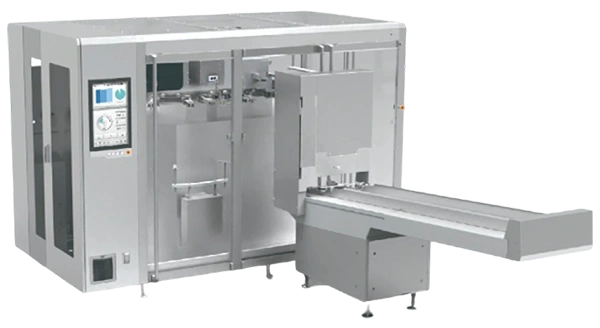
| Machine type | Horizontal fill-seal (premade pouch) |
| Products | Powders, granules, liquids, pastes, solids and frozen pieces |
| Output | 30–100 packs/min depending on product, pouch and dosing |
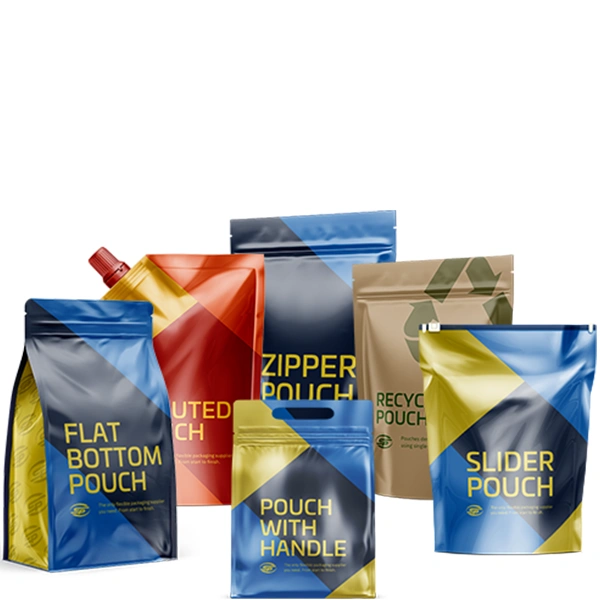
| Pouch formats | Stand-up doypack, zipper, spout, 3- and 4-side seal, flat-bottom (8-side seal), shaped |
| Filling systems | Auger, multihead weigher, volumetric cup, piston or pump |
| Sealing | Heat seal with nitrogen flush, zipper and spout options |
| Controls | Full servo drives, touchscreen PLC |
| Options | Date and batch coding, checkweigher, metal detection, cartoning and case-packing integration |
Configurations
A horizontal fill-seal machine is specified by how it handles the pouch and how it doses the product. The pouch is opened, filled and sealed in stations around a rotary table or along a linear track; the dosing unit is chosen for the product and bolted on above the fill station. The four building blocks below combine into the machine that suits your pouch and product.

01
Pouches are picked from a magazine and carried by grippers around a rotary table through opening, filling, settling, gas-flush and sealing stations. The most compact and common HFS layout, and the one to choose for stand-up and zipper pouches at medium speeds.
Best for
•Stand-up doypacks and zipper pouches
•Coffee, snacks, pet food, powders
•Frequent changeovers between SKUs
Benefits
Small footprint
Fast pouch-size changeover
Handles zippers and spouts
02
Pouches travel in a straight line between stations, which suits large or heavy bags, dual-lane output and integration with denesters, conveyors and check-weighing.
Best for
•Large flat-bottom and 3/4-side seal bags
•Frozen food and bulk products
•Higher-speed integrated lines
Benefits
Handles bigger, heavier bags
Dual-lane options
Straightforward line integration
03
The doser is matched to the product: auger for powders, multihead weigher for snacks, granules and frozen pieces, volumetric cup for free-flowing grains, and piston or pump for sauces, oils and gels.
Best for
•Auger: flour, spices, protein powder
•Weigher: nuts, treats, frozen fruit
•Pump: sauces, purees, liquids
Benefits
One frame, any product
Accurate fill weights, low giveaway
Checkweigher feedback available

04
Zipper-opening stations, spout insertion, nitrogen flushing before the seal, vacuum settling for powders, and date or batch coding at discharge extend the machine to premium and long-shelf-life packs.
Best for
•Resealable retail packs
•Oxygen-sensitive products
•Liquids in spouted pouches
Benefits
Retail-ready closures
Longer shelf life
Coding and inspection built in
Pouch formats
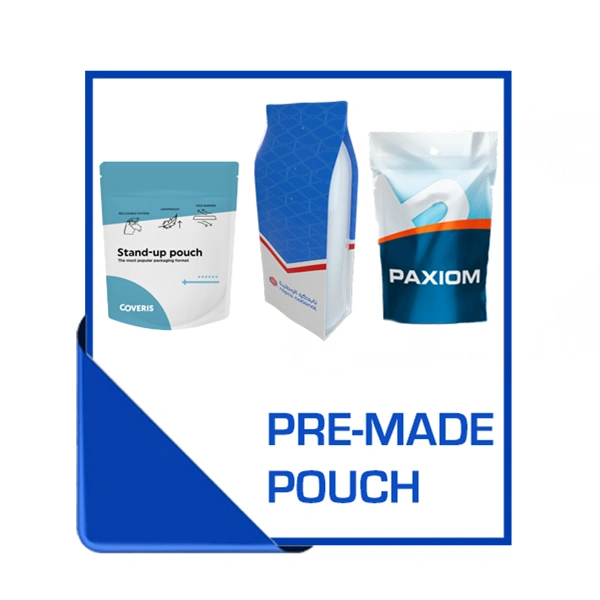
Because the pouch is made before it reaches the machine, an HFS system runs almost any premade format from the same frame. These are the four we fill most.
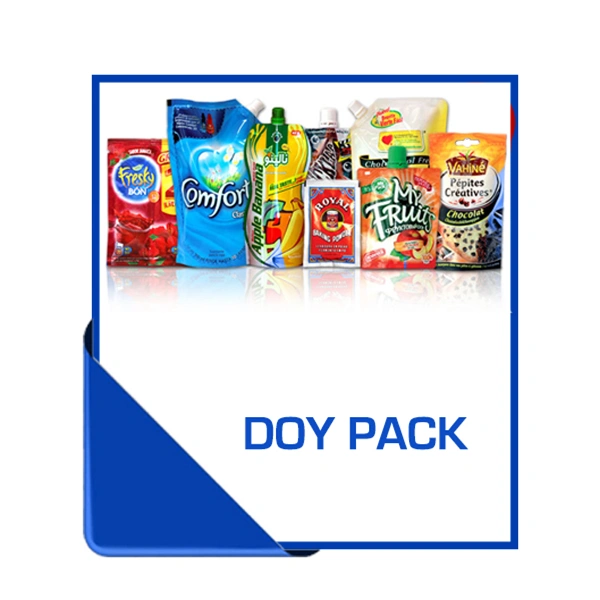
The retail standard: a gusseted base so the pack stands on the shelf, with or without a zipper. Used for baby food, sauces, beverage powders, spices, cleaning and cosmetic products.
Shelf-standing presentation
Zipper and spout compatible
Powders, granules and liquids
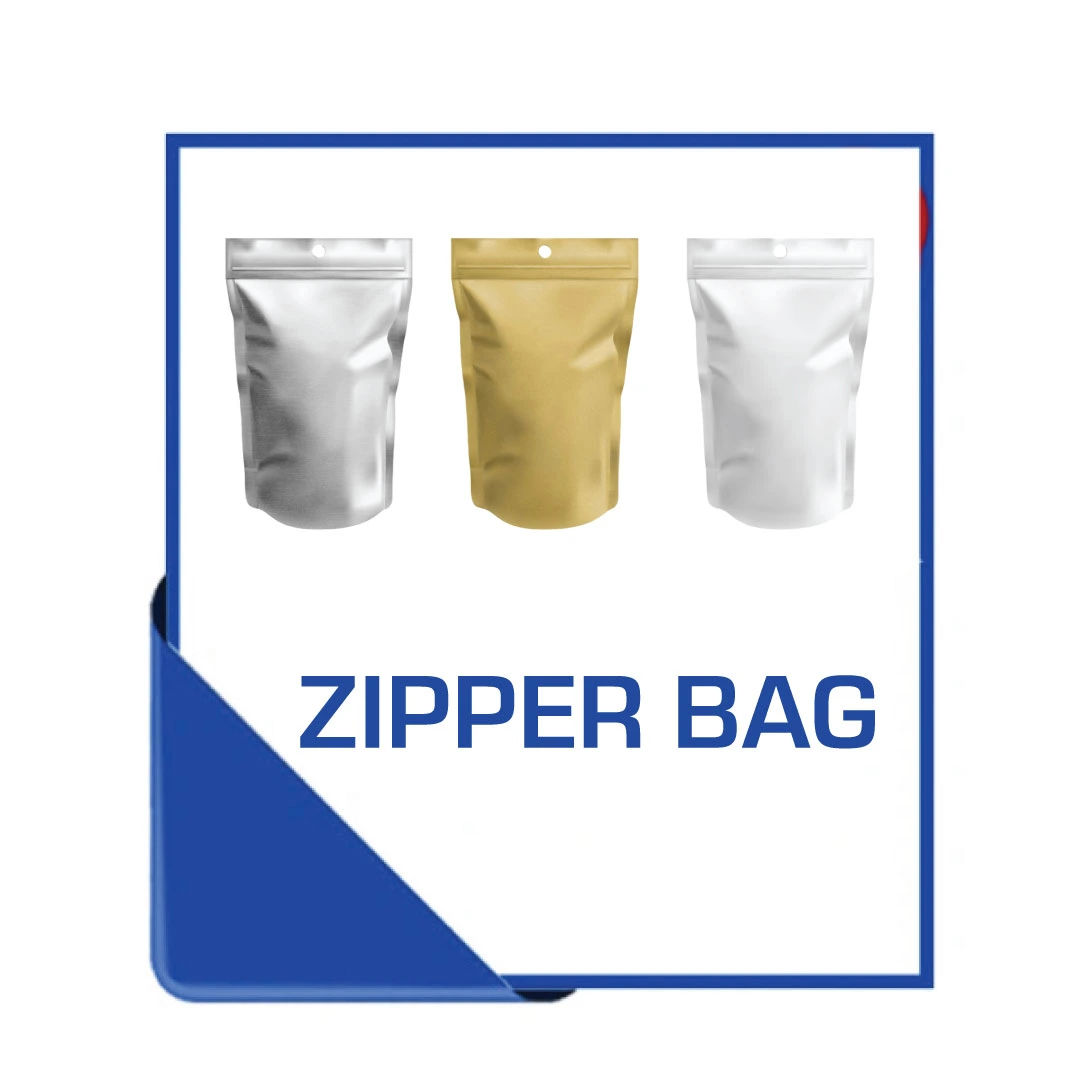
Resealable packs for products used over several servings: nuts, dried fruit, granola, coffee beans, supplements, pet treats and snacks. The machine opens the zipper before filling and seals above it.
Resealable convenience
Flat or stand-up base
Clean seal above the zipper
A fitted spout for pouring or squeezing: juices, purees, sauces, oils, gels and liquid cleaning products. Filled through the spout or the top, then capped.
Liquids and semi-liquids
Pour or squeeze dispensing
Capping in line
Flat-bottom (8-side seal) bags for premium coffee and pet food, and 3- or 4-side seal bags for frozen food, snacks and bulk packs where a simple, strong seal matters more than shelf presence.
Premium and bulk formats
Frozen and washdown applications
Large fill weights
Applications
Premade pouch products. Anything sold in a branded, preformed pouch:
Coffee and tea
Protein and beverage powders
Pet food
Sauces and condiments
Snacks and confectionery
Pharmaceutical and cosmetic products
Zipper pouch products. Multi-serving packs that need resealing:
Nuts and dried fruit
Frozen foods
Granola and cereals
Coffee beans
Health supplements
Pet treats and snack foods
Stand-up pouch products. Shelf-standing doypacks with or without spouts:
Baby food
Sauces and soups
Beverage powders
Cleaning products
Cosmetics
Spices, seasonings and liquids
The guides below cover the applications and buying questions we are asked about most for premade pouch machines.
Buying guides: when a premade bag machine is the right choice · horizontal fill-seal packaging explained · VFFS vs premade bag machines
Pouch machines: pouch packaging machines, every machine in the range that forms or fills pouches
Pouches and bags: premade pouches explained · the rise of premade bags
For every machine in the range that fills liquid, and how the filler is matched to thin, foamy, hot or viscous products, see liquid filling machines.
Specifications
The HFS machine is a full-servo system built for premade bags: zipper, 3-side seal, 4-side seal, stand-up and flat-bottom formats, in food-grade stainless steel with washdown protection for frozen and high-humidity products. Because the pouch is preformed, the specification is driven by pouch size range, product and dosing rather than by film.
Sizing the machine. Bring the largest and smallest pouch you intend to run, the fill weight range and the target packs per minute. Pouch width sets the gripper spacing and station size; fill weight and product form set the doser; speed sets rotary versus linear and single versus dual lane.
Every configuration can be supplied with zipper opening, spout handling, nitrogen flushing, date or batch coding, checkweigher and metal-detection integration, and conveyors into cartoning or case packing.
Output depends on product and pouch: free-flowing granules on a rotary machine run near the top of the range; liquids, large bags and zipper opening bring it down. Confirm real speeds on a trial with your product.
| Machine model | SAP-180 | SAP-180D | SAP-180Z | SAP-180C | SAP-180XC | SAP-180B | SAP-180DB | Auger fill-seal, pre-made bags (supplied) |
|---|---|---|---|---|---|---|---|---|
| Bag type | Premade bag | Premade bag | Zipper premade bag | Spout premade bag | Corner-spout premade bag | Special-shaped premade bag | Special-shaped premade bag | Stand-up, zipper, 3- and 4-side seal, paper and laminated bags |
| Pouch size (mm) | Min. 60×80 Max. 180×300 | Min. 60×120 Max. 85×225 | Min. 60×120 Max. 180×310 | Min. 60×120 Max. 160×300 | Min. 110×170 Max. 180×300 | Min. 60×120 Max. 180×300 | Min. 60×120 Max. 85×225 | Min. 60×100 Max. 160×220 |
| Filling capacity | 1500 ml | 120 ml | 1500 ml | 1100 ml | 1200 ml | 1200 ml | 120 ml | 100–800 g (auger) |
| Packaging capacity | 30–50 ppm | 70–100 ppm | 30–60 ppm | 30–50 ppm | 30–40 ppm | 30–50 ppm | 70–100 ppm | Rated 15–30 bags/min |
| Power | 2.8 kW | 2.8 kW | 2.8 kW | 4.1 kW | 4.5 kW | 2.8 kW | 2.8 kW | 2.5 kW |
| Air consumption | 200 NL/min | 200 NL/min | 200 NL/min | 400 NL/min | 400 NL/min | 200 NL/min | 300 NL/min | 0.7 m³/min |
| Machine dimensions (L×W×H) | 2500×1000×1400 mm | 2100×1000×1400 mm | 2400×1000×1400 mm | 2400×1000×1400 mm | 4100×1000×1400 mm | 2500×1000×1400 mm | 2100×1000×1400 mm | 1600×1250×1300 mm |
| Weight | 700 kg | 650 kg | 700 kg | 700 kg | 1300 kg | 700 kg | 650 kg | 650 kg |
Pouch size and filling capacity are the machine maximums; the achievable fill weight depends on your product bulk density. CE and other industry certifications are available on request.
| Parameter | Specification |
|---|---|
| Pouch formats | Stand-up doypack, zipper, spout, 3-side seal, 4-side seal, flat-bottom (8-side seal), shaped pouches |
| Products | Powders, granules, liquids, pastes, solids, frozen pieces |
| Output | 30–100 packs/min depending on product, pouch size and dosing |
| Layout | Rotary (compact, quick changeover) or linear (large bags, dual lane) |
| Filling systems | Auger, multihead weigher, volumetric cup, piston filler, pump |
| Sealing | Heat seal; ultrasonic or induction sealing depending on material |
| Construction | Stainless steel, food-grade contact parts, high IP rating for washdown |
| Controls | Full servo drives, touchscreen PLC, recipe memory |
| Utilities | 380–415 V three-phase; compressed air for pneumatic functions |
| Integration | Infeed and outfeed conveyors, denesters, checkweighers, metal detectors, cartoning and case packing |
Pouch size range, fill weight range and rated speed are confirmed per configuration on the quotation and proven on a product trial.
Not sure whether a premade pouch machine or a form-fill-seal machine is the better fit? Read when a premade bag machine is the right choice, then send us your pouch and product for a trial.
The auger fill-seal column is a machine we have supplied for powder in pre-made bags of 100 g to 800 g, to within 1%, with zipper opening and a no-bag, no-fill check; see the bagging machines page. About our modelModel codes shown are machines we have built or configured for previous projects. Your machine is specified and built to suit your product, output and pack format — not supplied off the shelf.
ABOUT THE MACHINE
A horizontal fill-seal machine takes a pouch that has already been made — a stand-up doypack, zipper bag, spout pouch or flat-bottom bag — opens it, fills it with a dosed product and seals it, all in a horizontal path through the machine. Because the pouch arrives finished, the machine does no forming: its job is handling, dosing and a clean seal, which is why it can run premium and complex formats that form-fill-seal machines cannot.
Also known as
The fill-seal cycle runs in six stations:
Servo drives index the grippers and time each station, and the PLC holds a recipe per pouch and product.
Downstream the machine feeds a checkweigher, metal detector, conveyor or cartoner.
Read the full explanation in horizontal fill-seal packaging explained.

HFS machines pack liquids, powders, granules, solids and frozen pieces into premade pouches: the dosing unit changes, the pouch handling stays the same.
Typical products are coffee, protein powders, pet food and treats, sauces, snacks, frozen fruit and vegetables, spices, supplements and cosmetic or pharmaceutical products.
Case Studies
A frozen-fruit line under evaluation, a granule-sweets machine proven on trial, plus the buyer’s guide we send to anyone comparing HFS machines.
“Highly recommended! Excellent customer service, great prices, and they always go above and beyond.”
Ratings and reviews are published on our Google Business Profile, where they can be read in full and in context.
PackMan purchased an Automatic 6-Lane, 4-Side Seal Vinegar Packaging Machine, and it has been performing reliably since installation. The machine delivers consistent packaging quality, operates efficiently, and has met our production expectations.

SA Packaging Machinery delivered a solution that has met our expectations. The equipment has been reliable in daily production, and we’re pleased with its performance. We found the team knowledgeable, professional, and willing to assist whenever required.
We’ve been very happy with the equipment supplied by SA Packaging Machinery. It’s straightforward to use, performs consistently, and has helped us improve our production process. The team was easy to work with and made the entire experience smooth.
Comparison
Both machines fill horizontally, but they start from different packaging. An HFS machine fills a pouch that was made elsewhere; an HFFS machine makes the pouch from roll film, then fills it. That one difference decides format flexibility, cost per pack, changeover time and speed.
| Horizontal fill-seal (HFS) | Horizontal form-fill-seal (HFFS) | |
|---|---|---|
|  | |
| Packaging input | Premade pouches (finished bags) | Flat roll film |
| Formats | Any premade format: doypack, zipper, spout, flat-bottom, shaped | Formats the machine can form: doypack, zipper, 3/4-side seal |
| Cost per pack | Higher: premade pouches cost more than film | Lower: rollstock is the cheapest material |
| Changeover | Fast: change pouch size and recipe | Slower: forming tooling and film change |
| Speed | 30–100 packs/min | Higher on standardised formats |
| Best for | Premium retail packs, many SKUs, short to medium runs | High-volume standard pouches, lowest cost per pack |
If the pouch itself is part of the product’s appeal, or you run many SKUs, choose HFS. If you run one or two formats at volume, choose HFFS. Our HFFS vs sachet machine comparison and VFFS vs premade bag comparison go further.
The decision behind HFS versus form-fill-seal is really premade bags versus film roll. Premade bags give presentation and flexibility; film roll gives speed and the lowest material cost.
| Premade bags (fill-seal) | Film roll (form-fill-seal) | |
|---|---|---|
| | |
| How the pack is made | Manufactured by a converter, delivered finished | Formed on the machine from a roll |
| Presentation | Premium: printed, shaped, zippers, spouts, flat bottoms | Standard pouch shapes |
| Material cost | Higher per pack | Lower per pack |
| Changeover | Load a different pouch, select the recipe | Change forming set and film |
| Volume | Short to medium runs, many SKUs | Long runs, few SKUs |
Rule of thumb: premade bags when the pack sells the product; film roll when the price per pack sells the product.
Within HFS, the second choice is the machine layout.
| Rotary | Linear | |
|---|---|---|
| | |
| Pouch sizes | Small to medium | Medium to large and heavy |
| Footprint | Compact | Longer |
| Changeover | Fastest | Fast |
| Speed | Medium | Medium to high; dual lane possible |
| Typical use | Coffee, snacks, pet treats, powders in doypacks | Frozen food, bulk bags, integrated lines |
Rule of thumb: rotary for most stand-up and zipper pouches; linear when the bag is big, heavy or the line is fully automated.
Advantages
An HFS machine is the way to fill premium pouches — doypacks with zippers, spouted pouches, flat-bottom bags and shaped packs — that no form-fill-seal machine can make. It runs any premade format from one frame, changes over between pouch sizes in minutes, handles fragile and frozen products gently, and lets a smaller producer launch retail-ready packaging without committing to a print run of film. When the pouch is part of how the product sells, this is the machine that fills it.
Machines for food and pharmaceutical lines are built in stainless steel with washdown protection and can be specified to HACCP and GMP requirements. The HFS is also the only one of the three horizontal machines we supply that can fill flat-bottom (8-side seal) pouches — a format VFFS and HFFS machines cannot form from film — which is why brands moving to a premium stand-up pack usually land on an HFS machine.
Quotation
Every horizontal fill-seal machine is quoted to your configuration, so the quotation is built from the pouch and product you send us rather than from a list price. To narrow the specification before you enquire, read when a premade bag machine is the right choice; for what shapes the figure on any machine quotation, see the packaging machine cost guide. Send us your pouches and product and we will trial-fill them and quote the configuration that suits them.
Why us
Every horizontal fill-seal machine we supply is installed and commissioned on your floor by our own technicians, with operator training on your product, a spare-parts holding in Johannesburg and remote technical support once the line is running.
Installation and commissioning.
We position the HFS machine, connect it to your 380–415 V three-phase supply and compressed air, run it in with your own pouches and product, and hand it over once it is holding fill weight and seal quality.
Operator training.
Your operators and maintenance staff are trained on the HFS machine: pouch loading and magazine setup, recipe changes, zipper and spout settings, seal temperature, daily cleaning and the wear items worth keeping on the shelf.
Service, spares and support.
Spares for the horizontal fill-seal range are held in Johannesburg, with service across South Africa and into neighbouring SADC markets, and remote support on the PLC for faults that can be diagnosed without a site visit. Routine care is set out in our packaging machine maintenance guide.
Choosing the right horizontal fill-seal configuration comes down to five things:
You might also like
SA Packaging Machinery supplies horizontal fill-seal machines across South Africa and Southern Africa. Send us your pouches, product and target output and we will trial-fill them, recommend the configuration, and quote it.
Questions
Powders, granules, liquids, pastes, solid pieces and frozen products: coffee, protein powders, pet food and treats, sauces, snacks, frozen fruit, spices, supplements, cosmetics and pharmaceutical products. The dosing unit is matched to the product; the pouch handling is the same for all of them.
An HFS machine fills any premade pouch: stand-up doypacks, zipper pouches, spout pouches, 3-side and 4-side seal bags, flat-bottom (8-side seal) bags and shaped pouches. Because the pouch is manufactured by a converter and loaded into the machine magazine, changing format is a matter of loading a different pouch and selecting the recipe.
Typically 30 to 100 packs per minute. Free-flowing granules in medium pouches on a rotary machine run near the top of the range; liquids, large bags and zipper opening reduce it. Real speed is confirmed on a trial with your product and pouch.
Yes. With a piston filler, peristaltic or servo pump it fills sauces, purees, oils, gels, creams and other viscous products accurately, including into spouted pouches.
Heat sealing is standard; ultrasonic and induction sealing are fitted where the pouch material or product demands it. Nitrogen flushing before sealing extends shelf life for oxygen-sensitive products.
Yes. It connects to infeed and outfeed conveyors, tray denesters, checkweighers, metal detectors and cartoning or case-packing systems, and needs a 380–415 V three-phase supply and compressed air.
Routine care: clean the filling and sealing components daily, inspect seals, grippers and sensors weekly, lubricate moving parts and replace wear items such as seal jaw covers as they age. The general schedule is in our packaging machine maintenance guide; an HFS-specific guide is in preparation.
An HFS machine fills and seals pouches that are already made; an HFFS machine forms the pouch from roll film first. HFS gives more format flexibility and faster changeover at a higher cost per pack; HFFS gives lower cost per pack and higher speed on standard formats.