Gummy candies have become a popular product in both the pharmaceutical and confectionery industries. Originally designed for medicinal gummies, modern gummy production lines can also be adapted for general candy production, offering a versatile and efficient manufacturing solution. These systems streamline the entire process, from mixing ingredients to packaging the final product, ensuring consistency, quality, and efficiency at every stage.
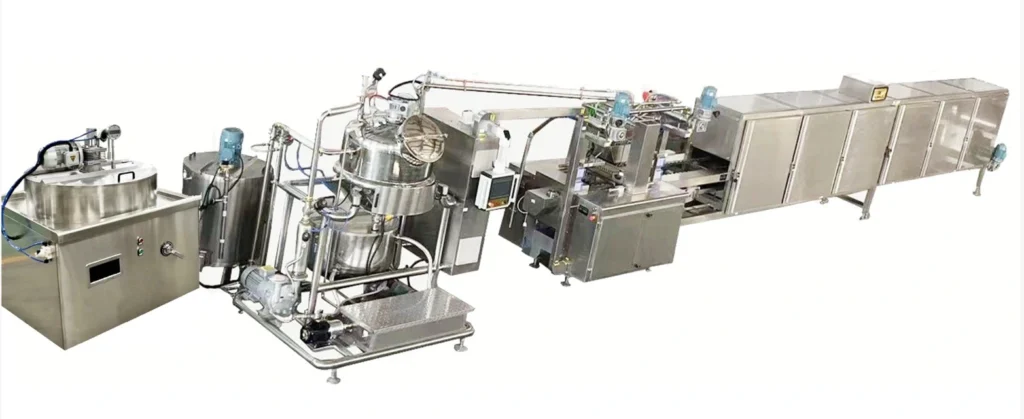
The gummy production line consists of several machines that work together seamlessly to produce high-quality gummies. The process involves heating, depositing, cooling, demoulding, coating, and packaging, all in a controlled and automated manner.
The production process begins with electric heating and melting pots, where ingredients such as gelatin, sugar, water, and active ingredients (for medicinal gummies) are mixed and heated. This ensures the ingredients are evenly distributed and achieve the proper consistency for depositing.
Once the mixture is prepared, it is transferred to a Depositing Machine, where it is precisely dispensed into moulds. This step ensures uniformity in shape, weight, and dosage (in the case of medicinal gummies). Advanced gummy depositing machines allow for high-speed production while maintaining accuracy.
After being deposited, the filled moulds are transferred into a cooling tunnel. This step is crucial, as it allows the gummies to set properly, ensuring the correct texture and firmness before demoulding.
Once the gummies are fully set, they are automatically demoulded and sent for coating. Some gummies undergo a sugar granule coating process, where they pass through a Sugar Granule Coated Mixer to enhance their taste, texture, and appearance.
Gummies can be packaged in various ways, depending on the final product requirements. For bottled gummies, a Multihead Weigher ensures the correct quantity of gummies is dispensed into each bottle before they are moved to a Capping Machine for automatic capping. For bagged gummies, the gummies can be weighed and packed using form-fill-seal machines or premade bagging machines.
While gummy production lines were initially designed for medicinal gummies—such as vitamin gummies or CBD-infused gummies—their versatility allows them to be used for various applications, including:
With increasing demand for functional foods and nutraceuticals, gummy production is evolving rapidly. Companies are adopting fully automated production lines to meet the growing need for high-quality, precisely dosed, and efficiently packaged gummies. By investing in modern gummy production technology, manufacturers can enhance product consistency, increase output, and reduce production costs.
The gummy production line is an essential system for manufacturers looking to produce gummies efficiently and at scale. Whether for medicinal applications or confectionery purposes, these systems ensure high-speed production, consistency, and superior quality control. Investing in a fully automated gummy production system allows manufacturers to diversify their product offerings and meet the growing market demand for gummies across multiple industries. Contact us today to discuss how our gummy production solutions can optimize your manufacturing process and help you achieve higher efficiency, quality, and output.
A gummy production line is an integrated set of machines designed to produce gummy sweets from raw ingredients through to finished product packaging. It typically includes cooking, dosing, moulding, cooling, demoulding, and packaging systems.
A complete gummy production line usually consists of:
Mixing & cooking kettles – prepare the gummy base
Dosers & depositors – portion the mixture into moulds
Moulding machines – shape gummies
Cooling tunnels – solidify the candies
Demoulding machines – release gummies from trays
Sugar coating systems (optional) – for coated varieties
Packaging machines – bagging, cartoning, flow wrapping, etc.
Gummy lines can produce a wide range of products including:
Traditional gummy bears and worms
Fruit-shaped or vitamin gummies
Sugar-coated or non-sugar variants
Functional or nutraceutical gummies
Gelatin or vegan pectin gummies
Benefits include:
Consistent product quality
Higher output and throughput
Reduced labour costs
Improved hygiene and sanitation
Precise portioning and weight control
Automation also reduces human error and increases scalability.
In the moulding stage, heated gummy mixture is dosed or deposited into mould trays that define the shape of each piece. These trays are then cooled so the gummies set and can be demoulded for further processing or packaging.
Yes. Mould trays can be customised to produce a wide variety of shapes, sizes, and designs — from classic bears to branded or seasonal shapes.
Gummies can be packaged using:
Flow wrapping machines for individual or multi-pack wraps
Form-Fill-Seal (FFS) machines for sachets or pouches
Cartoning machines for boxes
Vacuum or modified atmosphere packaging for extended shelf life
The best option depends on volume, retail format, and brand requirements.
Hygiene is critical. Equipment is typically made from food-grade stainless steel and designed for easy cleaning to meet food safety standards. Proper cleaning reduces contamination risk and ensures product quality.
Routine maintenance includes:
Cleaning kettles, pipes and mould surfaces
Inspecting belts and conveyors
Checking dosing mechanisms for accuracy
Servicing cooling and demoulding systems
Scheduled servicing helps maintain consistent output and reduces downtime.
Yes. Gummy production lines can be configured modularly, allowing you to upgrade individual components — such as higher-speed depositors, additional cooling capacity, or advanced packaging machines — as your production needs increase.
Yes. Smaller, semi-automatic gummy production lines are available for startup or artisanal producers. These allow lower investment while still delivering consistent quality.
Considerations include:
Desired output volume
Type of gummy (gelatin vs pectin)
Shapes and sizes required
Packaging format
Available floor space and budget
Consulting a packaging line specialist helps match the right configuration to your business goals.