As industries evolve, the future of packaging automation continues to advance, revolutionizing production lines across various sectors. Emerging technologies are improving efficiency, precision, and sustainability, making packaging machines smarter and more adaptable. Here’s what the future holds for packaging automation.
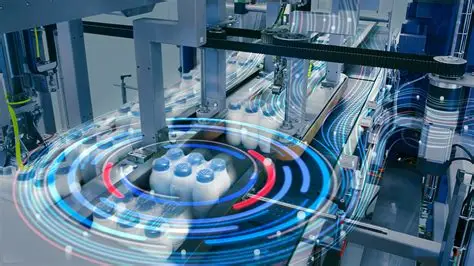
Artificial intelligence (AI) and the Internet of Things (IoT) are transforming packaging automation by enabling real-time monitoring, predictive maintenance, and data-driven optimizations. These advancements allow machines to:
Robotic systems and collaborative robots (cobots) are streamlining packaging processes by increasing speed and accuracy while working alongside human operators. These robots can:
With growing environmental concerns, the future of packaging automation is shifting towards sustainable solutions. Machines are being designed to:
Modern consumers demand personalized and unique packaging, pushing automation towards highly flexible and adaptable systems. Future machines will:
Next-generation packaging machines will feature enhanced vision systems to ensure product quality and compliance. These systems will:
Future packaging automation will be seamlessly connected to smart supply chains, enhancing logistics and inventory management. Expect to see:
3D printing is emerging as a game-changer in packaging design and prototyping. It enables:
The future of packaging automation is bright, driven by AI, robotics, sustainability, and smart technology. Businesses that invest in these innovations will benefit from greater efficiency, reduced waste, and enhanced product quality. Staying ahead of these trends will be essential for companies looking to remain competitive in the evolving market.
Interested in upgrading your packaging process? Contact us today to explore the latest automation solutions!
Packaging automation refers to the use of automated machinery and systems to perform packaging tasks — such as filling, sealing, labelling, case packing, and inspection — with minimal human intervention. It improves efficiency, accuracy, and consistency in production lines.
Packaging automation helps manufacturers:
Reduce labour costs
Increase throughput and output
Improve product quality and consistency
Minimise errors and waste
Enhance traceability and data collection
These benefits make automation essential for businesses aiming to scale and compete in global markets.
Emerging technologies like AI, robotics, machine vision, IoT sensors, and predictive maintenance are transforming packaging automation by:
Enabling real-time quality inspection
Forecasting machine failures before they happen
Improving line adaptability for product changeovers
Supporting flexible, data-driven production
Automation can be applied to numerous packaging processes, including:
Product filling (liquid, powder, granules)
Sealing and capping
Labelling and coding
Cartoning and case packing
Palletising
Quality inspection and vision systems
Each process can be integrated into a seamless automated line.
Automated packaging lines offer:
Higher production speeds
Greater consistency and accuracy
Lower labour dependency
Better quality control
Less downtime
Easier scaling for future growth
These benefits help businesses respond quickly to market demands.
Automation reduces human error and ensures repeatable performance. Machines can deliver:
Accurate fill levels
Tight and consistent seals
Legible labels and codes
Reliable inspection results
This delivers a professional appearance and minimizes recalls or returns.
While automation can reduce manual tasks, it also creates opportunities for higher-skilled roles in machine operation, maintenance, programming, and optimisation. Many companies use automation to reassign staff to quality control, line supervision, and technical roles, rather than reduce headcount.
Packaging automation is widely used in:
Food and beverage
Pharmaceuticals and healthcare
Cosmetics and personal care
Consumer goods
Chemical and industrial products
E-commerce fulfilment
Any industry with repetitive packaging tasks can benefit from automation.
Automated packaging systems can be integrated through:
Conveyors and feeders
Synchronised control software
Vision inspection and sensors
Centralised data systems
This enables a cohesive line that communicates machine status, product counts, fault detection, and performance metrics.
Industry 4.0 brings connectivity and intelligence to packaging systems. It enables:
Remote monitoring and control
Predictive maintenance
Data analytics for performance optimisation
Assistance with traceability and compliance
This helps manufacturers stay agile and efficient.
Automation helps build resilience by:
Reducing manual bottlenecks
Supporting scalable production
Enhancing traceability and quality reporting
Improving responsiveness to demand fluctuations
A well-configured automated line is less prone to disruption.
Start by:
Assessing current bottlenecks and inefficiencies
Defining production goals and KPIs
Choosing modular solutions that grow with your business
Consulting with automation experts for tailored solutions
Incremental automation often provides the best ROI.
Yes, automation requires investment, but the long-term ROI is often strong due to:
Labour cost savings
Productivity gains
Lower waste and rework
Enhanced product quality
Many businesses start with semi-automated systems and scale up over time.
The future of packaging automation is focused on:
Increased intelligence through AI and data analytics
Flexible, adaptive production lines
Smarter quality inspection
Autonomous maintenance and self-optimising systems
Packaging automation will continue to drive efficiency and competitiveness in manufacturing.