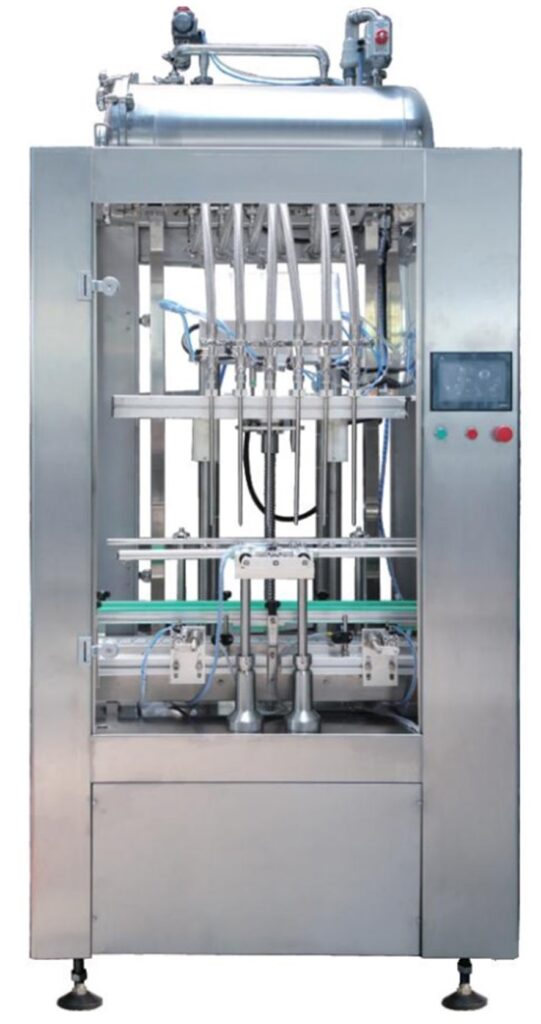
The cost of a bottling machine in South Africa can vary significantly depending on the level of automation, product type, and whether you need a standalone filler or a full bottling line (rinser, filler, capper, and labeler).
For most businesses, pricing typically ranges from entry-level semi-automatic systems to fully automated high-speed production lines designed for industrial output.
Understanding what drives cost is critical before requesting a quote, especially if you want to avoid overpaying or under-specifying your system.
The cost of a bottling machine depends on your production requirements. Because every business has different products, bottle sizes, production speeds, and automation requirements, there is no one-size-fits-all price.
The main factors that influence the final investment include:
The more tailored your production line is to your operation, the more accurate your quotation will be.
| Factor | Lower Investment | Higher Investment |
|---|---|---|
|
Automation |
Semi-automatic |
Fully automatic |
|
Production Speed |
Low volume |
High-volume production |
|
Filling Technology |
Basic liquid filling |
Precision or specialised filling |
|
Line Configuration |
Standalone filler |
Complete bottling line |
|
Material |
Standard construction |
Food-grade stainless steel |
|
Customisation |
Standard machine |
Bespoke production line |
A single filler is significantly cheaper than a full integrated bottling line.
The more stages you automate, the higher the investment—but also the higher the production efficiency.
Different products require different filling systems:
More advanced filling systems increase cost but reduce product waste and improve accuracy.
Speed is one of the biggest price drivers.
Higher speed = more motors, sensors, conveyors, and control systems.
Food, beverage, and pharmaceutical production often requires:
Higher-grade stainless steel increases upfront cost but improves hygiene, durability, and compliance.
Automation directly impacts pricing:
Fully automated lines cost more upfront but significantly reduce long-term operating costs.
While pricing varies, most South African manufacturers recover their investment through:
For many SMEs, ROI is achieved within 12–36 months, depending on production volume.
You should consider upgrading when:
Because every bottling application is different, pricing depends on factors such as automation, filling technology, production speed, and line configuration. Contact us for a customised quotation.
Yes. We design and quote complete bottling solutions based on your product, bottle size, production requirements, and available factory space.
Product type, bottle size, desired production speed, cap type, and whether you require rinsing, filling, capping, labelling, or coding equipment.
The biggest cost drivers are automation level, filling technology, speed, and line configuration.
Yes, most businesses see major savings in labour, time, and product wastage, resulting in strong ROI within a few years.
Yes. Most systems are built based on your product type, bottle size, and production requirements.
Bottling machine costs in South Africa vary widely, but the right system should always be chosen based on production goals—not just price.
A well-designed system improves efficiency, reduces labour dependency, and ensures consistent product quality at scale.
Looking for accurate pricing based on your product and production requirements?
Speak to a specialist to design a system tailored to your operation.
Request a Quote from SA Packaging Machinery