Understanding how HFFS machines work is essential for manufacturers looking to improve packaging efficiency, product protection, and production output. Horizontal Form Fill Seal (HFFS) machines automate the entire packaging process by forming a package from rollstock film, inserting the product, sealing the package, and discharging the finished pack—all within one continuous operation.
HFFS technology is widely used across industries such as food and beverage, pharmaceuticals, cosmetics, pet food, chemicals, and industrial manufacturing. By reducing manual handling and delivering consistent package quality, these machines help businesses improve productivity while maintaining high packaging standards.
Whether you’re exploring packaging automation for the first time or comparing different packaging solutions, understanding each stage of the HFFS process will help you determine whether this technology is the right fit for your production line.
In this guide, we’ll explain how HFFS machines work step by step, explore the key components involved, and highlight the types of products that benefit most from horizontal form fill seal packaging.
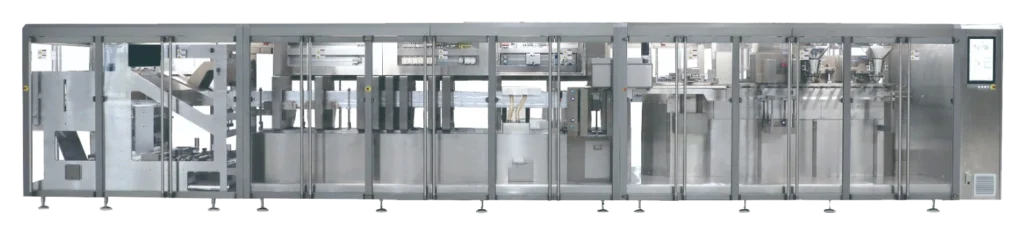
A Horizontal Form Fill Seal (HFFS) machine is an automated packaging system that creates flexible packages from a continuous roll of packaging film. Unlike pre-made pouch systems, HFFS equipment forms each package during production before filling and sealing it.
The process combines several packaging stages into one integrated machine:
Because these processes are synchronised through advanced servo motors, programmable logic controllers (PLCs), and precision sensors, HFFS machines can produce large volumes of consistently sealed packages with minimal manual intervention.
Modern HFFS machines can accommodate a wide variety of packaging materials, including laminated barrier films, recyclable mono-material films, polyethylene (PE), polypropylene (PP), and customised flexible packaging materials suited to specific industries.
The flexibility of HFFS technology makes it suitable for packaging products ranging from bakery goods and confectionery to medical devices, cosmetic sachets, frozen foods, hardware components, and pet food.
Although machine configurations vary depending on the product being packaged and the desired package style, the overall HFFS process follows the same sequence of operations.
Each package passes through six primary stages:
Each stage is carefully synchronised to ensure accurate product placement, reliable sealing, and consistent production speeds.
Let’s examine each stage in more detail.
Every HFFS packaging cycle begins with the packaging film.
A large roll of flexible packaging film, commonly referred to as rollstock, is mounted onto the machine’s unwind station. As production begins, servo-controlled motors feed the film into the packaging line at a precisely controlled speed.
Maintaining accurate film tension is one of the most important aspects of the packaging process. Too much tension can stretch or distort the film, while too little tension may cause wrinkles, misalignment, or inconsistent package dimensions.
Modern HFFS machines automatically regulate film movement using:
Many printed packaging films also include registration marks. Optical sensors continuously monitor these marks, ensuring that graphics, logos, nutritional information, and product branding are positioned accurately on every package.
This level of precision reduces packaging waste while ensuring a professional appearance for finished products.
Proper film unwinding provides several important benefits:
Without accurate film control, even a well-designed packaging line can experience poor sealing performance, rejected products, and unnecessary material costs.
nce the packaging film is moving through the machine, products are introduced into the packaging process.
The product feeding system varies depending on the size, shape, weight, and characteristics of the product being packaged. HFFS machines can integrate with a wide range of automated feeding solutions to ensure products arrive at the correct position and at precisely the right time.
Common feeding methods include:
Synchronisation between the product feed system and the packaging machine is critical. If products arrive too early or too late, packaging defects such as empty packs, damaged products, or incorrect sealing can occur.
To prevent these issues, modern HFFS machines use sensors and programmable controls that continuously monitor product position and adjust machine timing automatically.
Different industries require different feeding methods to maximise efficiency and protect product quality.
| Industry | Typical Product | Typical Product Common Feeding Method |
|---|---|---|
|
Bakery |
Biscuits and cookies |
Flighted conveyor |
|
Confectionery |
Chocolate bars |
Conveyor system |
|
Medical |
Syringes and diagnostic kits |
Robotic pick-and-place |
|
Hardware |
Screws, bolts and fasteners |
Counting system |
|
Pet Food |
Treats and snacks |
Conveyor or weighing system |
|
Cosmetics |
Sachets and wipes |
Automated product placement |
Selecting the appropriate feeding system helps improve production speed while reducing product damage and maintaining consistent package quality.
After the packaging film has been accurately unwound and the product feeding system is synchronised, the next stage is forming the package. This is where the flat rollstock film begins to take the shape of the final package.
As the film moves through the machine, it passes over specially designed forming tools that fold and shape it around the product path. The exact forming method depends on the machine configuration and the type of package being produced.
Unlike Vertical Form Fill Seal (VFFS) machines, which rely on gravity to fill packages from above, HFFS machines form packages horizontally. This makes them particularly suitable for products that are fragile, irregularly shaped, or require careful handling during the packaging process.
Modern HFFS machines can produce a wide range of package styles, including:
The machine continuously monitors the position of the packaging film to ensure that each package is formed consistently. Accurate forming is essential for maintaining package dimensions, ensuring effective sealing, and presenting a professional finished product.
Well-formed packages provide several advantages:
If the package is not formed correctly, sealing problems, product damage, and increased material waste can occur.
Once the package has been formed, the product is positioned inside before the package is sealed.
Depending on the application, the filling stage may involve placing a single product into the package or accurately dispensing a measured quantity of solids, powders, granules, liquids, or multiple components.
Modern HFFS systems are designed to integrate with a wide variety of filling technologies, allowing manufacturers to package products with exceptional speed and accuracy.
Some common filling systems include:
The correct filling method depends on the characteristics of the product being packaged.
| Product Type | Typical Filling Method |
|---|---|
|
Biscuits |
Conveyor feed |
|
Chocolate bars |
Flighted conveyor |
|
Powdered products |
Auger filler |
|
Granules |
Multi-head weigher |
|
Liquids |
Precision dosing system |
|
Medical devices |
Robotic placement |
|
Hardware components |
Counting system |
|
Pet treats |
Weighing system |
Accurate filling not only improves product consistency but also reduces giveaway, minimises waste, and helps manufacturers comply with product weight and quality standards.
Advanced HFFS machines use servo-controlled systems and sensors to ensure the product enters the package at precisely the right moment. This synchronisation prevents common packaging issues such as:
The result is a more reliable production process with fewer rejected products and less downtime.
After the product has been correctly positioned, the package moves into one of the most critical stages of the entire HFFS process: sealing.
The sealing system permanently closes the package using carefully controlled combinations of heat, pressure, and dwell time. These three factors work together to create strong, consistent seals that protect the product throughout storage, transport, and distribution.
Most HFFS machines create two primary types of seals:
Depending on the application, sealing jaws may operate continuously or intermittently. Servo-controlled sealing systems ensure that every seal is applied consistently, even during high-speed production.
Several variables affect the strength and appearance of the finished seal, including:
Finding the correct balance between these factors helps produce durable, leak-resistant packages without damaging the packaging material or the product inside.
Many HFFS machines can also incorporate Modified Atmosphere Packaging (MAP) technology.
Before the package is fully sealed, the air inside can be replaced with a controlled gas mixture, typically nitrogen or carbon dioxide, depending on the product. This helps extend shelf life by slowing oxidation, reducing moisture-related deterioration, and preserving product freshness.
MAP packaging is widely used for:
When combined with high-quality barrier films, MAP can significantly improve product preservation while reducing food waste.
A high-quality seal helps to:
Poor seals are one of the most common causes of packaging failures, making regular machine maintenance and correct machine setup essential for reliable operation.
Once the package has been completely sealed, the final stage of the HFFS process separates each individual package from the continuous web of packaging film.
Depending on the machine design and packaging format, cutting may be performed using:
These cutting systems are synchronised with the movement of the packaging film to ensure every package is separated cleanly and consistently.
Accurate cutting is essential for maintaining:
After cutting, the completed packages move onto an exit conveyor where they may pass through additional quality control systems before being packed into cartons or prepared for palletising.
Many modern HFFS packaging lines include automated inspection equipment after the cutting stage to ensure every package meets quality standards.
Common inspection systems include:
These systems help identify defective or non-conforming packages before they leave the production line, reducing the risk of customer complaints and protecting brand reputation.
After passing inspection, the completed packages are ready for secondary packaging, case packing, palletising, and distribution.
Because every stage of the HFFS process is carefully synchronised, manufacturers benefit from:
By integrating forming, filling, sealing, cutting, and inspection into one continuous automated process, HFFS machines provide manufacturers with an efficient packaging solution capable of meeting demanding production requirements across a wide range of industries.
Every Horizontal Form Fill Seal machine consists of several integrated components that work together to produce accurate, high-quality packaging. While the exact configuration varies depending on the machine model and application, the core components remain largely the same.
Understanding these components can help manufacturers troubleshoot issues, plan maintenance, and select the right machine for their production requirements.
| Component | Function |
|---|---|
|
Film unwind system |
Holds and feeds the rollstock packaging film into the machine. |
|
Servo motors |
Control the precise movement and timing of machine operations. |
|
Forming system |
Shapes the flat film into the desired package configuration. |
|
Product feeding system |
Delivers products into the package at the correct time and position. |
|
Filling system |
Dispenses or places the product into the formed package. |
|
Sealing jaws |
Apply heat and pressure to create secure package seals. |
|
Cutting system |
Separates individual packages from the continuous film. |
|
PLC control system |
Coordinates machine functions and production settings. |
|
HMI touchscreen |
Allows operators to monitor, adjust, and control machine settings. |
|
Sensors and vision systems |
Monitor film alignment, product position, registration marks, and quality checks. |
|
Discharge conveyor |
Transfers completed packages to the next stage of the production line. |
Modern HFFS machines combine these components into a fully automated packaging solution that delivers consistent results while reducing manual intervention.
One of the biggest advantages of HFFS technology is its versatility. These machines can package an extensive range of products across multiple industries while maintaining high production speeds and excellent package consistency.
The ideal product depends on factors such as size, weight, shape, fragility, and the required packaging format.
The food industry is one of the largest users of Horizontal Form Fill Seal machines.
Typical food applications include:
Fresh food manufacturers often require packaging solutions that preserve product quality while extending shelf life.
HFFS systems equipped with Modified Atmosphere Packaging (MAP) technology can package:
These packaging systems help reduce oxygen exposure and protect products during storage and transportation.
Medical and pharmaceutical manufacturers require packaging systems that deliver precision, consistency, and hygienic operation.
Common applications include:
Many HFFS machines designed for medical applications can be integrated into cleanroom environments and validated production processes.
The cosmetics industry frequently uses HFFS equipment to package products in convenient, consumer-friendly formats.
Typical products include:
Flexible packaging helps manufacturers reduce packaging material while providing attractive retail presentation.
Pet food manufacturers often require high-speed packaging systems capable of handling different product sizes and packaging formats.
HFFS machines are commonly used for:
Reliable sealing helps protect product freshness while improving shelf life.
Horizontal packaging machines are also widely used outside the food industry.
Typical industrial applications include:
Integrated counting systems ensure each package contains the correct quantity before sealing.
Manufacturers choose Horizontal Form Fill Seal technology because it combines multiple packaging operations into one efficient, automated system.
Whether producing thousands of packages per day or operating around the clock, HFFS machines offer numerous operational and commercial benefits.
Because forming, filling, sealing, and cutting take place within one continuous process, HFFS machines can achieve high production speeds while maintaining consistent package quality.
This reduces bottlenecks and allows manufacturers to increase output without significantly increasing labour requirements.
Servo-controlled automation ensures every package is produced with the same dimensions, seal quality, and product positioning.
Consistent packaging helps improve product presentation, reduces rejects, and enhances customer confidence.
Accurate film tracking, precise product placement, and reliable sealing minimise material waste throughout the packaging process.
Less waste not only lowers operating costs but also supports sustainability initiatives by improving material utilisation.
Automation reduces the need for manual handling throughout the packaging process.
Operators can focus on machine monitoring, quality control, and production management rather than repetitive packaging tasks.
Properly sealed flexible packaging protects products from:
For many food applications, integrating Modified Atmosphere Packaging (MAP) can further extend shelf life and preserve product quality.
Modern HFFS machines support a wide range of packaging styles and sizes, allowing manufacturers to adapt to changing customer requirements without replacing their entire packaging system.
Common packaging formats include:
This flexibility makes HFFS technology suitable for both established production lines and new product launches.
Although HFFS machines are designed for reliable, high-speed production, achieving optimal performance depends on several operational factors.
Understanding these variables helps manufacturers maximise efficiency, reduce downtime, and maintain consistent package quality.
The type and quality of packaging film play a major role in machine performance.
Poor-quality film can lead to:
Selecting the appropriate film for the application helps ensure reliable operation and consistent packaging results.
Variations in product size, weight, or shape can affect feeding accuracy and package quality.
Maintaining consistent product dimensions allows the machine to operate at higher speeds with fewer interruptions.
Machine settings should always be matched to the product and packaging material being used.
Important settings include:
Proper setup reduces defects while improving productivity.
Routine maintenance helps prevent unexpected breakdowns and extends the service life of the machine.
Regular maintenance typically includes:
Following a preventative maintenance schedule also helps maintain packaging quality over long production runs.
Even highly automated packaging systems require knowledgeable operators.
Well-trained operators can:
Investing in operator training often results in improved productivity and lower operating costs.
speeds. Manufacturers should consider their product characteristics, packaging requirements, available floor space, production volumes, and future growth plans.
Working with an experienced packaging machinery supplier can help ensure that the chosen solution is correctly specified for your application and capable of supporting your long-term production goals.
By carefully evaluating these factors before investing in new equipment, businesses can maximise efficiency, improve packaging quality, and achieve a stronger return on investment.
An HFFS (Horizontal Form Fill Seal) machine works by feeding a continuous roll of packaging film through a series of automated stages. The film is unwound, formed into the desired package shape, filled with the product, heat sealed, cut into individual packs, and discharged for further handling or distribution. Each stage is synchronised using servo motors and electronic controls to ensure consistent package quality and efficient production.
HFFS machines are suitable for packaging a wide variety of products across multiple industries, including:
Their versatility makes them an ideal solution for manufacturers looking to automate flexible packaging processes.
Most HFFS machines use rollstock flexible packaging films. Depending on the product and application, these materials may include:
The most suitable film depends on the product’s protection requirements, shelf-life objectives, and sustainability goals.
Yes. Although HFFS machines are commonly associated with solid products, they can also package liquids, powders, granules, and semi-liquid products when equipped with the appropriate filling system.
Typical filling options include auger fillers, liquid dosing systems, volumetric fillers, and multi-head weighing systems.
The main difference is the orientation of the packaging process.
An HFFS machine forms and seals packages horizontally, making it ideal for products that require careful handling or horizontal product placement.
A Vertical Form Fill Seal (VFFS) machine forms packages vertically and is commonly used for free-flowing products such as powders, grains, snacks, and liquids.
The right choice depends on your product type, packaging style, production requirements, and available floor space.
HFFS machines are widely used in:
Their flexibility makes them suitable for businesses producing both high-volume consumer products and specialised industrial items.
By combining forming, filling, sealing, and cutting into one continuous process, HFFS machines reduce manual handling, improve packaging consistency, minimise waste, and support higher production speeds.
Automation also helps manufacturers reduce downtime and maintain consistent product quality across long production runs.
Understanding how HFFS machines work provides valuable insight into why they have become one of the most widely used flexible packaging solutions across modern manufacturing industries.
From the moment the packaging film is unwound to the final package leaving the production line, every stage of the Horizontal Form Fill Seal process is designed to maximise efficiency, maintain product quality, and deliver reliable, repeatable results.
Whether you’re packaging food, pharmaceuticals, cosmetics, pet food, or industrial products, an HFFS machine offers the flexibility to accommodate a wide range of package styles and production requirements while supporting consistent, high-speed operation.
Choosing the right machine, packaging material, and level of automation is essential to achieving the best results. Working with an experienced packaging machinery supplier can help ensure your equipment is tailored to your product, production volumes, and long-term business objectives.
At SA Packaging Machinery, we supply high-quality Horizontal Form Fill Seal machines designed to meet the demands of modern manufacturing. Whether you’re introducing packaging automation for the first time or expanding an existing production line, our team can help you identify the right solution for your application.
Our specialists will assess your:
We’ll recommend an HFFS solution that aligns with your operational requirements and supports efficient, reliable production.
Contact SA Packaging Machinery today to discuss your packaging application and discover how the right HFFS machine can improve productivity, reduce waste, and support your long-term manufacturing goals.