
Choosing between an HFFS (Horizontal Form Fill Seal) machine and a VFFS (Vertical Form Fill Seal) machine is one of the most important packaging decisions for manufacturers.
While both automate the form-fill-seal process, they are designed for different product types, pouch styles, production environments and packaging goals.
In this guide, we’ll compare HFFS vs VFFS machines, explain where each excels, and help you determine which packaging solution is best for your operation.
For a more detailed comparison between vertical bagging and individual product wrapping, see our guide on Flow Wrap vs VFFS.
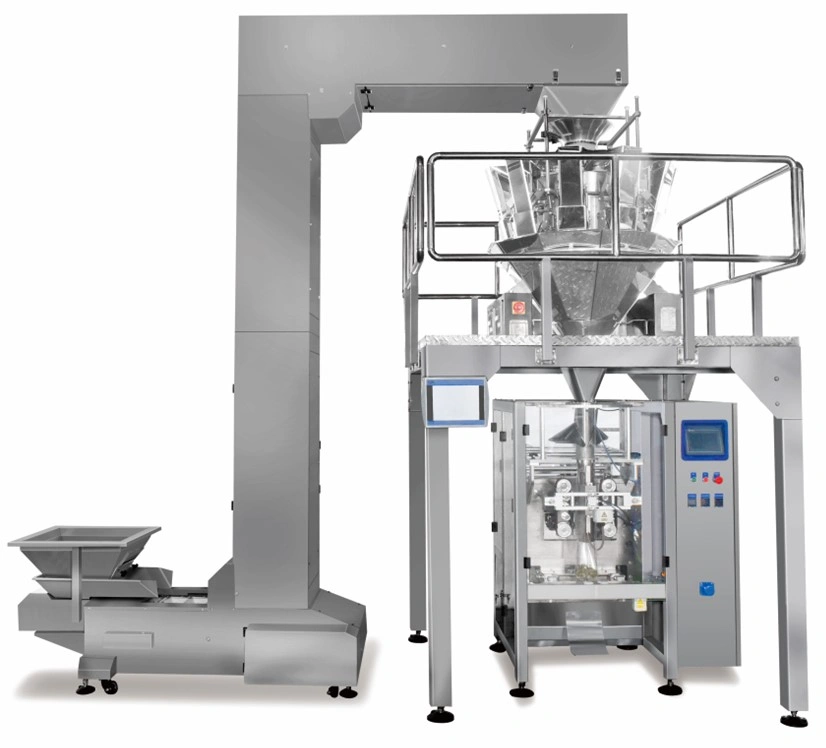
A Vertical Form Fill Seal (VFFS) machine forms a bag from a roll of packaging film that travels vertically.
The machine:
Because gravity assists the filling process, VFFS machines are particularly efficient for free-flowing products.
Typical products include:
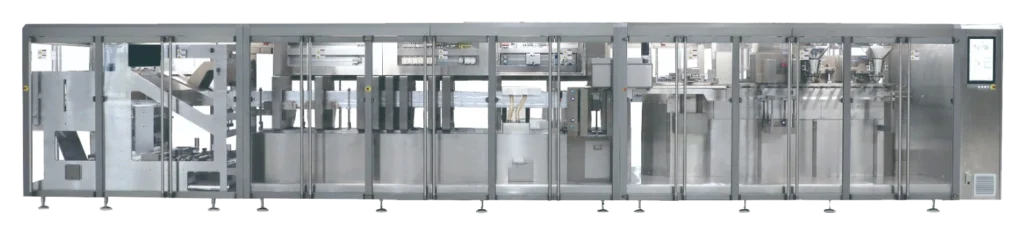
A Horizontal Form Fill Seal (HFFS) machine forms pouches horizontally rather than vertically.
Instead of filling products from the top, products are inserted into horizontally travelling pouches before sealing.
HFFS machines are commonly used for:
| Feature | VFFS | HFFS |
|---|---|---|
|
Machine orientation |
Vertical |
Horizontal |
|
Filling method |
Gravity feed |
Product placement |
|
Best for |
Powders, grains, snacks |
Large, fragile or shaped products |
|
Typical packaging |
Pillow bags, gusset bags |
Stand-up pouches, zipper pouches |
|
Floor space |
Smaller |
Larger |
|
Speed |
Very high |
Moderate to high |
|
Initial investment |
Lower |
Higher |
|
Product handling |
Basic |
Gentle handling |
|
Automation options |
Extensive |
Extensive |
One of the biggest differences is the packaging style each machine produces.
VFFS machines commonly produce:
These are common in:
HFFS machines typically produce:
These are often chosen when premium shelf presentation is important.
Production speed depends on:
Generally:
VFFS machines can achieve extremely high production rates because gravity speeds up filling.
Typical ranges:
HFFS machines are generally slower because products often require controlled placement.
Typical ranges:
VFFS machines are popular because they offer:
They are often the preferred solution for manufacturers producing high volumes of similar products.
HFFS machines excel when packaging quality and presentation matter most.
Benefits include:
These differences become clearer when looking at real-world use cases, which you can explore in our applications of VFFS machines guide.
Although every installation is different, VFFS systems generally require a lower initial investment.
Factors influencing price include:
HFFS machines usually cost more because they involve more complex pouch handling and sealing mechanisms.
However, they often deliver greater value when producing premium retail packaging.
When comparing horizontal and vertical systems, cost differences are an important factor, which we explain in detail in our guide to VFFS machine cost in South Africa.
If factory space is limited, VFFS machines usually have the advantage.
Because products fall vertically into the bag, the overall footprint is much smaller.
HFFS systems require longer conveying systems and pouch handling stations, resulting in a larger installation.
Both machine types require preventative maintenance.
Typical maintenance includes:
VFFS machines often have fewer moving parts, making routine maintenance slightly simpler.
VFFS machines are widely used in:
HFFS machines are common in:
The right choice depends on several factors:
A Vertical Form Fill Seal machine is usually the best choice when:
Common industries include:
If you’re still deciding which system best suits your product and production line, our VFFS buying guide breaks down the key selection factors.
An HFFS packaging machine is typically the better option when:
Ideal applications include:
Another common comparison in automated packaging is VFFS vs premade pouch machines, especially when evaluating flexibility and packaging costs.
| If you need... | Recommended Machine |
|---|---|
|
Stand-up pouches |
HFFS |
|
Zipper bags |
HFFS |
|
Spout pouches |
HFFS |
|
Premium shelf presentation |
HFFS |
|
Powders |
VFFS |
|
Granules |
VFFS |
|
Liquids |
VFFS |
|
High-speed bulk packaging |
VFFS |
|
Compact machine footprint |
VFFS |
|
Delicate product handling |
HFFS |
At SA Packaging Machinery, we help businesses choose packaging equipment based on their production requirements—not simply the machine with the highest specifications.
Our specialists can assist with:
Whether you’re upgrading an existing production line or investing in your first automated packaging system, our team can help you select the most suitable solution.
The primary difference is machine orientation. HFFS machines package products horizontally, while VFFS machines package products vertically.
Both are suitable for food packaging. HFFS is often preferred for premium retail packaging, while VFFS is commonly used for high-volume packaging of snacks, powders, grains, and other free-flowing products.
Not always. VFFS machines often achieve higher speeds for standard packaging formats, while HFFS machines provide greater flexibility for complex pouch designs.
VFFS machines are ideal for powders, granules, snacks, coffee, sugar, rice, pet food, and other free-flowing products.
Yes. HFFS machines are commonly used for liquids, sauces, creams, gels, and other products requiring advanced pouch packaging formats.
The best packaging machine for your product depends on several factors, including the type of product, packaging format, production volume, and desired shelf presentation. HFFS machines are often preferred for premium packaging formats such as stand-up pouches and zipper bags, while VFFS machines are ideal for high-volume packaging of powders, granules, snacks, and other free-flowing products. Consulting with a packaging specialist can help determine the most suitable solution for your operation.
When choosing a packaging machine, consider your product characteristics, packaging requirements, production speed, available floor space, and budget. HFFS machines offer greater flexibility and premium packaging options, while VFFS machines provide efficient, high-speed production for standard bag formats. The right choice depends on your specific production goals and packaging needs.
In many applications, yes. VFFS machines often achieve higher production speeds because gravity assists the filling process.
FFS machines are generally the preferred choice for powders, granules and free-flowing products.
Yes. HFFS machines are commonly used for liquid, paste and wet-product packaging, especially when using pre-made or stand-up pouches.
VFFS machines generally have a lower purchase price and smaller installation footprint, although the final cost depends on the machine configuration.
Neither machine is universally better. The right choice depends on your product, packaging style, production speed, available space and business goals.
While both systems offer automation benefits, long-term savings in labour and efficiency improvements contribute significantly to overall VFFS machine ROI.