Machine Overview
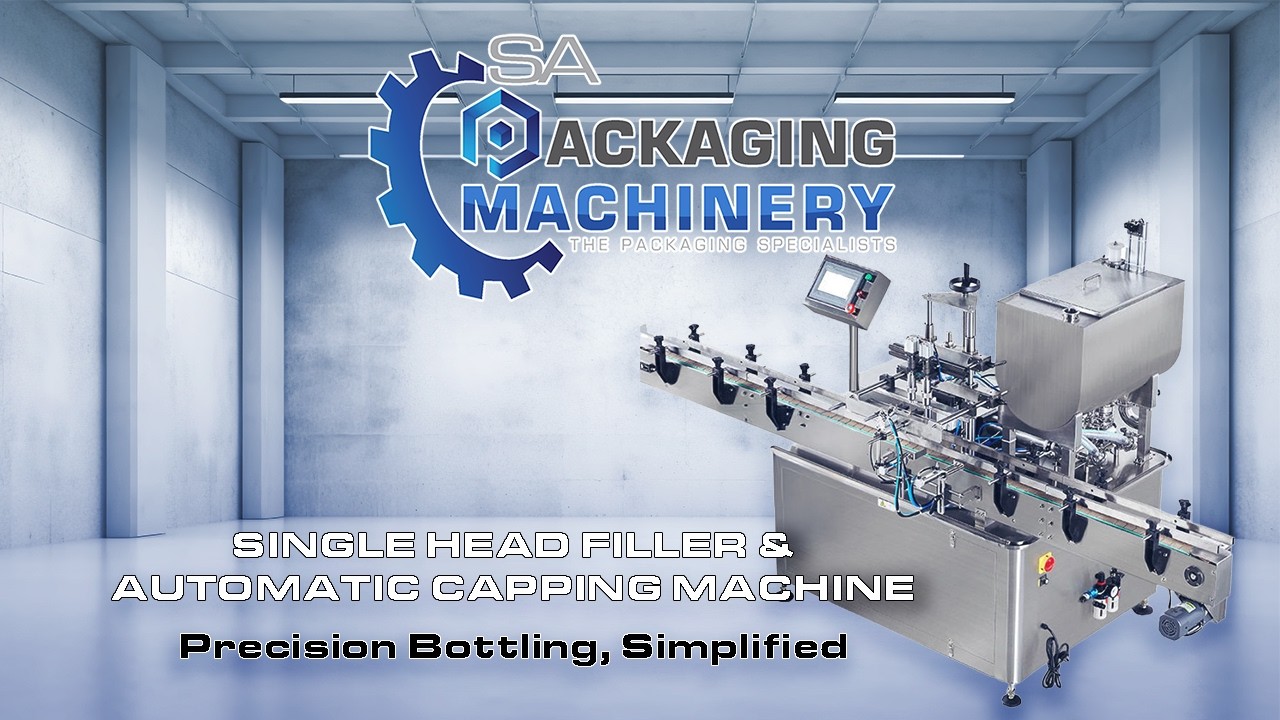
| Machine type | Bottle capping machine, semi-automatic or automatic, on its own or in a bottling line |
| Caps | Plastic and metal screw caps, snap caps, ROPP aluminium caps, trigger sprays, pumps, inner plugs and dropper caps |
| Bottles | PET, HDPE and glass bottles from 5 ml, and containers up to 25 litres |
| Cap and neck sizes | Caps of 20 to 68 mm on our semi-automatic screw capper; 50 to 60 mm necks on 5 to 25 litre containers |
| Bottle sizes | Up to 200 mm wide and 30 to 350 mm tall on the semi-automatic screw capper; 20 to 65 mm wide and 50 to 300 mm tall on the trigger and pump capper |
| Capping heads | 1 head on standalone cappers; 3 heads on the 3-in-1 water lines we have supplied |
| Output | 10–15 containers/min (5–25 L); 15–20 bottles/min (glass, 5–50 ml); 16–33 bottles/min (single-head screw capper, 500 ml); 30 bottles/min, rated 50 (3-in-1, 500 ml) |
| Capping torque | 4–8 kgf·cm on the trigger and pump capper |
| Cap feeding | By hand on semi-automatic cappers; cap elevator, cap sorter or vibratory feeder on automatic lines |
| Power and air | 0.12 kW (semi-automatic screw capper), 80 W (trigger and pump capper), 1.1 kW (large-container capper); air 0.2–0.6 MPa |
| Options | Automatic cap feeding, conveyor, foil sealing heads, connection to your filler and labeller |
Configurations
A bottle capping machine is chosen by the cap first, then by the output. Screw caps, ROPP caps, trigger sprays and pumps each need a different capping head, and the number of bottles a minute decides whether an operator feeds the capper or the bottles arrive on a conveyor. Every capper we supply can work on its own or as part of a bottling line, and it is configured to match your production speed.
For the filling side of the line, see the bottle filler-capper-labeller.

01
The operator places the cap on the bottle and the capper tightens it, so one machine handles several bottle and cap sizes. The semi-automatic screw capper we have supplied takes caps of 20 to 68 mm on bottles up to 200 mm wide and 30 to 350 mm tall, beside a single-head filler and a labeller. An automatic cap feeder can be added.
Best for
•Start-ups and small batches
•Several cap sizes on one machine
•Plastic screw caps on PET and HDPE
Benefits
Low entry cost
Covers a wide cap range
Runs on its own or beside a filler
02
Bottles arrive on the conveyor and a cap elevator or sorter supplies the caps, so no operator handles caps. On a line we have supplied, a single-head automatic screw capper caps 16 to 33 bottles a minute on 500 ml bottles. For 5 to 25 litre containers we have supplied an automatic capper for 50 to 60 mm necks at 10 to 15 containers a minute, where the operator sets each cap with a quarter turn and the capper tightens it. Faster lines use more capping heads: the 3-in-1 water lines run three.
Best for
•Daily production
•Lines with a filler and labeller
•Screw caps in long runs
Benefits
Automatic cap feeding
Runs at the filler’s speed
Head changes between cap types

03
Trigger sprays and pump dispensers are not round, so they need a capper that holds the head square while it tightens. Our capper for these caps takes bottles of 20 to 65 mm diameter and 50 to 300 mm tall, at a capping torque of 4 to 8 kgf·cm. The cap is placed by hand before the capper tightens it. We have supplied it on a line with a double-head liquid filler and a labeller for shaped bottles.
Best for
•Cleaning products and sanitisers
•Spray bottles
•Lotion and soap pumps
Benefits
Holds irregular caps square
Set torque protects the pump
Small footprint

04
Roll-on pilfer-proof (ROPP) caps are aluminium caps rolled onto the bottle’s thread, leaving a tamper-evident ring. Metal screw caps and ROPP caps on glass bottles run on a capper built for glass. For small glass bottles we have supplied a line that presses in an inner cap and screws on the outer cap at 15 to 20 bottles a minute on 5 to 50 ml bottles.
Best for
•Wine and spirits
•Syrups and health products in glass
•Tamper-evident caps
Benefits
Tamper-evident seal
Built for glass bottles
Metal and aluminium caps
Line set-up
Most bottle capping machines work inside a bottling line, between the filler and the labeller. These are the set-ups we supply.

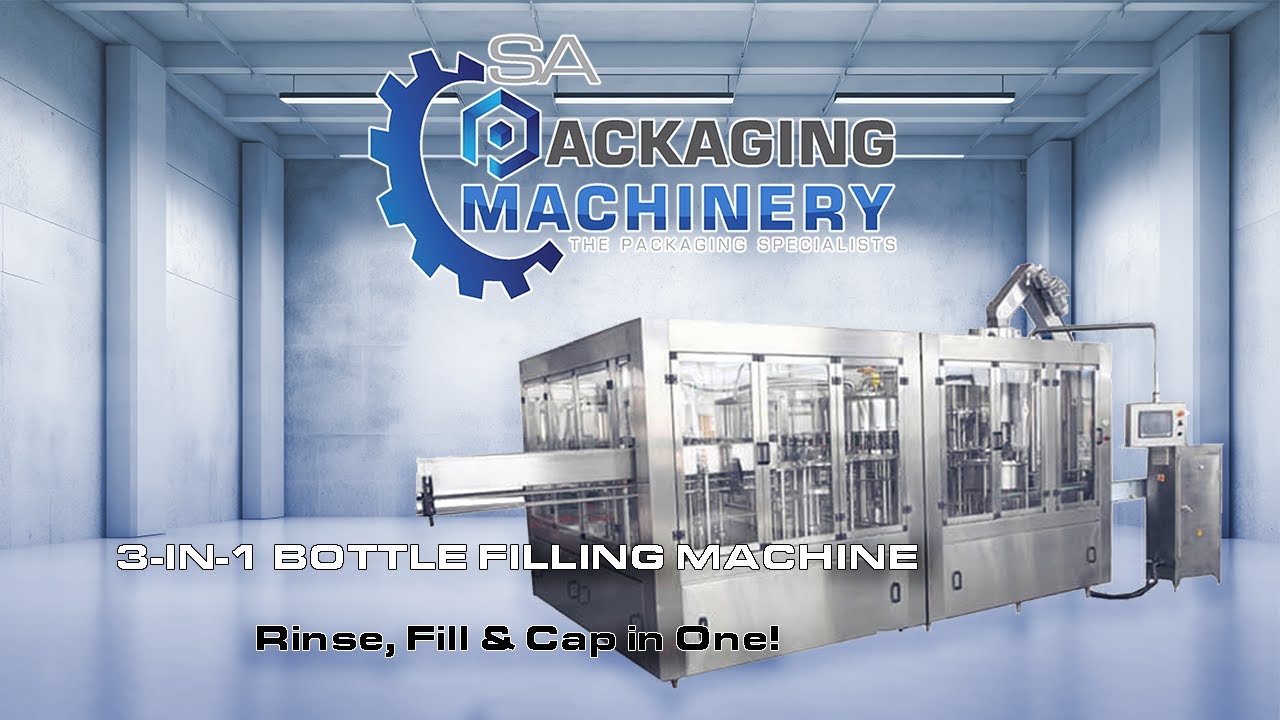
Rinses, fills and caps each bottle in one machine. On the water lines we have supplied, three capping heads follow eight rinsing and eight filling heads, fed by a cap sorter and elevator, at 30 bottles a minute on 500 ml bottles. See the water bottling machine.
Rinse, fill and cap in one
Cap sorter and elevator
200 ml to 2 litre bottles

Fills and caps dropper bottles in one line. The dropper caps are fed automatically, placed in the bottle and screwed down at the next station. The line we have supplied fills, caps and labels 30 ml and 50 ml glass dropper bottles at 25 a minute.
Automatic dropper feeding
30 ml and 50 ml bottles
Fill, cap and label in one line

A gravity, piston or single-head filler with an automatic capper on the same conveyor, for producers who fill one product at a time and want caps applied without a second operator. See liquid filling machines for the filler.
Filler and capper on one conveyor
Any filler type
Add a labeller later
Some bottles are foil sealed before they are capped. On a line we have supplied, foil application and foil sealing heads seal the bottle mouth after filling, and a single-head automatic screw capper fits the plastic cap afterwards.
Foil seal under the cap
Separate automatic screw capper
Tamper evidence and a resealable cap
Applications

Water, juice and drinks. Screw caps on PET bottles, usually on a 3-in-1 machine or a filler with an automatic capper:
Water bottling
Juice and still drinks
Drinks on a filler-capper-labeller

Cosmetics and personal care. Pumps, screw caps and droppers on lotion, shampoo and serum bottles:
Lotions and creams
Shampoo and liquid soap
Dropper bottles for oils and serums

Chemicals, glass and health products. Trigger sprays and screw caps on cleaning products, and metal or ROPP caps on glass:
Cleaning chemicals and detergents
Sanitisers and sprays
Wine, spirits and syrups in glass
Other bottles and caps. If your bottle or cap is not listed here, send us samples. The capping head is chosen for the cap, so most bottles can be capped once we have trialled them.
The guides below cover the questions we are asked about most for capping.
Guides: how a capping machine works · applications of bottle filling machines · bottling machine maintenance
Line machines: bottle filler-capper-labeller, labelling machine, sleeve sealer and shrink tunnel
Specifications
A bottle capping machine is configured to the cap, the bottle and the output, so the figures below come from cappers and lines we have supplied rather than a fixed catalogue.
Output depends on the cap, the bottle and how the caps are fed. On the cappers we have supplied it runs from 10 to 15 containers a minute on 5 to 25 litre containers to 30 bottles a minute on a 3-in-1 water line, rated at 50 on 500 ml bottles. Every capper is configured to your production speed, so confirm real speeds on a trial with your own bottles and caps.
| Capper | Caps | Bottle and cap size | Output | Power and air |
|---|---|---|---|---|
| Semi-automatic screw capper | Screw caps, placed by hand | Caps 20–68 mm; bottles up to 200 mm wide, 30–350 mm tall | Set by the operator | 220 V, 0.12 kW; air 0.4–0.6 MPa; 40 kg |
| Trigger and pump capper | Trigger sprays, pumps and other irregular caps, placed by hand | Bottles Ø20–65 mm, 50–300 mm tall; torque 4–8 kgf·cm | Set by the operator | 220 V, 80 W |
| Automatic capper for large containers | Screw caps, set by hand with a quarter turn | 5–25 L containers; necks 50–60 mm; 100–300 mm sealing height | 10–15 containers/min | 220 V, 1.1 kW; air 0.2–0.4 MPa |
| Single-head automatic screw capper | Plastic screw caps, after foil sealing | 500 ml bottles | 16–33 bottles/min | Part of a rinse, fill and foil seal line |
| Glass bottle capping station | Inner cap pressed in, outer screw cap; vibratory cap sorter; 1 capping head | 5–50 ml glass bottles | 15–20 bottles/min | 220 V, 2 kW (filler and capper) |
Capping on bottling lines we have supplied. These lines cap bottles as part of a complete line. The speeds were tested in our workshop.
| Line | Capping | Bottles | Output |
|---|---|---|---|
| 3-in-1 rinse, fill and cap (water) | 3 capping heads, cap sorter and elevator | 200 ml to 2 L | 30 bottles/min on 500 ml |
| 3-in-1 rinse, fill and cap (water) | 3 capping heads | 500 ml | Rated 50 bottles/min on 500 ml |
| Rinse, fill and foil seal, then screw capper | Foil application and sealing heads; 1-head automatic screw capper | 500 ml | 16–33 bottles/min on 500 ml |
| Glass bottle filler, capper and labeller Read the case study | Inner caps pressed in, then outer screw caps, both fed by a vibratory sorter; 1 capping head | 5 to 50 ml glass bottles | 15–20 bottles/min |
| Dropper bottle filler, capper and labeller | Automatic dropper feeding and screwing | 30 ml and 50 ml glass dropper bottles | 25 bottles/min |
| 2-head filler with automatic capper | Automatic tightening after the cap is set by hand | 5 to 25 L containers | 10–15 containers/min capping |
| Single-head filler, screw capper and labeller | Semi-automatic screw capper, caps 20–68 mm | 100 to 1,000 ml | 20–40 fills/min on 500 ml |
| Double-head filler, capper and labeller | Semi-automatic trigger and pump capper, 4–8 kgf·cm | 200 to 2,000 ml | 20–70 fills/min on 500 ml |
Not sure which capper suits your cap? Send us a bottle and a cap, and we will trial them before you order.
ABOUT THE MACHINE
A bottle capping machine, or capper, fits a cap to a filled bottle and closes it to a consistent tightness. A screw capper turns the cap down the thread with a rotating capping head, a press-on capper pushes snap caps into place, and an ROPP capper rolls an aluminium cap onto the bottle’s thread. Capping every bottle the same way stops leaks in transport and keeps tamper-evident caps intact.
Also known as
The capping cycle runs in four steps:
More capping heads cap more bottles a minute, which is why 3-in-1 machines carry several.
On an automatic line the capper runs at the filler’s speed, so the two are configured together.
For the full explanation, read how does a capping machine work.
Trigger sprays and pumps run on a capping head that holds the cap square while it tightens, unlike round screw caps.
Metal and ROPP caps on glass bottles run on a glass bottle capper rather than a standard screw capper.
Case Studies
A water line that rinses, fills and caps on a 3-in-1 machine, a dropper bottle line that fills and caps at 25 bottles a minute, and a glass bottle line that fills, caps and labels 5 to 50 ml bottles.
“Highly recommended! Excellent customer service, great prices, and they always go above and beyond.”
Ratings and reviews are published on our Google Business Profile, where they can be read in full and in context.
PackMan purchased an Automatic 6-Lane, 4-Side Seal Vinegar Packaging Machine, and it has been performing reliably since installation. The machine delivers consistent packaging quality, operates efficiently, and has met our production expectations.

SA Packaging Machinery delivered a solution that has met our expectations. The equipment has been reliable in daily production, and we’re pleased with its performance. We found the team knowledgeable, professional, and willing to assist whenever required.
We’ve been very happy with the equipment supplied by SA Packaging Machinery. It’s straightforward to use, performs consistently, and has helped us improve our production process. The team was easy to work with and made the entire experience smooth.
Comparison
Both tighten the same caps; the difference is how the bottles and caps arrive. On a semi-automatic capper the operator places the cap and the bottle, while an automatic capper takes bottles from the conveyor and caps from a feeder.
| Semi-automatic capper | Automatic capper | |
|---|---|---|
| Cap feeding | By hand | Cap elevator, sorter or vibratory feeder |
| Bottle feeding | Placed by the operator | On the conveyor from the filler |
| Operator | Needed at the capper | Not needed at the capper |
| Output | Set by the operator | 10–50 bottles/min on lines we have supplied, configured to your line |
| Best for | Small batches and several cap sizes | Daily production on a line |
If you cap in batches or change caps often, start with a semi-automatic capper. If the capper has to keep up with a filler, choose an automatic capper. Our guide to automatic vs manual liquid filling covers the same choice for the filler.
A standalone capper can be added to a filler you already run and suits several bottle sizes. A 3-in-1 machine rinses, fills and caps in one frame, which saves floor space and suits long runs of one bottle, such as water.
| Standalone capper | 3-in-1 machine | |
|---|---|---|
| Does | Caps only | Rinses, fills and caps |
| Fits | Next to a filler you already run | A new bottling line |
| Best for | Several bottles and caps | Water and drinks in long runs |
| Capping heads | One, or more on fast lines | Three on our 8-8-3 lines |
The cap decides the capping head. Screw caps are turned down a thread, ROPP caps are rolled onto glass bottles from an aluminium cap, and snap caps are pressed on. Tell us the cap, or send a sample, and the capper is configured for it.
Advantages
Choose a bottle capping machine when hand capping holds back your filler or caps come back loose. A capper tightens every cap the same way, so bottles do not leak in transport, and it works on its own beside a filler you already run or as part of a new line. Because the capping head is chosen for the cap, one type of machine covers screw caps on water and juice, trigger sprays on cleaning products, pumps on lotions, droppers on serums and ROPP caps on glass.
Quotation
Every bottle capping machine is quoted to your cap, bottle and output rather than from a list price. For what shapes the figure on any machine quotation, see the packaging machine cost guide and bottling machine cost in South Africa, and to plan the line around it, read which bottle filling machine suits each application. Send us your bottles and caps and we will trial them and quote the capper that suits them.
Why us
Every bottle capping machine we supply is installed and commissioned by our own technicians, together with the filler and conveyor it works with.
Installation and commissioning.
We position the capper, connect it to your power, compressed air and conveyor, set it to your caps and bottles, and hand it over once it is capping to your standard.
Operator training.
Your operators learn to change caps and bottle sizes, set the capping speed, load the cap feeder and clear stoppages.
Service, spares and support.
Spares are held in Johannesburg, and our technicians support the line in person and over phone and video. Every machine carries a one-year warranty.
Choosing the right bottle capping machine starts with the cap, the bottle, the output you need, the filler it works with and your budget.
You might also like
Browse the full range
Filling MachinesFlow WrapHorizontal Fill-SealHorizontal Form-Fill-SealCartoningCup Fill and SealTube Fill and SealLabellingShrink Sleeve LabellingShrink TunnelSleeve Sealer and Shrink TunnelL-Bar SealerSide Bar SealerBlister and ClamshellBottle Filler-Capper-LabellerCan Fill-Seam
SA Packaging Machinery supplies semi-automatic and automatic bottle capping machines across South Africa and Southern Africa. Send us your bottles, caps and target output, and we will trial them, recommend the capper and quote it.
Questions
A bottle capping machine applies plastic and metal screw caps, snap caps, ROPP aluminium caps, trigger sprays, pump dispensers and dropper caps. Each cap type needs its own capping head, so tell us the cap, or send a sample, and the capper is configured for it.
Yes, within its range. Our semi-automatic screw capper takes caps of 20 to 68 mm on bottles up to 350 mm tall, and the trigger and pump capper takes bottles of 20 to 65 mm diameter. Moving to a different bottle or cap usually needs change parts.
A bottle capping machine is configured to your production speed. On the lines we have supplied, capping runs at 10 to 15 containers a minute on 5 to 25 litre containers, 15 to 20 bottles a minute on small glass bottles, 16 to 33 bottles a minute on a single-head screw capper and 30 bottles a minute on a 3-in-1 water line, rated at 50, on 500 ml bottles.
Yes. A bottle capping machine can work on its own or be connected to a production line. An automatic capper sits on the conveyor after your filler and runs at its speed, and a semi-automatic capper can stand beside the filler with an operator.
Yes. Metal screw caps and aluminium caps, including ROPP caps, are tightened onto glass bottles on a capper built for glass. For small glass bottles we have supplied a filler, capper and labeller that presses in an inner cap and then screws on the outer cap, at 15 to 20 bottles a minute on 5 to 50 ml bottles.
On a capper built for irregular caps. The cap is placed on the bottle by hand, and the capping machine holds it square and tightens it at a set torque of 4 to 8 kgf·cm, on bottles of 20 to 65 mm diameter.
Yes. On a line we have supplied, foil application and foil sealing heads seal the bottle mouth after filling, and a single-head automatic screw capper then fits the plastic cap.
Routine cleaning of the capping heads and cap feeder, a check of cap tightness, and lubrication of moving parts. The general schedule for bottling equipment is in our bottling machine maintenance guide.