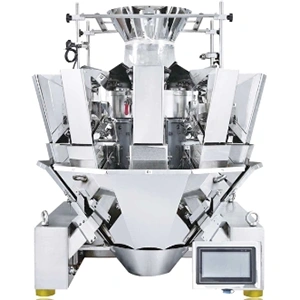
Machine Overview
| Machine type | Multihead (combination) weigher, as part of a line or on its own |
| Products | Granules, beans, rice, sugar, maize meal, coffee beans, sweets, chocolate pieces, snacks and screws; powders with an auger feeder; fresh meat, fish and frozen food on screw-feed and frozen-food weighers |
| Head counts | 2, 4, 10, 14, 16 and 20 heads; the 2-head and 4-head, and the 10-head and 14-head, are the most common |
| Feeding | Z-type bucket elevator; auger feeder for powders; screw feed on the weigher for sticky fresh meat; hand-fed on small, slower machines |
| Packs into | Bags formed on a VFFS, premade bags on a fill-seal machine or semi-automatic sealer, or your existing packaging machine |
| Pack weights | 15 g to 10 kg on lines we have supplied |
| Accuracy | ±1–3 g on small packs; within 2% to 3% on larger bags |
| Output | 6–80 bags/min on supplied lines, by head count, product and bag |
| Contact parts | Food-grade SUS304 stainless steel; SUS316 where the product carries salt; polished or dimpled contact surface |
| Controls | Touch screen with stored product programs; links to the packing machine below |
| Options | Dimpled contact surface, timing hopper, reject device, check weigher, printer for date codes |
Configurations
A multihead weigher is specified by its number of heads, and three things set that number: the speed you need, the product and your budget. More heads give the weigher more combinations to choose from each cycle, so it reaches the target weight faster. A 20-head weigher costs more than a 10-head but runs much faster. The most common choices are the 2-head and 4-head weighers for smaller and heavier packs, and the 10-head and 14-head weighers on VFFS lines.
Any of these weighers can be supplied as part of a complete line, as a machine on its own in a more semi-automatic form, or to sit on top of a packaging machine you already run.
Not sure this is the right filler? Our filling machines page compares every filler we supply by container, product and output.
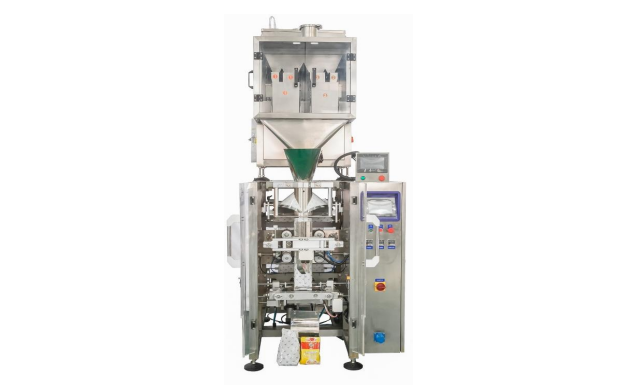
01
Small weighers for lower speeds and heavier packs, and the most common choice for a first weighing line. A 2-head weigher fills bags of 500 g to 10 kg on a VFFS. A 4-head weigher fed by a Z-type elevator fills premade bags of 20 g to 1 kg at 10 to 15 packs a minute, with the bags closed on a semi-automatic band sealer.
Best for
•Bags of 500 g to 10 kg
•Granules and sweets in premade bags
•Semi-automatic and start-up lines
Benefits
Lowest cost in the range
Simple to run and clean
Suits a semi-automatic start
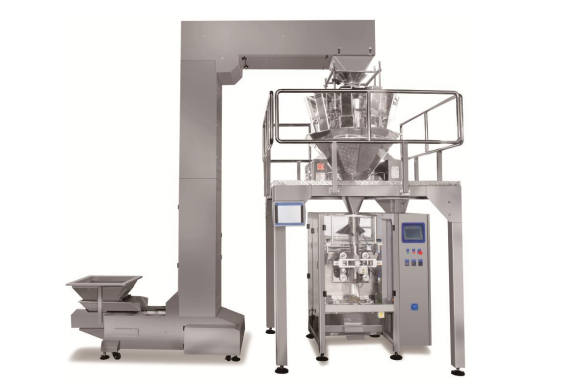
02
One of the two most common weighers on a VFFS fed by a Z-type bucket elevator. On lines we have supplied it fills granules from 15 g to 2 kg to ±1–3 g at 30 to 80 bags a minute, rice in 100 g to 2 kg pillow bags, sugar in 500 g to 2 kg bags, whole coffee beans in 250 g to 1 kg valve bags, and 50 screws per bag for a hardware packer.
Best for
•Rice, sugar and coffee beans
•Bags of 100 g to 2 kg
•Counting pieces by weight
Benefits
Balances speed and cost
±1–3 g on small packs
Polished or dimpled contact surface
03
More heads give more combinations per cycle, so the weigher keeps up with a faster bagger. Our 14-head lines fill granules from 15 g to 2 kg at ±2%, at 15 to 20 bags a minute on 2 kg bags, and on a coffee line the 14-head is rated at 20 to 25 bags a minute against 10 to 15 for the 10-head. A 14-head weigher with a VFFS and a Z-type elevator is the line customers buy most.
The 14-head also comes in two versions for food that a standard weigher struggles with: a frozen-food weigher with 1.6-litre hoppers for frozen fish, vegetables and dumplings from 10 g to 2.5 kg, and a screw-feed weigher with 2.5-litre hoppers for sticky fresh meat and fish from 10 g to 1.5 kg.
Best for
•Higher-speed VFFS lines
•Coffee beans, snacks and granules
•Retail bags from 250 g
Benefits
Faster cycles than a 10-head
Keeps pace with a faster VFFS
The most popular complete line
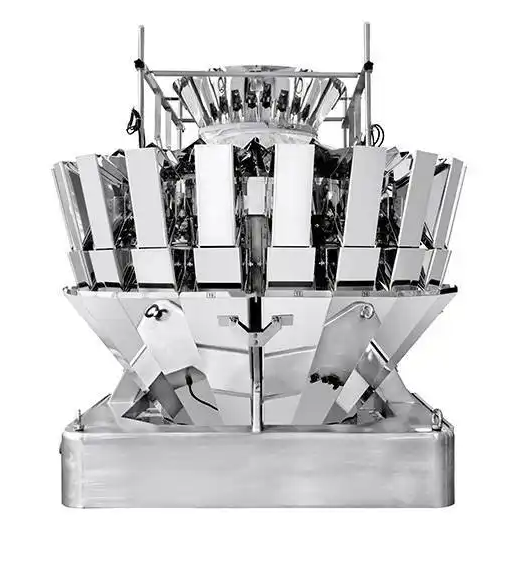
04
The fastest weigher in the range, for high-volume lines where speed matters more than machine cost. It costs more than a 10-head or 14-head weigher, so it is specified when the bagger and the order book need the extra output.
The 20-head weigher has small 0.5-litre hoppers for portions of 10 g to 200 g, and a twin discharge chute lets it feed two packing machines at up to 65 portions a minute each, or one machine through a single chute.
Best for
•High-volume lines
•Long runs of one product
Benefits
Highest speed in the range
Feeds high-speed VFFS lines
Line set-up
A multihead weigher is one part of a line. A feeder lifts the product into the weigher, the weigher portions it, and a packing machine below forms or fills the bag and seals it. These are the machines it works with.
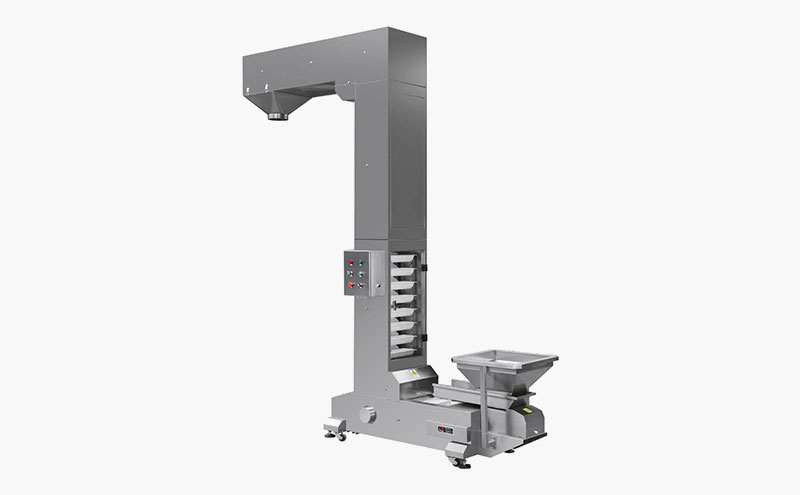
Lifts granules and pieces from floor level into the top of the multihead weigher, so the weigher stays topped up. The elevators on our lines are SUS304 stainless steel with a lifting capacity of 7,200 litres an hour, and they feed most of the weigher lines we supply.
Gentle product handling
Keeps the weigher topped up
Standard on most weigher lines
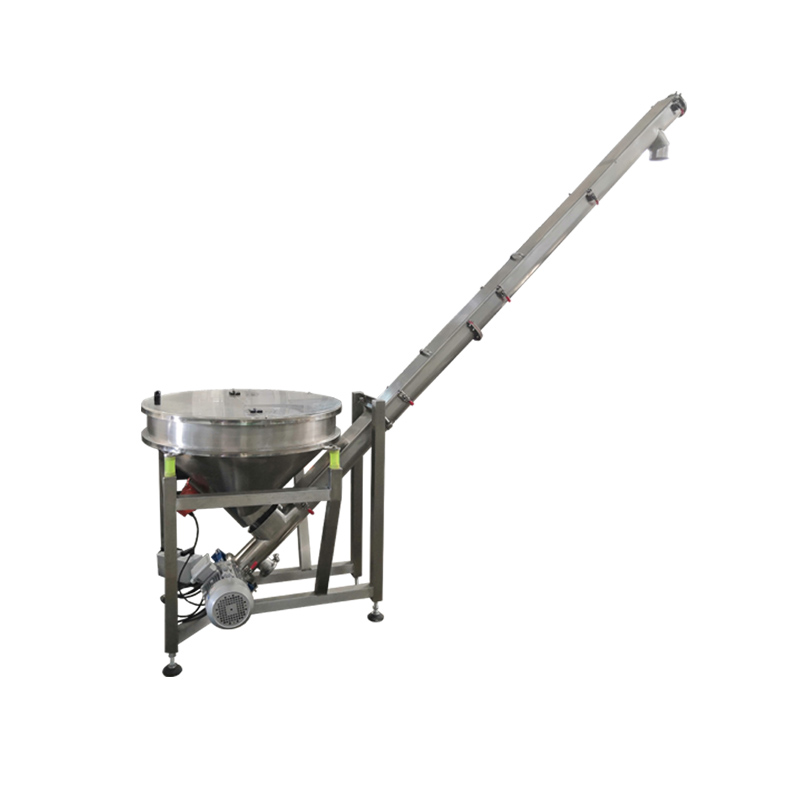
For powders, an auger feeder supplies the product to the multihead weigher in place of a bucket elevator, giving a controlled flow of powder into the weigher.
Controlled powder flow
Specified to the powder density
Fitted to the same weigher
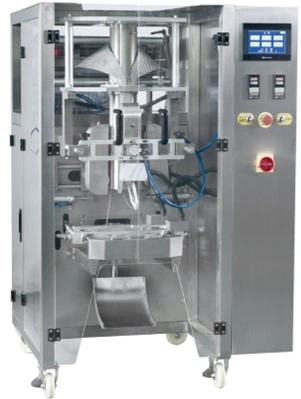
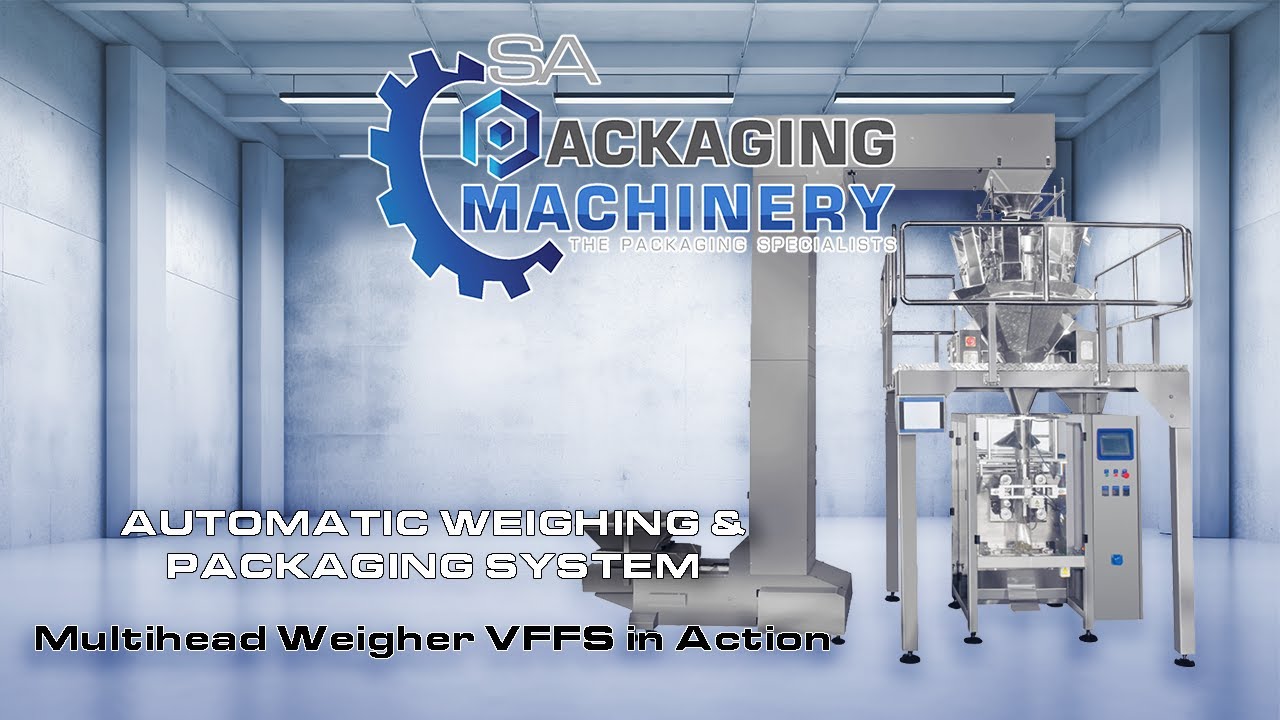
The usual partner for a multihead weigher. The VFFS machine forms pillow or gusseted bags from roll film below the weigher, and each weighed portion drops straight into the bag before it is sealed.
Pillow and gusseted bags
Bags formed from roll film
The most popular combination
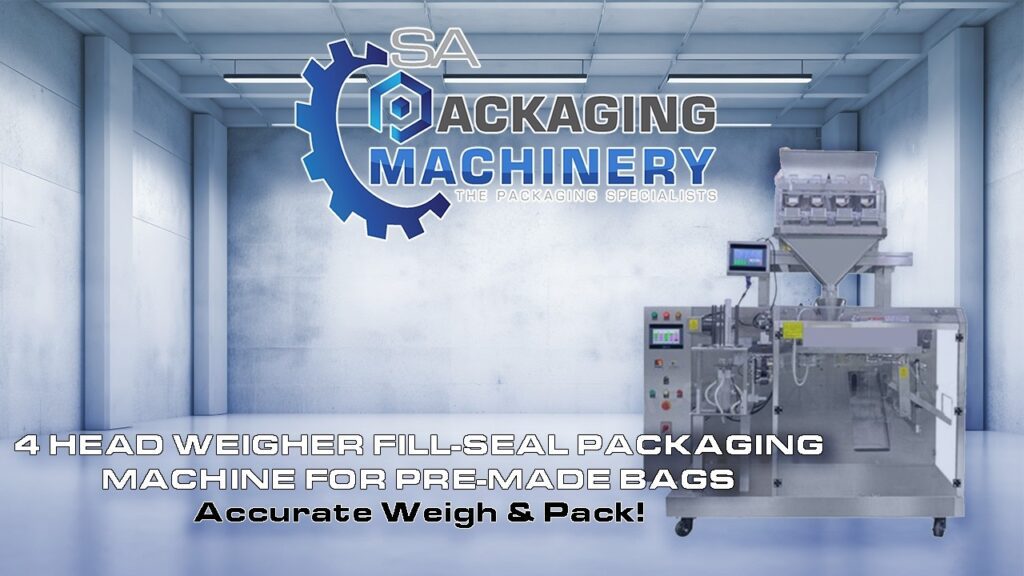
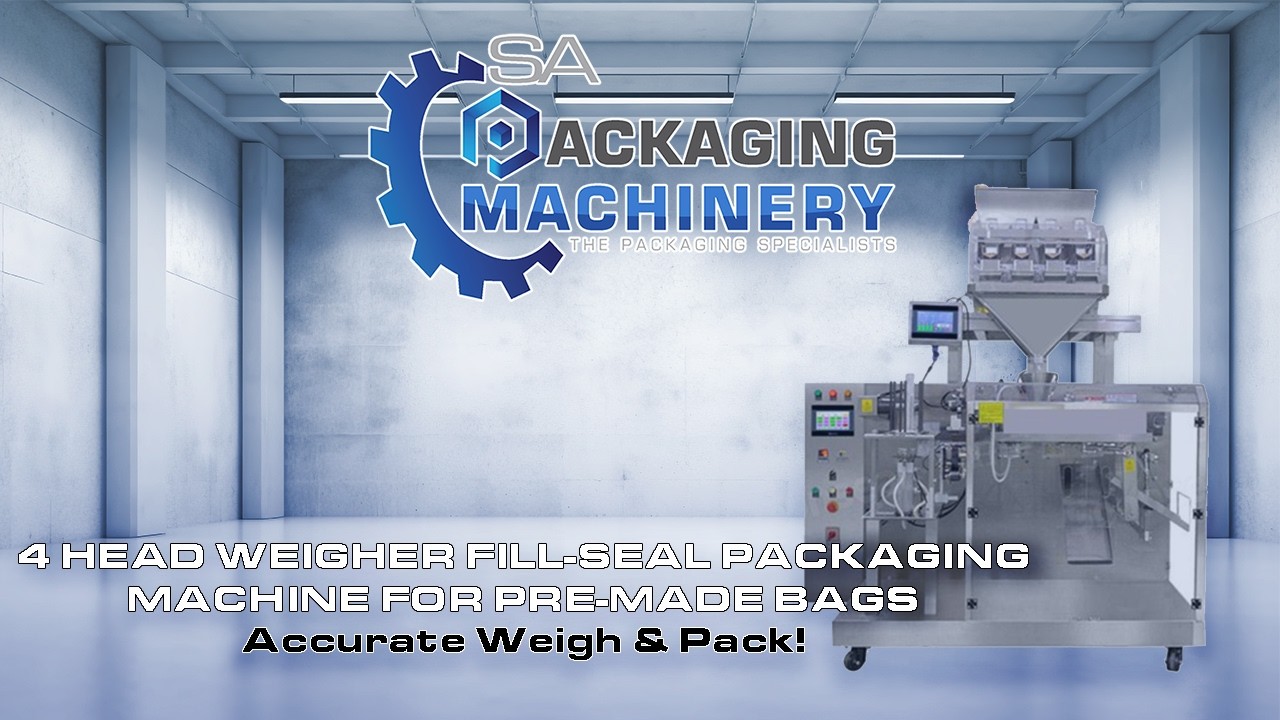
For products sold in premade bags and pouches, the weigher sits above a fill-seal machine that picks up each bag, opens it, fills it and seals it, then drops it onto a conveyor. For a simpler line, a 4-head weigher fills premade bags that are then closed on a semi-automatic band sealer. Our showroom machine is a 4-head weigher fitted to a premade-bag fill-seal machine.
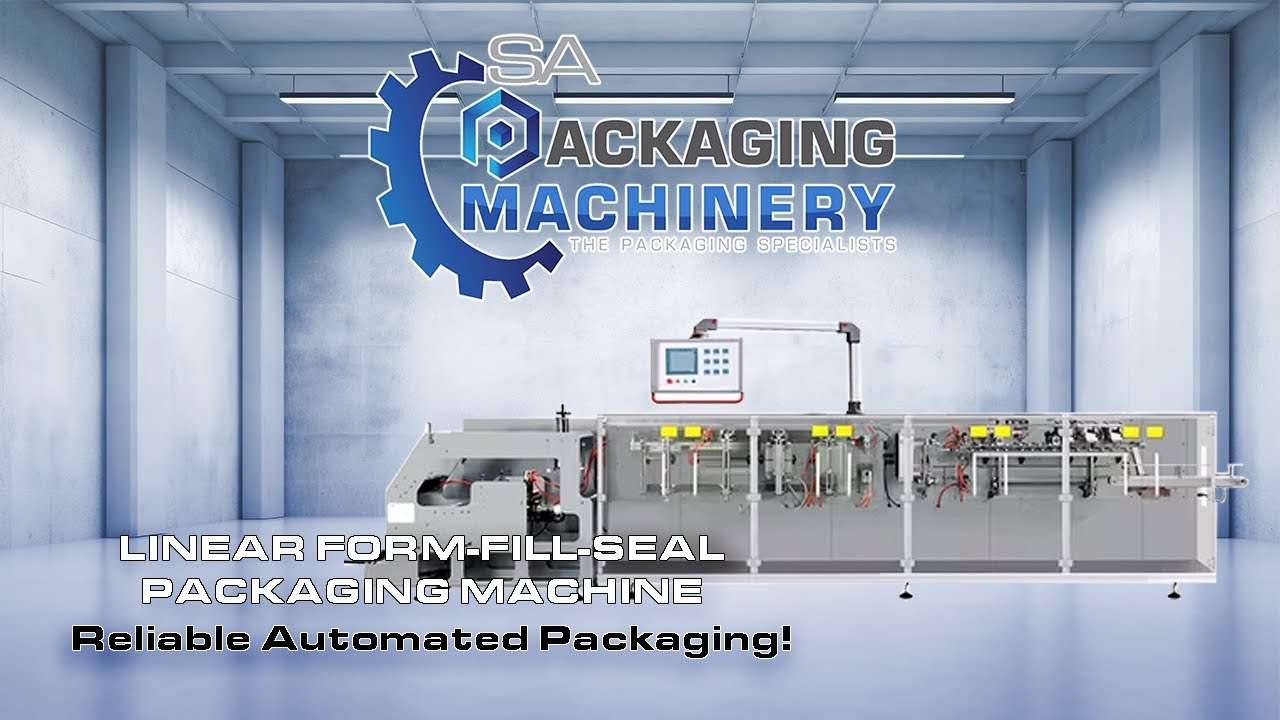
Fitted to a weigher a customer already runs, our rotary and linear premade-bag machines fill 500 g to 1 kg zipper pouches of fruit at 35 to 40 bags a minute.
Premade bags and pouches
Bag pick-up, fill, seal and discharge
Specified to the customer
Applications
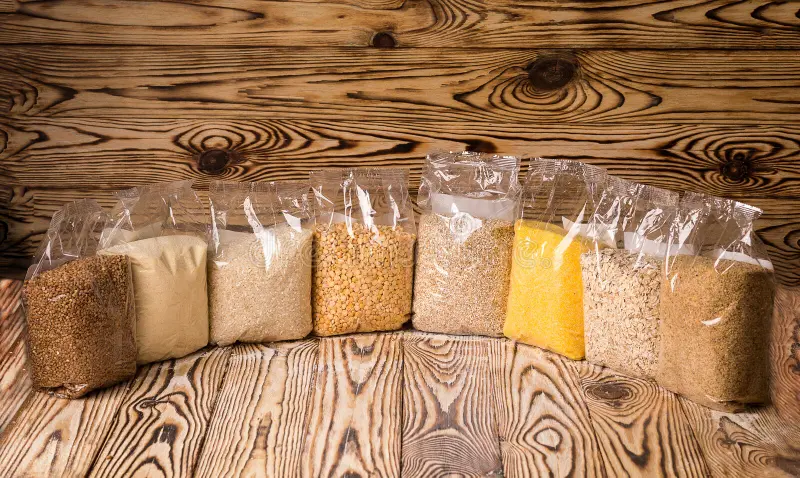
Grains, beans and coffee. Free-flowing and irregular dry food, where every gram of giveaway counts:
Rice and maize meal
Sugar
Whole coffee beans
Beans, grains and granules
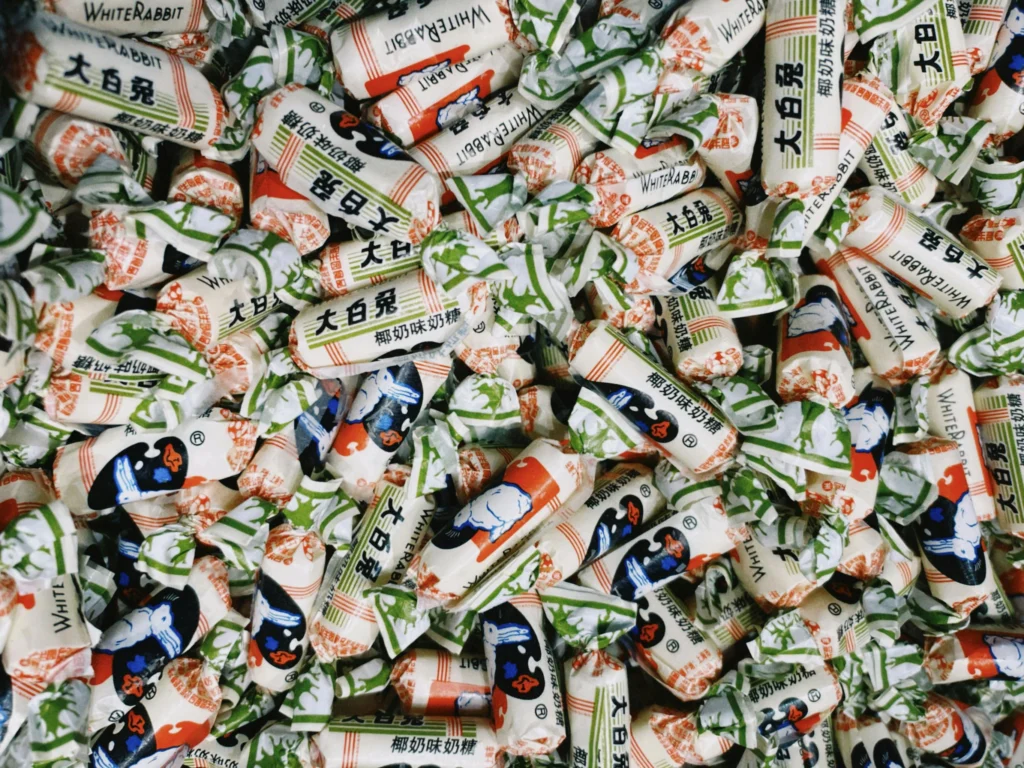
Sweets, snacks and pieces. Pieces that cannot be dosed by volume, including sticky sweets on a weigher with a special contact surface:
Sweets, wrapped or unwrapped
Chocolate pieces
Snacks and nuts
Raisins and dried fruit
Pet treats
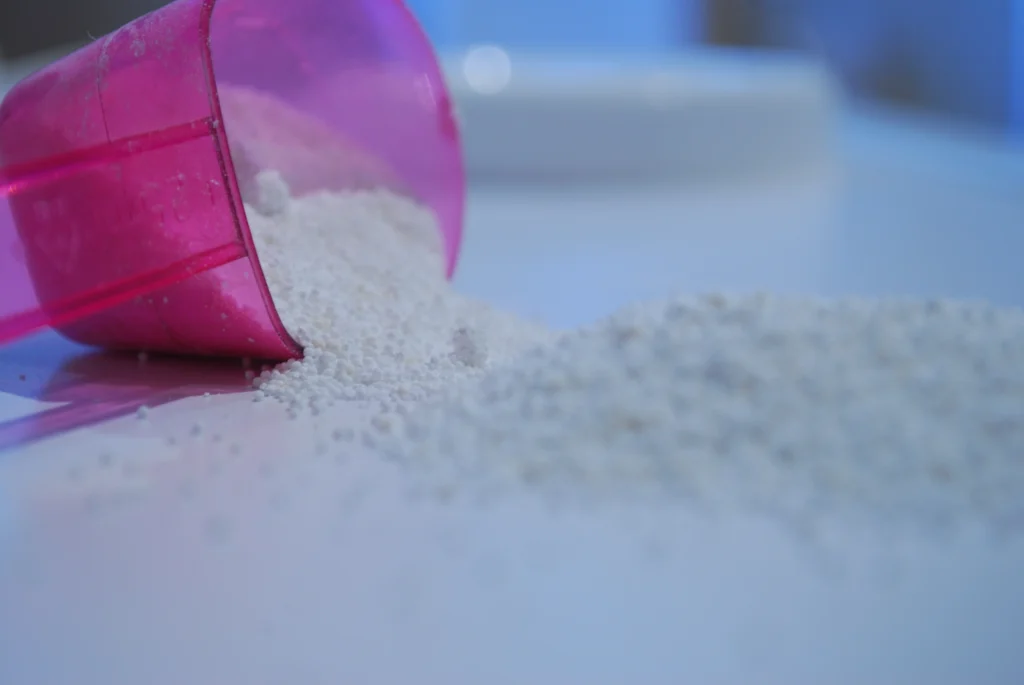
Powders and hardware. Powders fed by an auger, and small parts counted by weight:
Fresh and frozen food. Fresh chicken, pork, beef and fish are sticky, so the weigher feeds them with screws instead of the usual vibrating trays, and frozen fish, vegetables, fruit and dumplings run on a frozen-food weigher. Both have an IP65 waterproof case and dimpled contact parts.
The guides below cover the questions we are asked about most for weigher lines.
Guides: auger screw vs measuring cup fillers · how to choose a VFFS machine · VFFS vs premade bag machines
By product: grain and granule packing machines, coffee packaging machine, rice packaging machine
Specifications
A multihead weigher is specified per product, so the figures below come from lines we have supplied rather than a fixed catalogue. Each line pairs a weigher with a feeder and a packing machine, and the weighing range, accuracy and output were set for that customer’s product and bag.
Output depends on the number of heads, the product and the bag: free-flowing granules in small bags run near the top of the range, while heavy bags and sticky products bring it down. Confirm real speeds on a trial with your product.
| Product | Weigher | Packs into | Pack weight | Accuracy | Output |
|---|---|---|---|---|---|
| Granules | 10-head, Z-type elevator | VFFS pillow bags | 15 g to 2 kg | ±1–3 g | 30–80 bags/min, by product and fill |
| Granules | 14-head, Z-type elevator | VFFS pillow bags, check weigher and thermal printer | 15 g to 2 kg | ±2% | 15–20 bags/min on 2 kg |
| Granules | 14-head, Z-type elevator | VFFS pillow bags | 500 g to 2 kg | ±2% | 15–20 bags/min on 2 kg |
| Sugar, maize meal and rice | 2-head, Z-type elevator | Large VFFS, pillow and side-gusset bags | 500 g to 10 kg | ±2% | 20–25 bags/min on 2 kg; 6–8 on 10 kg |
| Granules | 4-head, Z-type elevator | Premade bags, semi-automatic band sealer | 20 g to 1 kg | – | 10–15 packs/min |
| Rice | 10-head, Z-type elevator | VFFS pillow bags | 100 g to 2 kg | Within 3% | 10–60 bags/min |
| Rice and brown sugar | 2-head | VFFS bags | 500 g to 5 kg | About 5 g on 500 g | 6–8 bags/min |
| Granulated sugar | 10-head, Z-type elevator | VFFS bags | 500 g to 2 kg | Within 2% | 10–15 bags/min on 2 kg |
| Whole coffee beans | 10-head and 14-head | VFFS valve bags, nitrogen flush | 250 g to 1 kg | Within 2% | 10–15 (10-head), 20–25 (14-head) bags/min |
| Granule sweets | 4-head | Premade-bag fill-seal | 30 g to 500 g | – | – |
| Solid baking chocolate (sample) | 4-head | Premade-bag fill-seal, hand-fed | 22 g | – | – |
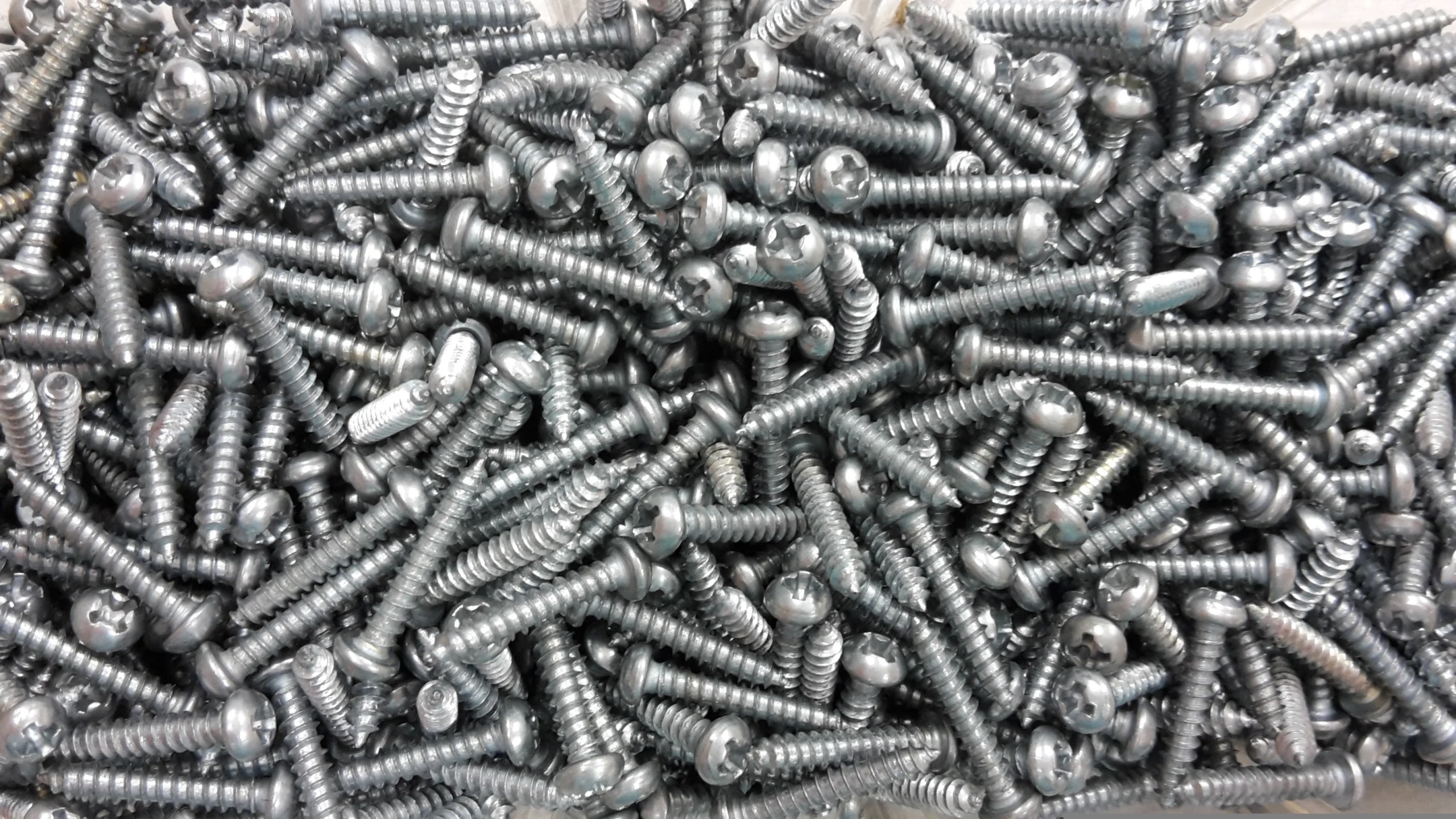
| Screws | 10-head | VFFS bags | 50 screws per bag, by weight | – | – |
Weighers for fresh, frozen and small-portion products. As well as the lines above, we have supplied the weighers below for fresh meat, frozen food and small, fast portions. The speeds are tested in our workshop, and the pack weight and output for your own product are set on a trial.
| Weigher | Suited to | Weighing range | Hopper | Speed | Features |
|---|---|---|---|---|---|
| 20-head weigher | Sweets, jelly sweets, nuts, seeds, puffed snacks, raisins and dried fruit, pet food, meatballs and small hardware | 10 g to 200 g | 0.5 L | Up to 65 portions/min from each of two discharge chutes | Twin discharge feeds two packing machines, or converts to a single chute; 10.4-inch touch screen |
| 14-head frozen-food weigher | Frozen fish, vegetables, fruit and dumplings | 10 g to 2.5 kg, by product density | 1.6 L | Up to 120 portions/min | IP65 waterproof case; dimpled contact parts; air-pressurised cabinet keeps moisture off the electronics; 100 stored product programs |
| 14-head screw-feed weigher | Sticky fresh product: chicken, pork, beef and fish | 10 g to 1.5 kg | 2.5 L | Up to 50 portions/min | Screws feed the product in place of vibrating trays; IP65 waterproof case; dimpled contact parts; 60° discharge chute; optional drying device |
All three run on 220 V single-phase power, with options of a timing hopper, reject device and printer. The weigher talks to the packing machine below over the Modbus industrial protocol, so it can be linked to a VFFS or premade-bag machine, including one you already run.
Not sure whether a weigher or a volumetric filler suits your product? Read auger screw vs measuring cup fillers, then send us a sample for a trial.
ABOUT THE MACHINE
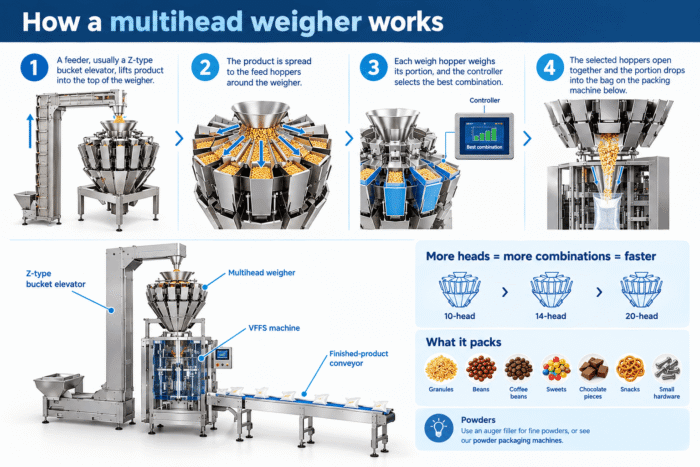
A multihead weigher, also called a combination weigher, portions product by weight using a ring of small weigh hoppers. Each weigh hopper sits on its own load cell and weighs part of the product, and the controller picks the combination of hoppers whose total is closest to the target weight, then releases them together into the bag below. Because it weighs rather than measures by volume, a multihead weigher suits granules and irregular pieces where giveaway costs money.
Also known as
The weighing cycle runs in four steps:
The more heads a multihead weigher has, the more combinations it can choose from each cycle, which is why a 14-head or 20-head weigher runs faster than a 10-head.
Below the weigher, the packing machine seals the bag and a finished-product conveyor carries it away.
For the bagging side of the line, see the vertical form-fill-seal machine and form fill seal machines.
Sticky products such as unwrapped sweets need a dimpled contact surface on the weigher, so product does not cling to the hoppers and upset the weight. Wrapped sweets run on a standard polished surface.
Where the product is a fine powder dosed by volume, an auger filler on its own may be the simpler choice; see powder packaging machines.
Case Studies
A sweets line on a four-head weigher, a hardware line counting screws by weight, and the coffee lines that use 10-head and 14-head weighers.
“Highly recommended! Excellent customer service, great prices, and they always go above and beyond.”
Ratings and reviews are published on our Google Business Profile, where they can be read in full and in context.
PackMan purchased an Automatic 6-Lane, 4-Side Seal Vinegar Packaging Machine, and it has been performing reliably since installation. The machine delivers consistent packaging quality, operates efficiently, and has met our production expectations.

SA Packaging Machinery delivered a solution that has met our expectations. The equipment has been reliable in daily production, and we’re pleased with its performance. We found the team knowledgeable, professional, and willing to assist whenever required.

We’ve been very happy with the equipment supplied by SA Packaging Machinery. It’s straightforward to use, performs consistently, and has helped us improve our production process. The team was easy to work with and made the entire experience smooth.

Comparison
Both dose free-flowing product into a bag, but they measure it differently. A measuring cup filler doses a fixed volume, so the pack weight moves when the product’s density moves. A multihead weigher weighs every portion, so it holds pack weight on irregular and higher-value products.
| Measuring cup filler | Multihead weigher | |
|---|---|---|
| Doses by | Volume: a cup of fixed size | Weight: every portion is weighed |
| Best for | Uniform, free-flowing granules | Irregular, sticky or higher-value products and pieces |
| When density varies | Pack weight varies with it | Pack weight holds |
| Machine cost | Lower | Higher, rising with head count |
If the product is uniform and low in value, a measuring cup filler is the economical choice. If it is irregular, sticky or valuable enough that giveaway matters, choose a multihead weigher. For powder, compare auger screw and measuring cup fillers.
The head count is the second choice. On the coffee lines we have supplied, a 14-head weigher runs at 20 to 25 bags a minute against 10 to 15 for a 10-head, on the same 250 g to 1 kg bags and to the same 2% accuracy.
| 10-head weigher | 14-head weigher | |
|---|---|---|
| Output on our coffee lines (250 g to 1 kg) | 10–15 bags/min | 20–25 bags/min |
| Accuracy on those lines | Within 2% | Within 2% |
| Cost | Lower | Higher |
| Chosen when | Budget leads | Output leads |
Below the weigher, the choice is the bag. A VFFS forms the bag from roll film and gives the lowest cost per pack, while a premade-bag fill-seal machine fills bags and pouches that arrive ready-made, for a retail finish. See VFFS vs premade bag machines.
Advantages
Choose a multihead weigher when giveaway costs more than the machine. On irregular pieces, sticky sweets, coffee beans and other higher-value products, a volumetric filler has to overfill to keep every pack above its declared weight, while a weigher holds each pack close to target. It also counts by weight, which is how a hardware packer fills 50 screws per bag without hand counting, and with screw feeding or a frozen-food build it extends to fresh meat and frozen food that a cup filler cannot dose.
Quotation
Every multihead weigher is quoted to your configuration, so the quotation is built from the product and pack weights you send us rather than from a list price. For what shapes the figure on any machine quotation, see the packaging machine cost guide, and for the bagger it feeds, read how to choose a VFFS machine. Send us a sample and we will trial it and quote the configuration that suits it.
Why us
Every multihead weigher we supply is installed and commissioned by our own technicians, together with the feeder and packing machine it works with.
Installation and commissioning.
We position the weigher, elevator and packing machine, connect the line to your power and compressed air, run it in with your own product and bags, and hand it over once it is holding pack weight.
Operator training.
Your operators learn to set target weights, change products, clean the hoppers and contact surfaces, and clear stoppages on the line.
Service, spares and support.
Spares are held in Johannesburg, and our technicians support the line in person and over phone and video. Every machine carries a one-year warranty.
Choosing the right weigher configuration starts with the product, the pack weight range, the output you need, the packing machine below it and your budget.
You might also like
Browse the full range
Filling MachinesFlow WrapHorizontal Fill-SealHorizontal Form-Fill-SealCartoningCup Fill and SealTube Fill and SealLabellingShrink Sleeve LabellingShrink TunnelSleeve Sealer and Shrink TunnelL-Bar SealerSide Bar SealerBlister and ClamshellBottle Filler-Capper-LabellerCan Fill-Seam
SA Packaging Machinery supplies multihead weighers and complete weigher lines across South Africa and Southern Africa. Send us a sample of your product, your pack weights and target output, and we will trial it, recommend the head count and line, and quote it.
Questions
A multihead weigher packs granules, beans, coffee beans, sweets, chocolate pieces, snacks and small hardware such as screws. It also weighs powders when an auger feeder supplies the product, sticky fresh meat and fish on a screw-feed weigher, and frozen food on a frozen-food weigher. It suits irregular and higher-value products, where weighing each portion cuts giveaway.
The head count is set by the speed you need, your product and your budget. We supply 2, 4, 10, 14, 16 and 20-head multihead weighers. The 2-head and 4-head are the most common for smaller and heavier packs, and the 10-head and 14-head on VFFS lines. More heads run faster but cost more: on our coffee lines a 14-head weigher runs at 20 to 25 bags a minute against 10 to 15 for a 10-head.
Yes. Sticky products such as unwrapped sweets need a dimpled contact surface on the multihead weigher, so product does not cling to the hoppers and upset the weight. Wrapped sweets run on a standard polished surface.
Yes. For powders, an auger feeder supplies the product to the multihead weigher in place of the bucket elevator used for granules. The density of the powder decides how the weigher is specified, so send us a sample.
Most often a vertical form-fill-seal (VFFS) machine, which forms pillow or gusseted bags under the weigher. A multihead weigher can also sit above a premade-bag fill-seal machine, fill premade bags that are closed on a semi-automatic band sealer, or be fitted to a packaging machine you already run. Every head count can be supplied on its own in a more semi-automatic form.
On most lines a Z-type bucket elevator lifts product from floor level into the multihead weigher, and powders are fed by an auger. A small, slower machine, such as our 4-head weigher fill-seal machine, can be fed by hand.
Accuracy depends on the product and the pack weight. Our 10-head lines weigh small granule packs to ±1–3 g, our 14-head and large-bag 2-head lines are rated to ±2%, and our rice line to within 3%.
Yes, by weight. A hardware packer uses a 10-head multihead weigher on a VFFS to fill 50 screws per bag without hand counting; read the screw packaging case study.