
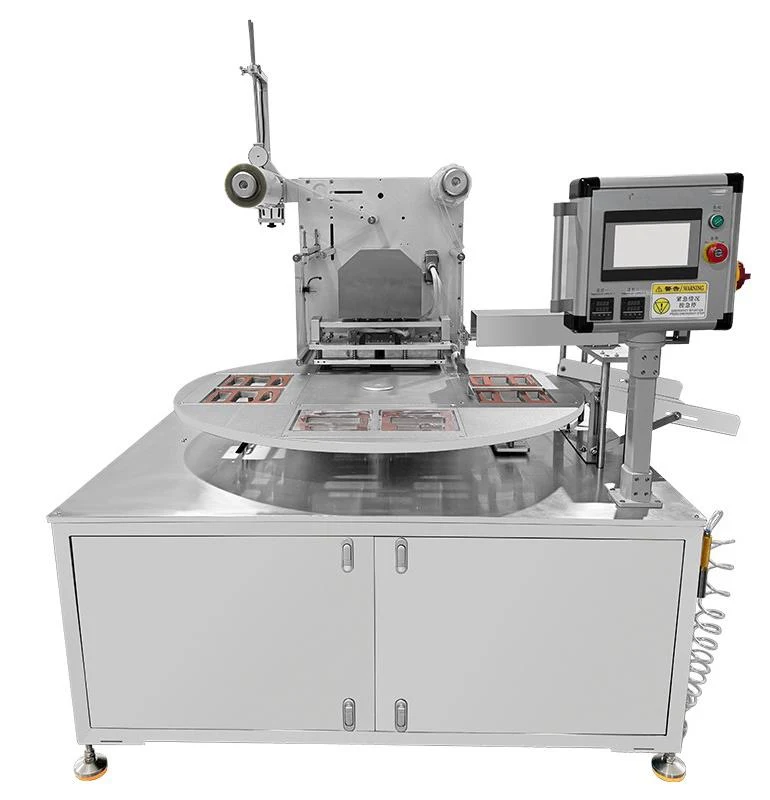
Machine Overview
| Machine type | Automatic rotary tray sealer (tray sealing machine) |
| Sealing | Heat press seal, two sealing stations working at once |
| Containers | Trays, bowls, boxes and cups, each on its own replaceable mould |
| Film | Roll film or pre-cut sheet film, in heat-sealable plastic or aluminium foil laminate |
| Output | 1,000 to 1,500 containers an hour |
| Controls | PLC with touch screen and digital temperature control |
| Line integration | Can be linked to a filling machine and conveyors |
| Where it is used | Food, beverage, pharmaceutical, cosmetic and household chemical products |
Applications
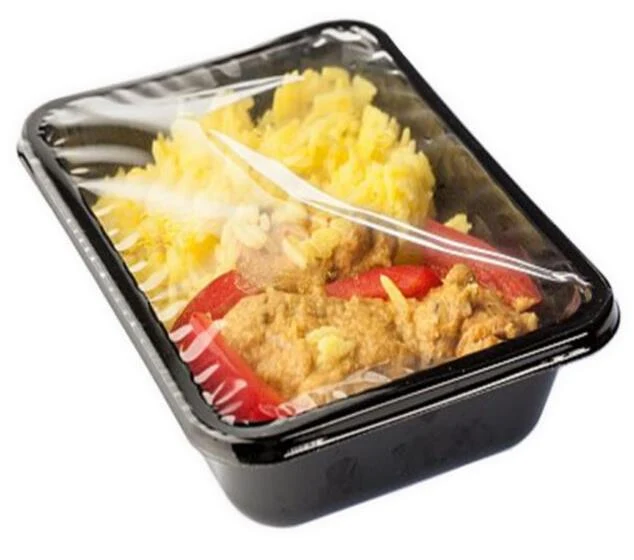
Ready meals and prepared food. Meals and portions filled into trays, bowls and cups and sealed with a film lid:
Ready meals and meal kits
Desserts, salads and sides
Portions in cups and bowls
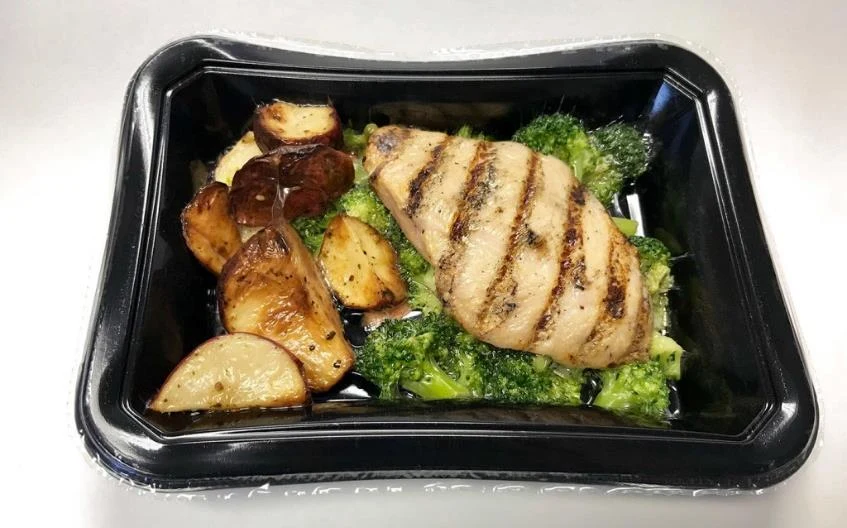
Meat, poultry and vegetables. Fresh and cooked portions sealed into trays:
Chicken and meat portions in trays
Cooked meat and vegetable meals
Meat packed for retail
Other products. If your product is not listed here, send us a sample in its container and we will seal it on a trial before we specify the machine.
A tray sealing machine seals a film lid onto a rigid container that has already been filled. For cups that are filled and sealed on one machine, see the cup fill and seal machine; for trays wrapped all round in clear stretch film, see the cling wrap machine. Punnets, tubs and bowls of cut fruit, berries and salads are covered on the fresh produce wrapping machine page.
Specifications
A tray sealing machine is set up for the containers and film you run. The figures below are from the rotary tray sealer we have supplied, and the figures for your line are confirmed in the quotation.
Output depends on the number of sealing stations and on how quickly filled containers are placed in the moulds. Each container shape runs on its own mould, and moulds are replaceable.
| Specification | Rotary tray sealer |
|---|---|
| Sealing stations | 2 |
| Output | 1,000 to 1,500 containers an hour |
| Sealing method | Heat press seal |
| Film | Roll film or sheet film; plastic laminate or aluminium foil laminate |
| Containers | Cups, bowls, boxes, bottles, cans and custom containers, on replaceable moulds |
| Sealing temperature | Ambient to 300 °C, held within ±5 °C |
| Film positioning | Photoelectric film tracking |
| Controls | PLC with touch screen |
| Main components | Weinview touch screen, Delta PLC, inverter and power supply, Airtac cylinders, Schneider relays |
| Power | 1,000 to 2,000 W |
| Compressed air | 4 to 8 kg/cm² |
| Frame | SUS304 stainless steel |
| Moulds | CNC-machined 6061 aluminium alloy, anodised |
| Safety | Fault alarms and over-temperature protection |
| Machine size | 1,500 × 1,300 × 1,600 mm |
| Weight | 500 kg |
About our modelModel codes shown are machines we have supplied and configured for previous projects. Your machine is specified and configured to suit your product, output and pack format — not supplied off the shelf.
Not sure the tray sealer suits your containers? Send us a sample container and tell us how many you seal a day.
ABOUT THE MACHINE
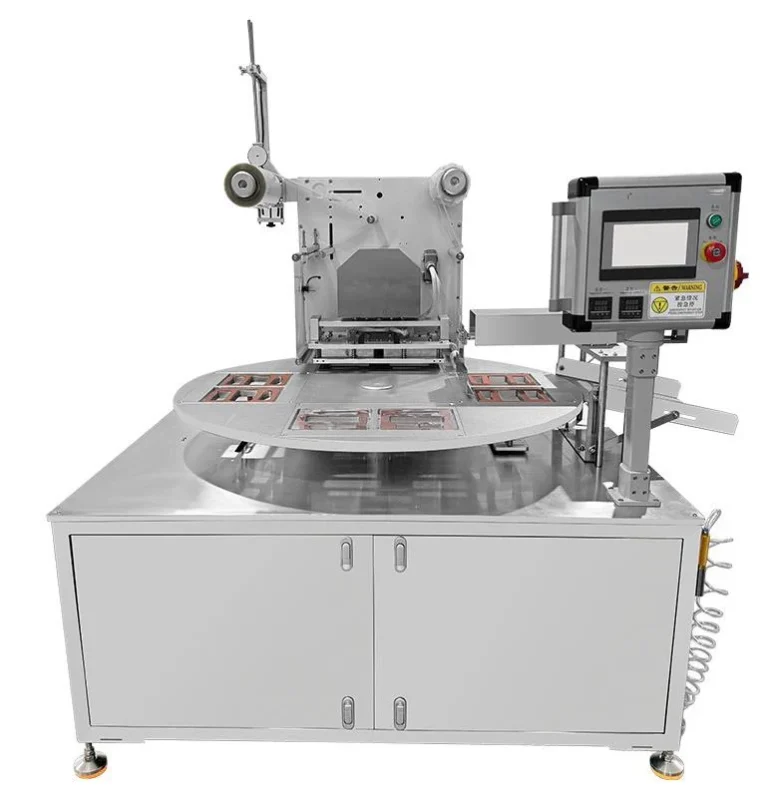
A tray sealing machine, also called a tray sealer, seals a lid of film onto a filled tray, bowl or cup. Film is drawn from a roll, or placed as a pre-cut sheet, over the container, and a heated sealing head presses it onto the rim to close the pack. On a rotary tray sealer the containers sit in moulds on a turning disc, which carries each one from loading to sealing to discharge.
Also known as
Each container goes through these steps.
The rotary tray sealer seals two containers at a time, at 1,000 to 1,500 containers an hour. Digital temperature control holds the sealing head within ±5 °C, so every seal is made at the same heat.
The moulds are replaceable, so the same tray sealer can seal trays, bowls, cups or boxes by changing the mould. It can also be linked to a filling machine and conveyors, so containers are filled and sealed in one line.
Film runs from a roll or as pre-cut sheets, in plastic laminate or aluminium foil laminate.
A tray sealer closes the container with a film lid. Products on an open tray that only need a clear, tight wrap suit a cling wrap machine instead.
For cups that are filled and sealed on one machine, see the cup fill and seal machine.
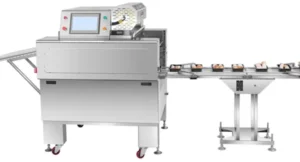
Tray sealing machines from our range running: an automatic tray sealer, an automatic linear tray sealer, and a semi-automatic tray sealer that vacuum seals and gas flushes each tray. The machine for your containers is specified and configured to suit your product and output.
Filled food trays loaded, sealed with film and discharged on an automatic tray sealer.
Trays fed in a line through the sealing station and heat sealed with a film lid.
Trays placed by hand, vacuum sealed and flushed with nitrogen, with the film cut to the tray shape.
“Highly recommended! Excellent customer service, great prices, and they always go above and beyond.”
Ratings and reviews are published on our Google Business Profile, where they can be read in full and in context.
PackMan purchased an Automatic 6-Lane, 4-Side Seal Vinegar Packaging Machine, and it has been performing reliably since installation. The machine delivers consistent packaging quality, operates efficiently, and has met our production expectations.

SA Packaging Machinery delivered a solution that has met our expectations. The equipment has been reliable in daily production, and we’re pleased with its performance. We found the team knowledgeable, professional, and willing to assist whenever required.

We’ve been very happy with the equipment supplied by SA Packaging Machinery. It’s straightforward to use, performs consistently, and has helped us improve our production process. The team was easy to work with and made the entire experience smooth.

Comparison
A tray sealing machine and a cling wrap machine both pack food on trays. A tray sealing machine heat seals a film lid onto the rim of the tray and closes the pack; a cling wrap machine stretches cling film over the tray and wraps it underneath, without sealing it to the rim.
| Tray sealing machine | Cling wrap machine | |
|---|---|---|
 |  | |
| Film | Heat-sealable plastic or foil laminate, on a roll or as sheets | PVC stretch cling film on a roll |
| Pack | A film lid sealed to the rim of the container | Film stretched over the tray and wrapped underneath |
| Containers | Rigid trays, bowls, cups and boxes, each on a mould | Trays, or products without a tray |
| Loading | Containers placed in moulds on a rotary disc | By hand, or on a conveyor on the automatic model |
| Typical products | Ready meals, desserts, meat and prepared food | Fresh produce, meat, cheese and bakery on trays |
Choose a tray sealing machine when the container needs a sealed lid that holds the product in. Choose a cling wrap machine when the product sits on an open tray and needs a clear, tight wrap.
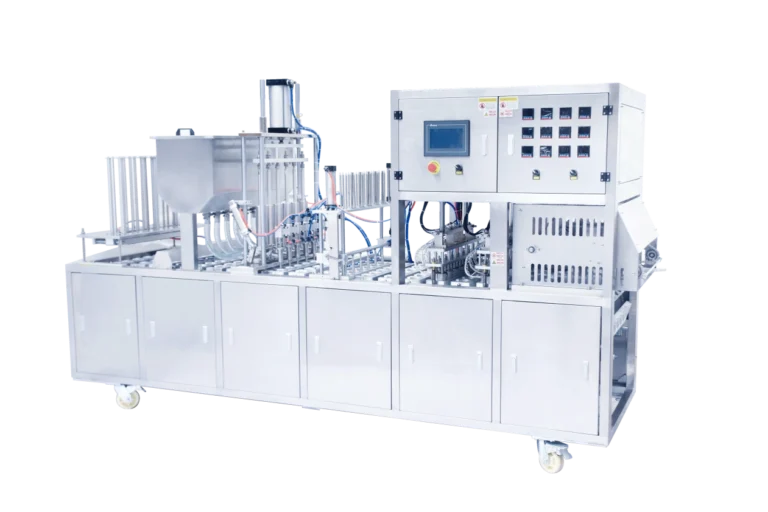
A tray sealer and a cup sealing machine both press a film lid onto a container rim. The cup fill and seal machine fills the cups and then seals them on one machine; the tray sealer seals containers that have already been filled, or is linked to a separate filling machine.
Advantages
Choose a tray sealing machine when containers are being sealed by hand or one at a time. The rotary tray sealer feeds the film, seals and discharges each container automatically, two at a time, so every pack gets the same seal and fewer people are needed on the line. Replaceable moulds let one machine seal different containers, and it can be linked to a filling machine and conveyors as the line grows.
Quotation
Every tray sealing machine is quoted to your containers and volumes rather than from a list price. For what shapes the figure on any machine quotation, see the packaging machine cost guide.
Why us
Every tray sealing machine we supply is set up and handed over by our own technicians.
Installation and commissioning.
We position the machine, connect the power and air, fit the moulds, load the film and set the sealing temperature, then hand it over once containers are sealing cleanly.
Operator training.
Your operators learn to load the film, change moulds, set the temperature, run the machine and clean it.
Service, spares and support.
Spares are held in Johannesburg, and our technicians support the line in person and over phone and video. The tray sealer carries a 12-month warranty on mechanical parts and 6 months on electrical components.
Choosing the right tray sealing machine starts with your containers, how many you seal a day, and whether the sealer will run on its own or as part of a filling line.
You might also like
Browse the full range
Filling MachinesSealing MachinesFlow WrapHorizontal Fill-SealHorizontal Form-Fill-SealCartoningCup Fill and SealTube Fill and SealLabellingShrink Sleeve LabellingShrink TunnelSleeve Sealer and Shrink TunnelL-Bar SealerSide Bar SealerBlister and ClamshellBottle Filling MachineCan Fill-SeamWrapping MachinesPiston FillerAuger FillerZ-Type Bucket ElevatorVacuum PackagingPallet Wrapping
SA Packaging Machinery supplies tray sealing machines across South Africa and Southern Africa. Send us a sample container and tell us how many you seal a day, and we will seal it on a trial and quote the machine to suit.
Questions
Yes. A tray sealer and a tray sealing machine are the same machine: it heat seals a film lid onto a filled tray, bowl or cup. The model we supply is a rotary tray sealer with two sealing stations.
A tray sealing machine seals trays, bowls, boxes, cups and other rigid containers with a rim the film can seal to. Each container shape runs on its own mould, and the moulds are replaceable, so one machine can seal several containers.
The rotary tray sealing machine we supply seals 1,000 to 1,500 containers an hour, two at a time. The output for your containers is confirmed in the quotation.
A tray sealer uses heat-sealable plastic laminate or aluminium foil laminate film, from a roll or as pre-cut sheets. Photoelectric tracking keeps roll film in position over each container.
Yes. The tray sealing machine can be linked to a filling machine and conveyors, so containers are filled and sealed in one line. For cups that are filled and sealed on one machine, see the cup fill and seal machine.
The rotary tray sealing machine needs 1,000 to 2,000 W of power, compressed air at 4 to 8 kg/cm², and floor space of about 1,500 × 1,300 mm. It weighs about 500 kg.