
A sealing machine closes a filled pack with heat and pressure, or with a mechanical seam, so the product stays airtight and the pack is tamper-evident. We supply industrial sealing machines for packaging lines in South Africa: continuous band sealers for pouches and bags, cup sealers, can seamers, tube sealers, pouch fill-seal machines and shrink wrap sealers.
The pack decides which sealing machine you need. The output, and where the pack is filled, decide how automated it should be.
The pack. Filled pouches and bags are closed on a continuous band sealer. Cups and tubs take a foil or film lid on a cup sealing machine. Tubes are sealed at the tail on a tube fill and seal machine, and cans are double-seamed on a can fill-seam machine. Products that need a film overwrap go on a shrink wrap machine.
Where the filling happens. If you fill by hand or on a semi-automatic filler, a standalone band sealer closes each bag as it leaves the filler. Cup, tube and can machines fill and seal on the same machine, and a horizontal fill-seal machine fills and seals premade pouches. Packs made from roll film are formed, filled and sealed on a form fill seal machine.
The output. Semi-automatic cup sealers and band sealers suit start-ups and short runs, with an operator placing each pack. Automatic sealing machines feed, seal and discharge every pack in a continuous cycle for steady production.
Extras on the seal. Nitrogen flushing pushes the air out of the pack just before it seals, and a date coder marks the batch or expiry date in the same pass. Both are options on the band sealer and on the horizontal fill-seal machine.
See it running
Sealing machines from the range running, from cups and cans to tubes, pouches and shrink-wrapped packs. Book a visit to see them in person at our Riversands showroom in Johannesburg.
Cups are filled, then a heated plate seals a foil or film lid onto each rim.
Each can is filled with a beverage, then the seamer rolls the lid onto the can in a double seam.
Tubes are filled with cream or paste, then the tail is sealed and trimmed.
Grippers open each premade pouch, the filler doses the product and the top is heat-sealed.
A heated L-shaped bar seals and trims the film around the pack, then the tunnel shrinks it tight.
Film wraps the bundle as a sleeve with the ends left open, and the tunnel shrinks it around the bottles or cans.
Most sealing machines join two layers of packaging material with heat, pressure and time. Heated jaws, bands or a sealing plate soften the sealing layer of the film or lid, pressure joins the layers, and the seal sets as it cools. Temperature, pressure and dwell time are set to suit the material, so a laminated foil pouch and a polyethylene bag run at different settings.
How the pack is presented changes from machine to machine. A band sealer carries the bag between moving sealing bands and then through a cooling block. A cup sealer lowers a heated plate onto a foil or film lid over the cup rim. A shrink wrap sealer seals and cuts the film around the product before a tunnel shrinks it tight.
Cans are closed mechanically instead. A can seamer rolls the lid and the can body together into an interlocking double seam, with no heat involved.
Each pack type has its own sealing machine. Open the page for the pack you seal to see formats, options and the lines we have supplied.
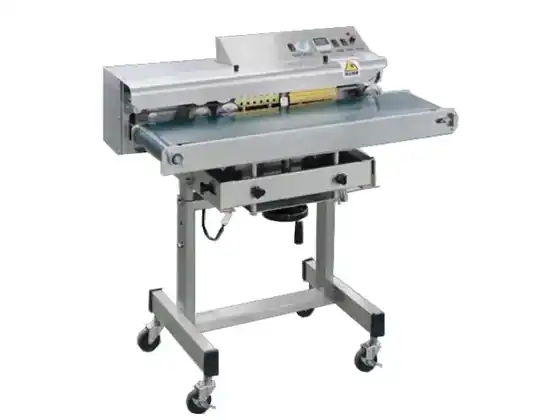
Pouches and bags of powder, granules, snacks or hardware, closed with a continuous heat seal as they travel through on a conveyor. Nitrogen flushing and a date coder are options. Read more: continuous band sealer.
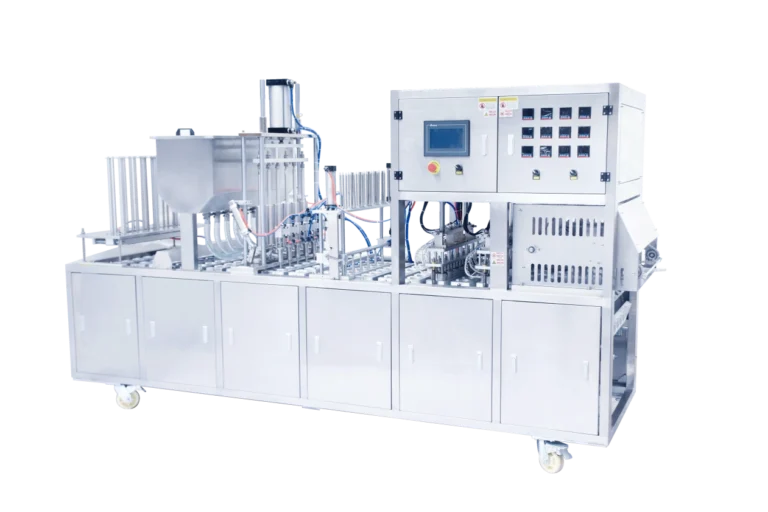
Yoghurt, juice, water and snack cups sealed with a foil or film lid, on semi-automatic or automatic cup fill and seal machines. Read more: cup sealing machines.
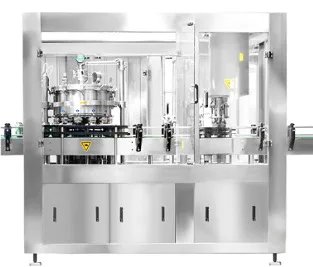
Beverages, food and industrial products filled and double-seamed on a can fill-seam monoblock. Read more: can fill-seam machine.
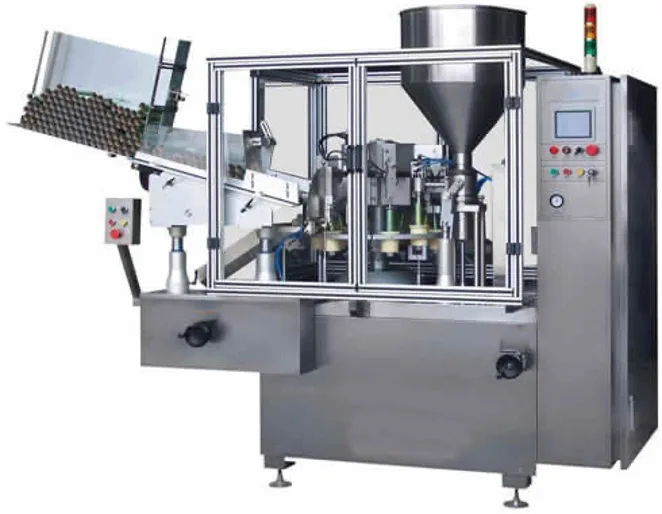
Creams, gels, ointments and pastes in plastic, laminated or aluminium tubes, filled and sealed at the tail. Read more: tube fill and seal machine.
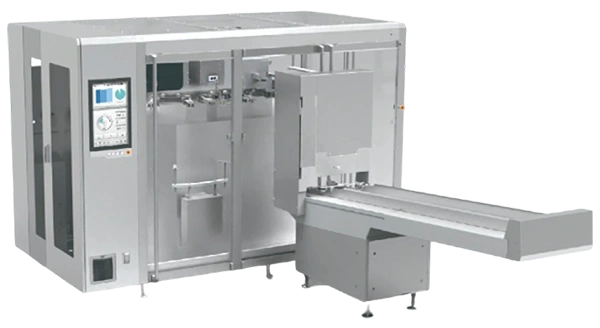
Stand-up, zipper and spout pouches filled and sealed on one machine, with nitrogen flushing and date coding as options. Read more: horizontal fill-seal machine.
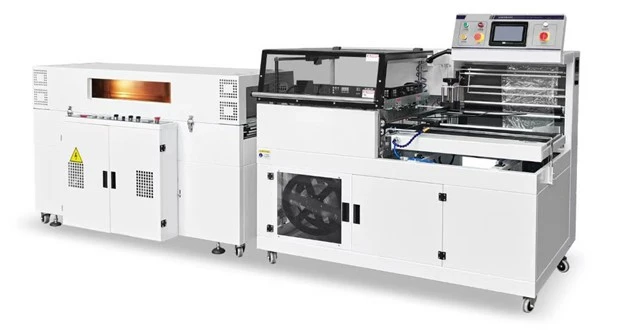
Single packs, cartons and bottle or can bundles sealed in shrink film by an L-bar, side bar or sleeve sealer. Read more: shrink wrap machines.
Buying
We supply sealing machines configured to suit your pack, product and production needs. Each machine is customised and prepared at our workshop in Riversands, Johannesburg before delivery and commissioning across South Africa and into neighbouring SADC markets.
A quotation is put together from the pack and its material, the product, the output you need, and options such as nitrogen flushing or date coding. Send us a filled sample pack and we seal it on the machine, so you see the finished seal before you decide.
Our own technicians install and commission the machine and train your operators on site. Every machine carries a one-year warranty, and spares are held in Johannesburg.
Our PDF catalogue has images and specification tables for the sealing machines on this page and the rest of our range. Download it, or ask for a quote on your pack.
No. We supply industrial sealing machines for packaging lines. A hand-held impulse sealer or foot sealer closes one bag at a time and suits low volumes, and packaging retailers stock them. When bags come off a filler all day, a continuous band sealer seals them as fast as they are filled.
A continuous band sealer. The operator places the filled pouch on the conveyor and the sealing bands close the top as it passes through. If you want the pouch filled and sealed on one machine, a horizontal fill-seal machine does both.
No. Cup, tube, can and pouch fill-seal machines seal the pack on the same machine that fills it. A standalone sealing machine is for packs filled by hand or on a semi-automatic filler that does not close the pack.
No. The sealing head is matched to the pack: a heated plate for cup lids, sealing bands for pouches and a seaming head for cans. Each pack type needs its own sealing machine. Different sizes of the same pack can usually run on one machine with the right settings or change parts, which we confirm at quotation.
Yes. A shrink wrap machine seals film around the product, then a tunnel shrinks the film tight. It overwraps a product or a bundle rather than closing a filled pack, which is why it has its own range: see shrink wrap machines.