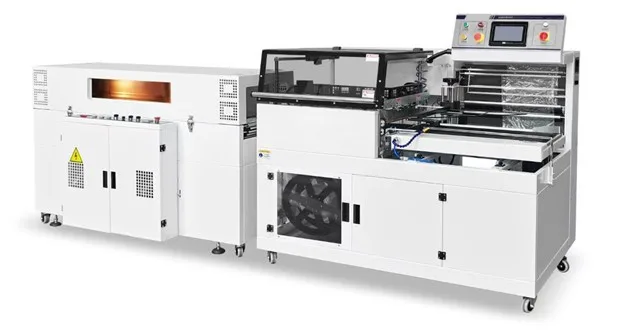
Shrink wrap machines protect products by enclosing them in heat-shrinkable film before applying controlled heat to create a tight, professional finish. Although the process looks simple, it involves two important stages: sealing the film around the product and shrinking the film using heat. Understanding how shrink wrap machines work helps manufacturers choose the right equipment for their production line, whether packaging food, beverages, pharmaceuticals, electronics or industrial products.
Every shrink wrap machine follows the same basic process, regardless of whether it is manual, semi-automatic or fully automatic. The process consists of two main stages: sealing the shrink film around the product and applying heat to shrink the film tightly around it. This creates a secure, professional-looking package that protects the product during storage, transport and display.
The product is placed inside shrink film, which may be supplied as centre-folded film, tubing or sleeves depending on the machine and application. Selecting the correct film size ensures a neat finish while minimising material waste.
The machine seals the open edges of the film to create a loose package around the product. This seal keeps the film securely in place before the shrinking process begins. Different sealing systems are available depending on the product size, production speed and packaging requirements.
Once sealed, the product passes through a shrink tunnel or is heated using a heat gun or shrink chamber. The controlled heat causes the film to shrink tightly around the product, producing a smooth, durable and tamper-evident package.
After leaving the heat source, the film cools and hardens into its final shape. The finished package is then inspected to ensure the seals are secure and the film has shrunk evenly before being prepared for storage or shipping.
Different shrink wrap sealers are designed to suit different production volumes, product sizes and packaging applications.
| Sealer Type | Best Suited For | Typical Production |
|---|
| L-Bar Sealer | Retail products, food, cosmetics and consumer goods | Medium |
| I-Bar Sealer | Small businesses and low-volume packaging | Low |
| Side Sealer | Long or irregular-shaped products | Medium to High |
| Sleeve Sealer | Bottles, cartons and multipacks | High |
| Continuous Motion Sealer | Fully automated production lines | Very High |
Selecting the right sealing system depends on your production requirements, packaging material and the size of the products being wrapped.
After the film has been sealed, heat is applied to shrink it tightly around the product. Several heating methods are available depending on the production environment.
A shrink tunnel uses circulating hot air to evenly heat the film as products move through the tunnel on a conveyor. It provides consistent results and is the preferred solution for medium- to high-volume production.
A heat gun is a handheld tool used to manually shrink film around products. It is commonly used for small production runs, oversized products or occasional packaging applications.
Shrink chamber machines combine sealing and shrinking into a single operation. They are compact, easy to operate and ideal for smaller businesses or lower production volumes.
Shrink wrapping is suitable for a wide variety of products across many industries. It provides protection, improves product presentation and helps keep products securely bundled together during transport and storage.
Common applications include:
Shrink wrapping is widely used wherever products need protection, tamper evidence or an attractive retail presentation.
Shrink wrapping offers several benefits for manufacturers, distributors and retailers.
Some of the key advantages include:
Because of its versatility and efficiency, shrink wrapping remains one of the most widely used packaging methods across numerous industries.
Choosing the right shrink wrap machine depends on your products, production requirements and future business growth. The ideal machine should improve packaging efficiency while delivering reliable, consistent results.
When selecting a shrink wrap machine, consider:
Businesses with lower production volumes often benefit from manual or semi-automatic machines, while larger manufacturers typically choose fully automatic shrink wrapping systems to maximise throughput and reduce labour costs.
If you are unsure which shrink wrap machine is best suited to your operation, the SA Packaging Machinery team can recommend the most suitable solution based on your products, packaging requirements and production goals.
A shrink wrap machine works by sealing shrink film around a product and then applying controlled heat using a shrink tunnel, heat gun or shrink chamber. The heat causes the film to shrink tightly around the product, creating a secure, protective and professional-looking package.
Sealing joins the edges of the shrink film together to enclose the product, while shrinking uses heat to tighten the sealed film around the product. Both steps are essential for creating a secure shrink-wrapped package.
No. While automatic and high-volume shrink wrap machines typically use a shrink tunnel, smaller operations may use a heat gun or a shrink chamber machine. The best heat source depends on your production volume, product size and packaging requirements.
Shrink wrapping is suitable for a wide range of products, including food, beverages, dairy products, pharmaceuticals, cosmetics, electronics, printed materials, household goods, industrial components and retail multipacks.
Shrink wrapping protects products from dust, moisture and tampering, improves shelf presentation, keeps products securely bundled together during transport and helps reduce packaging waste. It is also suitable for both manual and fully automated packaging lines.
Common shrink wrap sealers include L-bar sealers, I-bar sealers, side sealers, sleeve sealers and continuous motion sealers. Each type is designed for different product sizes, packaging styles and production speeds.
The most commonly used shrink films are polyolefin (POF), polyethylene (PE) and PVC shrink film. The best choice depends on the product being packaged, the required level of protection and the packaging equipment being used.
The right shrink wrap machine depends on your product size, production volume, type of shrink film, available floor space, level of automation and budget. Consulting with a packaging specialist can help you select the most suitable machine for your application.