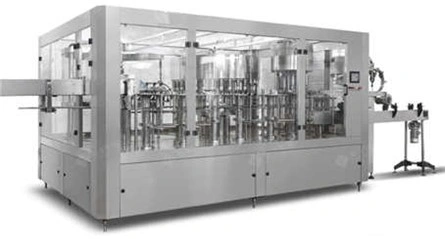
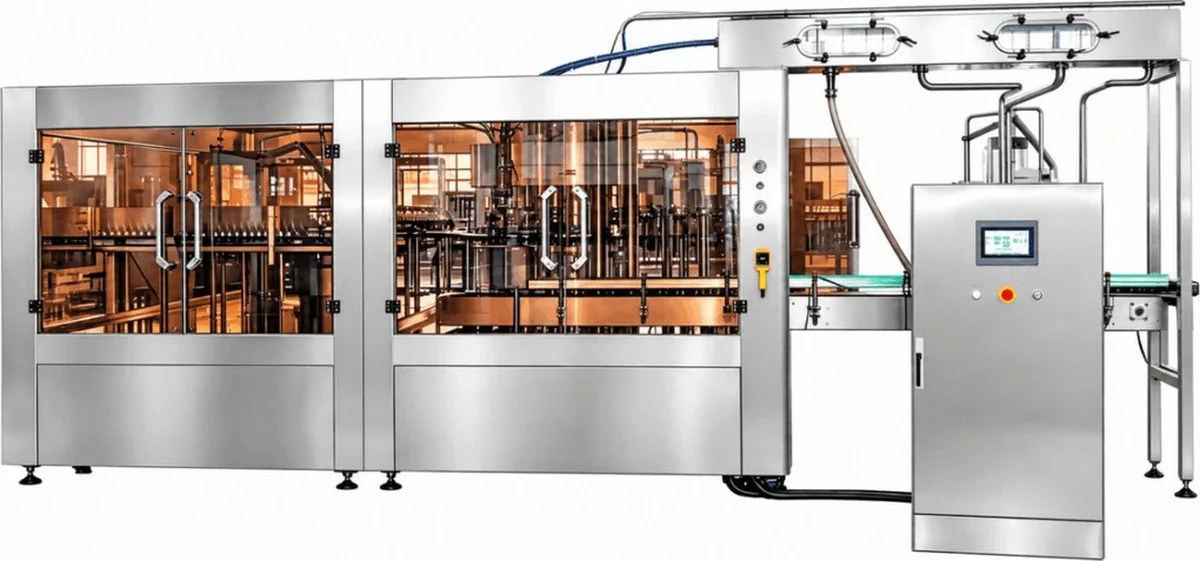
Machines that fill, cap and label bottles, from 2 ml dropper bottles to 5 litre containers.
Key Takeaways
Thin liquids run on gravity or overflow fillers, thick ones on a piston filler, and pump fillers cover the range in between.
Bottle material, size range and neck finish decide the change parts, the capper and how steadily the bottle runs.
Rinsing, capping, labelling and shrink packing can be added as output grows, if the filler is chosen with them in mind.
The applications of bottle filling machines cover almost any liquid sold in a bottle: water and juice, milk, sauces and honey, cooking oils, lotions and shampoo, cleaning chemicals, and essential oils in dropper bottles. Each application changes the machine. The liquid decides the filler, the bottle and cap decide the handling and capping, and your output decides whether a semi-automatic filler or a full line makes sense. For a machine that fills, caps and labels, see our bottling machine page. For every filler in the range by liquid, see liquid filling machines.
Each application of a bottle filling machine is matched by how the liquid flows and how it behaves in the bottle. The table pairs common applications with the filler that suits them.
| Application | How the liquid behaves | Filler that suits it |
|---|---|---|
|
Water and still drinks |
Thin and free-flowing, sold in clear bottles |
Gravity or overflow filler, often on a 3-in-1 machine that rinses, fills and caps |
|
Juice |
Thin to medium, foams when filled fast, sometimes filled hot |
Gravity or overflow filler with the fill speed set to control foam |
|
Milk and dairy drinks |
Foams when filled fast |
Nozzle and filling head chosen to keep foam down |
|
Sauces, honey and syrups |
Thick, strings at the nozzle; sauces carry salt |
Piston filler with a drip-free nozzle; SUS316 contact parts for salty sauces |
|
Cooking oils |
Slippery, and drips spoil the label |
Pump or piston filler with drip-free nozzles |
|
Lotions, creams, shampoo and liquid soap |
Viscous; shampoo and soap foam |
Piston filler, with the nozzle chosen to control foam |
|
Cleaning chemicals and detergents |
Some foam, and some attack standard seals |
Overflow or pump filler, with contact parts and seals chosen for the chemical |
|
Essential oils and dropper bottles |
Small volumes, from 2 ml |
Peristaltic pump filler on a monoblock that fills and caps |
We supply gravity, overflow, piston, pump (including peristaltic) and weigh fillers, so the filler is matched to your liquid rather than the liquid to the machine. Our machines are built in SUS304 stainless steel as standard, and in SUS316 for liquids that contain salt.
One bottle filling machine can run more than one liquid when they flow in a similar way. A filler set up for water will not suit a thick sauce, so liquids with very different viscosities need a different filler or filling head, and time to clean between products. Carbonated drinks are a separate application because the gas has to stay in the product; see still vs carbonated liquid filling.
The bottle decides how a bottle filling machine handles each container, so it matters as much as the liquid. Before choosing a machine, confirm:
A bottle filling machine runs several bottle sizes within a set range. Moving between sizes usually needs change parts, so ask how long a changeover takes. If you run 500 ml and 2 litre bottles on one line, say so when you ask for a quote.
Clean bottles matter too. Drips and splashes around the neck lift and wrinkle labels, so ask how the filler stops drips between fills.
A bottle filling machine is one step in a bottling line, and most applications need some of the steps around it:
You do not need every step on day one. Many producers start with filling and capping and add labelling later, so choose the bottle filling machine with the conveyor and the later steps in mind. The water bottling machine page shows a complete line from rinsing to shrink-wrapped packs.
Output decides how automated the line is. Smaller batches often start on a semi-automatic filling machine, with an operator placing each bottle, while daily production for retail moves to a fully automatic line. Our guide to automatic vs manual liquid filling covers that decision.
A bottle filling machine quote is only as good as the details behind it, so send the same details to every supplier:
When the quotes come back, compare the output each supplier expects with your liquid and bottle, not the maximum speed. Ask for the fill accuracy in writing, how long cleaning and changeover take, and where spares are held. Our spares are held in Johannesburg, and you can send samples to our Riversands showroom for a trial run on your own product before you commit. For what shapes the cost, see bottling machine cost in South Africa.
Related guides: how a bottling line works and bottling machine maintenance.
The applications of bottle filling machines run from water and juice to cosmetics and chemicals, and the liquid, the bottle and your output decide the machine. See the bottle filler-capper-labeller for a machine that fills, caps and labels, or compare every filler by liquid on liquid filling machines.
Send us your liquid, your bottle and the output you need, and we will recommend the bottle filling machine and line to suit.