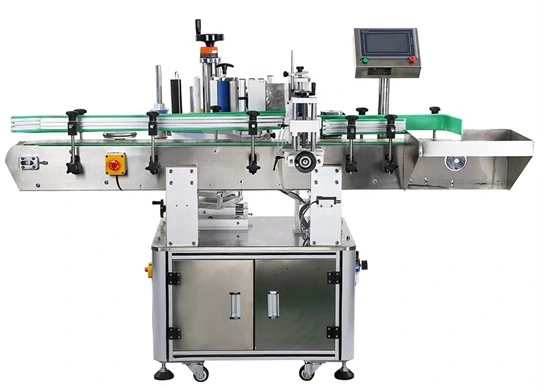
If your business is still applying labels by hand, you’ve probably wondered whether investing in a labelling machine is worth the cost. While hand labelling may work for small production runs, it quickly becomes time-consuming, inconsistent, and expensive as production volumes grow.
A labelling machine improves speed, accuracy, product presentation, and compliance while reducing labour costs and label waste. For many manufacturers, the return on investment (ROI) can be achieved much sooner than expected.
Labelling machine ROI refers to how quickly the savings generated by the machine cover the initial purchase cost.
Savings typically come from:
Once these savings exceed the cost of the machine, the investment has paid for itself.
| Factor | Hand Labelling | Automatic Labelling Machine |
|---|---|---|
| Speed | 5–15 containers per minute | 30–300+ containers per minute |
| Labour | One or more operators | Minimal operator involvement |
| Accuracy | Depends on operator | Consistent label placement |
| Label Waste | Higher | Much lower |
| Product Appearance | Can vary | Professional finish every time |
| Downtime | Frequent adjustments | Continuous production |
| Scalability | Limited | Easy to increase production |
The biggest ROI advantage comes from higher production output.
For example:
That’s 8 times more products labelled in the same amount of time.
Higher throughput means:
Manual labelling often requires one or more employees dedicated to placing labels.
An automatic labelling machine allows employees to focus on:
Rather than replacing staff, many businesses improve productivity by reallocating labour where it’s needed most.
Incorrectly applied labels lead to:
Automatic labelling machines apply labels consistently, reducing waste and lowering the cost of consumables over time.
Customers notice packaging quality.
A professionally applied label helps products:
Uniform labels also make products look more premium.
Many industries require labels to be applied accurately.
This includes:
Misplaced or unreadable labels can result in rejected products or compliance issues.
Automatic labelling improves placement accuracy and repeatability.
A labelling machine is usually a worthwhile investment if you:
For very low production volumes, hand labelling may still be sufficient. However, as demand grows, automation often becomes the more economical long-term solution.
Beyond the initial payback period, a labelling machine continues to deliver value through:
The machine becomes an asset that supports business growth for years.
Many businesses recover their investment within 12–24 months, depending on labour savings, production volume, and reduced waste.
Yes. Automatic labelling machines apply labels with consistent positioning, reducing crooked labels, wrinkles, and application errors.
Yes. Automation reduces the amount of manual work required, allowing staff to focus on higher-value production tasks.
Yes. Semi-automatic models are ideal for businesses looking to improve consistency and productivity without investing in a fully automated production line.
The biggest factors include production volume, labour costs, label waste, machine speed, maintenance, and the value of improved product quality.