Choosing the right can seamer is essential for producing consistently sealed cans while meeting your production requirements. The best machine depends on your output volume, product type, level of automation, and whether your products require atmospheric, vacuum, or gas-flush sealing.
This guide explains the most common can seamer types and helps you determine which solution is best for your operation.
Manual can seamers are operated entirely by hand and are typically mounted on a workbench. They are designed for very small production runs, product development, laboratories, and educational environments.
Semi-automatic can seamers combine manual loading with automated seam formation. The operator places the filled can and lid into the machine before the seaming cycle begins automatically.
These machines offer significantly higher consistency than manual seamers while remaining affordable for growing businesses.
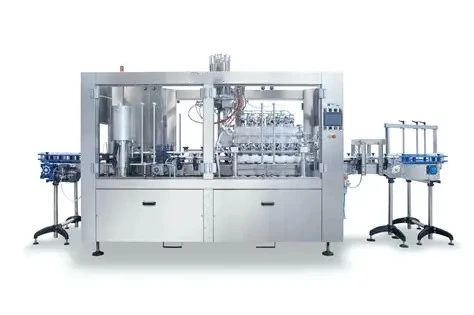
Automatic can seamers integrate directly into a production line where cans are automatically conveyed, lidded, seamed, and discharged without manual intervention.
These systems are designed for continuous manufacturing and can process hundreds of cans per minute depending on the machine configuration.
Besides automation level, can seamers can also be classified according to the sealing environment.
Atmospheric seamers seal cans under normal room air conditions.
These machines are suitable for products that do not require oxygen reduction before sealing.
Typical products include:
Vacuum seamers remove air from the can before the double seam is formed.
Reducing oxygen helps improve product quality and shelf life by slowing oxidation.
Vacuum seaming is commonly used for:
Gas-flush seamers replace oxygen inside the can with an inert gas such as nitrogen before sealing.
This process helps preserve freshness and protects oxygen-sensitive products.
Common applications include:
| Feature | Manual | Semi-Automatic | Automatic |
|---|---|---|---|
| Production Volume | Low | Medium | High |
| Labour Requirement | High | Medium | Low |
| Consistency | Moderate | High | Very High |
| Investment Cost | Low | Medium | High |
| Production Speed | Slow | Moderate | Fast |
| Suitable for Continuous Production | No | Limited | Yes |
The right can seamer depends on your production goals.
Choose a manual can seamer if you:
Choose a semi-automatic can seamer if you:
Choose a fully automatic can seamer if you:
If your products require longer shelf life or reduced oxygen levels, consider a vacuum or gas-flush can seamer instead of a standard atmospheric machine.
The three main can seamer types are manual (bench-top), semi-automatic, and fully automatic machines. They differ primarily in automation level, production speed, and output capacity.
A semi-automatic can seamer requires an operator to load and unload each can, while an automatic can seamer continuously processes cans as part of an integrated production line.
A vacuum can seamer is recommended for products that benefit from reduced oxygen exposure, such as coffee, seafood, and premium food products, to improve shelf life and product quality.
A gas-flush can seamer replaces oxygen inside the can with an inert gas, usually nitrogen, before sealing. This helps preserve freshness and reduce oxidation.
Most small manufacturers benefit from a semi-automatic can seamer because it offers professional seam quality at a lower investment than a fully automatic system.