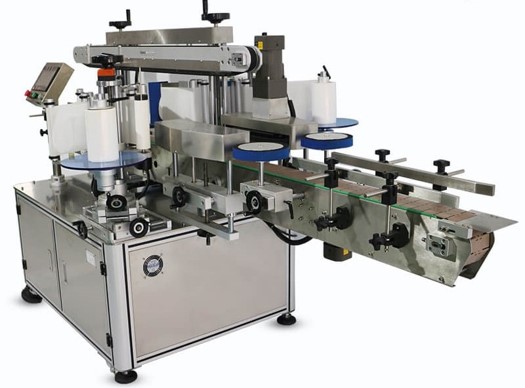
Choosing the right labelling machine is one of the most important decisions for any production line. The correct machine improves product presentation, reduces labour costs, increases throughput and ensures labels are applied consistently every time.
However, not every labelling machine is suitable for every product. The ideal solution depends on factors such as container shape, production speed, label type, level of automation and future growth.
This buying guide explains the key considerations before investing in a labelling machine so you can select equipment that meets your current production needs while supporting future expansion.
A properly selected labelling machine helps manufacturers:
The wrong machine can create production bottlenecks, increase maintenance costs and lead to poorly applied labels that affect your brand image.
The first question to ask is:
What type of container are you labelling?
Different machines are designed for different container shapes.
Suitable for:
Recommended machine:
Suitable for:
Recommended machine:
Suitable for:
Recommended machine:
Products with unusual shapes may require:
Different products require different label configurations.
Examples include:
Choosing the correct labelling machine ensures accurate placement regardless of label size or position.
Production speed is one of the biggest factors affecting machine selection.
Suitable for:
Typical output:
A semi-automatic machine is often sufficient.
Suitable for:
Typical output:
An automatic inline labeller offers greater efficiency.
Suitable for:
Typical output:
A fully automatic labelling system with conveyor integration is recommended.
Best for:
Advantages:
Limitations:
Best for:
Advantages:
Best for:
Advantages:
Ideal for:
Installed directly into production lines.
Benefits include:
Buying only for today’s production needs may result in replacing equipment sooner than expected.
Consider:
Selecting a scalable machine protects your investment.
If you produce multiple products, quick changeovers become essential.
Look for machines with:
These features reduce downtime and improve productivity.
High-quality products require consistent label positioning.
Modern labelling machines offer:
Accurate labelling improves shelf appeal and reduces rejected products.
Before purchasing, ensure the machine integrates with existing equipment.
Check compatibility with:
Integrated systems maximise production efficiency.
Before selecting a labelling machine, ask yourself:
Answering these questions will help narrow down the most suitable solution.
Avoid these common purchasing mistakes:
Taking the time to evaluate your production needs helps prevent costly upgrades later.
SA Packaging Machinery supplies reliable labelling solutions for manufacturers across South Africa.
Our range includes:
Our experienced team helps businesses identify the most suitable machine based on production requirements, packaging type and future growth plans.
Choosing the right labelling machine involves more than selecting the fastest or most affordable option. Factors such as container shape, label type, production speed, automation level and future scalability all play an important role in ensuring long-term efficiency and return on investment.
By evaluating your production requirements carefully and investing in the appropriate equipment, you can improve productivity, reduce operating costs and maintain consistent product presentation.
Choosing the right labelling machine depends on your container shape, label type, production speed, level of automation, and whether the machine needs to integrate with your existing packaging line. It’s also important to consider future production growth so your investment can scale with your business.
Key factors include:
A semi-automatic labelling machine requires an operator to load each product manually, making it ideal for lower production volumes. An automatic labelling machine labels products continuously on a conveyor, making it suitable for medium- to high-volume manufacturing with greater speed and efficiency.
Wrap-around labelling machines are designed specifically for round bottles, jars and cans. They apply a single label around the entire circumference of the container with consistent positioning and high accuracy.
Front and back labelling machines are ideal for flat and oval containers. They can apply two labels accurately—one on the front and one on the back—making them popular for cosmetic, pharmaceutical and household products.
Yes. Many modern labelling machines feature adjustable guides and settings that allow them to accommodate a range of container sizes and shapes. If you frequently switch products, choose a machine designed for quick and easy changeovers.
Labelling machine speeds vary depending on the model and application. Semi-automatic machines are suitable for lower production volumes, while fully automatic systems can label dozens or even hundreds of products per minute, depending on the product size and label configuration.
Yes. Many automatic labelling machines are designed to integrate with filling machines, capping machines, conveyors, coding systems and other packaging equipment, creating a fully automated production line.
Labelling machines are widely used across industries including:
Yes. Choosing a machine with higher capacity and flexible configuration helps avoid costly upgrades as your production increases. Investing in scalable equipment can improve long-term efficiency and return on investment.
The cost of a labelling machine depends on factors such as automation level, production speed, label application type, and machine configuration. Semi-automatic models are generally more affordable, while fully automatic inline systems require a larger investment but offer greater productivity and lower labour costs over time.
SA Packaging Machinery supplies high-quality labelling solutions tailored to a wide range of industries and production requirements. Our team provides expert advice to help you select the right machine, along with installation, training, technical support and after-sales service to ensure long-term performance.
Not sure which labelling machine best suits your products or production line? Our packaging specialists can help you compare options based on your container type, production speed, label requirements and budget.
Whether you need a semi-automatic solution for a growing business or a fully automated inline system for high-volume production, we’ll recommend the right machine for your application.
Contact SA Packaging Machinery today for expert advice and a tailored quotation.