
If you’re considering investing in a flow wrap machine, one of the first questions you’ll likely ask is, “How much does a flow wrap machine cost in South Africa?” While it’s a valid question, there isn’t a one-size-fits-all answer. The cost of a flow wrap machine depends on several factors, including production speed, automation level, machine construction, product requirements, and the level of customisation needed for your packaging process.
Many businesses make the mistake of focusing solely on the initial purchase price. However, the true value of a flow wrap machine lies in its ability to improve productivity, reduce labour costs, minimise product waste, and deliver consistent, high-quality packaging. When viewed as a long-term investment rather than a once-off expense, the right machine can significantly improve operational efficiency and profitability.
Whether you’re packaging bakery products, confectionery, fresh produce, medical devices, hardware, or consumer goods, selecting the right machine requires understanding what influences the overall investment and how different features impact your production line.
In this guide, you’ll learn:
By understanding the complete cost picture, you’ll be better equipped to make an informed purchasing decision that supports both your current production requirements and future business growth.
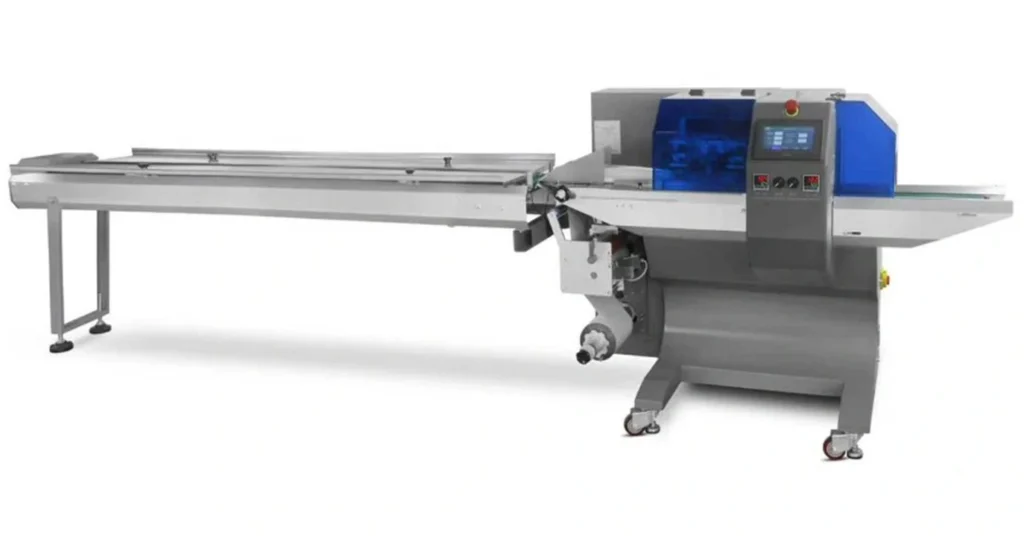
No two manufacturing businesses have exactly the same packaging requirements. A small business packaging handmade products has very different needs from a large-scale food manufacturer producing thousands of products every hour.
For this reason, flow wrap machines are available in a wide range of configurations, and each specification affects the overall investment.
Below are the primary factors that influence the cost of a flow wrap machine in South Africa.
One of the biggest factors affecting the price of a flow wrap machine is its production speed.
Machines designed for lower production volumes generally have simpler mechanical systems and fewer automation features. In contrast, high-speed industrial machines are built with advanced motion control systems, precision engineering, and heavy-duty components that allow them to package products continuously at much higher output rates.
When evaluating machine speed, consider:
Purchasing a machine that can comfortably meet future demand may prove more cost-effective than upgrading equipment only a few years later.
Instead of choosing the fastest machine available, select a system that matches your production requirements while allowing room for growth.
The products you package play a significant role in determining the type of flow wrap machine you require.
Different products require different handling methods, sealing systems, and machine configurations.
For example, packaging soft bakery products requires a machine capable of gentle product handling to avoid crushing or damaging delicate items. Packaging hardware or industrial components, on the other hand, may require stronger sealing pressure and more durable packaging materials.
Factors that influence machine selection include:
The more specialised your application, the more customised the machine may need to be.
Automation is another major contributor to the overall investment.
Entry-level systems may require operators to manually feed products into the machine, making them suitable for lower production volumes or businesses with limited automation requirements.
As production increases, many businesses choose to automate additional parts of the packaging process to improve efficiency and reduce labour costs.
Automation options may include:
Although these features increase the initial investment, they often reduce operating costs over time by improving consistency, minimising downtime, and lowering labour requirements.
Modern flow wrap machines increasingly use servo-driven technology instead of conventional mechanical or pneumatic systems.
Servo motors provide precise electronic control over machine movement, allowing different parts of the machine to operate with exceptional accuracy and synchronisation.
Benefits of servo-driven flow wrappers include:
Although servo-driven machines generally represent a higher initial investment, many manufacturers find that the productivity improvements and reduced waste deliver significant long-term savings.
For businesses producing multiple products or changing packaging sizes regularly, servo technology often provides a strong return on investment.
Not all flow wrap machines are built to the same standard.
The quality of construction has a direct impact on machine reliability, maintenance requirements, and service life.
Industrial-grade flow wrap machines are typically manufactured using robust materials designed to withstand continuous operation in demanding production environments.
Higher-quality machines may include:
While premium construction may increase the purchase price, it can reduce maintenance costs, improve uptime, and extend the machine’s operational lifespan.
Some manufacturers package only one product, while others produce dozens of different product sizes and packaging formats every day.
If your business regularly changes products, packaging dimensions, or film types, you’ll benefit from a machine designed for quick and efficient changeovers.
Features that simplify changeovers include:
Reducing changeover time helps maximise production efficiency and minimise downtime, particularly in businesses with a diverse product range.
Many flow wrap machines can be integrated with additional equipment to create a fully automated packaging line.
Optional features vary depending on the application and industry but may include:
While these additions increase the overall investment, they can significantly improve production efficiency, product traceability, quality control, and compliance with industry standards.
Rather than asking, “What is the cheapest flow wrap machine available?”, a better question is:
“Which machine will deliver the greatest value for my business over the next five to ten years?”
The lowest-priced machine may not provide the production capacity, reliability, or flexibility your business needs as it grows.
Instead, consider:
By evaluating the complete picture rather than focusing solely on the purchase price, you’ll be better positioned to select a flow wrap machine that supports sustainable business growth and delivers lasting value.
When budgeting for a new flow wrap machine, it’s easy to focus only on the purchase price. However, the total investment extends beyond the machine itself. Understanding these additional costs will help you budget accurately and avoid unexpected expenses after installation.
The good news is that many of these costs are one-time investments or can be minimised through proper planning and preventative maintenance.
A flow wrap machine should be installed and commissioned by experienced technicians to ensure it performs correctly from day one.
Professional installation typically includes:
Proper commissioning helps identify any adjustments required before full production begins, reducing the risk of unnecessary downtime.
Working with an experienced supplier also ensures your machine is configured to suit your specific products and packaging materials.
Even the most advanced packaging machine performs best when operated by trained personnel.
Investing in operator training helps your team:
Well-trained operators can significantly improve productivity while extending the lifespan of the equipment.
Like any industrial equipment, a flow wrap machine requires regular maintenance to maintain reliable performance.
Routine preventative maintenance helps prevent unexpected breakdowns, extends component life and keeps packaging quality consistent.
Typical maintenance tasks include:
A preventative maintenance schedule is almost always more cost-effective than reactive repairs following unexpected machine failures.
Every production facility should keep a small inventory of critical spare parts.
Having replacement components readily available can reduce downtime if a part requires replacement during production.
Common spare parts may include:
When selecting a supplier, it’s worth asking about local spare parts availability and after-sales support to minimise future delays.
The performance of a flow wrap machine depends not only on the equipment but also on the quality of the packaging materials being used.
Using poor-quality film can result in:
Choosing packaging materials that are compatible with your machine helps ensure consistent packaging quality while reducing unnecessary production interruptions.
Before purchasing a flow wrap machine, it’s important to ensure your facility has the necessary infrastructure.
Depending on the machine configuration, requirements may include:
Planning for these requirements in advance can simplify installation and reduce delays when the equipment arrives.
As your business grows, your packaging requirements may change.
Choosing a machine that can accommodate future upgrades often proves more economical than replacing the entire system later.
Possible upgrades include:
Investing in a scalable solution allows your packaging line to grow alongside your business.
One of the biggest decisions manufacturers face is whether to purchase their own flow wrap machine or continue outsourcing their packaging requirements.
The right choice depends on your production volumes, growth plans and operational objectives.
For smaller businesses or companies with inconsistent production schedules, outsourcing packaging may be the most practical option.
Outsourcing can be beneficial when:
It allows businesses to access professional packaging services without investing in machinery or additional production staff.
However, outsourcing also means less control over production schedules, turnaround times and packaging quality.
As production volumes increase, many businesses find that purchasing their own flow wrap machine provides greater flexibility and long-term savings.
Owning your own equipment allows you to:
Many manufacturers also find that in-house packaging helps streamline operations by reducing lead times and improving inventory control.
Before deciding whether to purchase a flow wrap machine, consider the following questions:
If you answered “yes” to several of these questions, investing in your own packaging equipment may offer significant long-term benefits.
The decision to buy a flow wrap machine should not be based solely on the initial investment.
Instead, consider the broader impact on your business, including:
By evaluating both the immediate and long-term benefits, you’ll be better positioned to determine whether purchasing a flow wrap machine aligns with your operational goals.
When evaluating the cost of a flow wrap machine, it’s important to look beyond the purchase price. The initial investment is only one part of the overall financial picture.
The Total Cost of Ownership (TCO) considers every cost associated with owning and operating the machine throughout its working life. By understanding these ongoing costs, businesses can make more informed purchasing decisions and choose equipment that delivers long-term value rather than simply the lowest upfront price.
A well-built flow wrap machine may require a higher initial investment but can often provide lower operating costs, greater reliability and higher productivity over many years of operation.
When comparing different machines, consider the following factors.
Modern flow wrap machines are designed to maximise productivity while reducing energy consumption.
Energy-efficient machines can help lower operating costs by:
Although energy savings may seem small on a daily basis, they can become significant over years of continuous production.
Routine maintenance is an essential part of operating any packaging machine.
Machines that are designed with easy access to serviceable components often require less downtime during routine maintenance and repairs.
Features that can reduce maintenance costs include:
Working with a supplier that offers reliable technical support and readily available spare parts can also reduce maintenance-related downtime.
One of the biggest financial benefits of investing in a flow wrap machine is the reduction in manual labour.
Automated packaging systems can streamline repetitive tasks that would otherwise require multiple operators.
Potential labour savings include:
As labour costs continue to rise, automation can help manufacturers improve efficiency while allowing employees to focus on higher-value tasks.
Packaging waste has a direct impact on production costs.
Poorly sealed packages, damaged products or incorrect film positioning can result in unnecessary material waste and product loss.
A high-quality flow wrap machine helps reduce waste by providing:
Reducing waste not only lowers operating costs but also contributes to more sustainable manufacturing practices.
For many businesses, the greatest return on investment comes from increased production output.
A faster, more reliable packaging process enables manufacturers to:
Higher production efficiency can create new opportunities for business growth without significantly increasing labour requirements.
Purchasing a flow wrap machine is a long-term investment, and getting the highest return requires more than simply selecting the right equipment.
The following strategies can help maximise the value of your investment.
Avoid purchasing a machine based solely on today’s production volumes.
Instead, consider:
Choosing a machine with room for future growth can help avoid costly equipment upgrades later.
Lower-priced machines may appear attractive initially, but poor build quality can result in:
Investing in reliable, industrial-grade equipment often provides better long-term value through improved performance and reduced operating costs.
Preventative maintenance is one of the most effective ways to protect your investment.
Regular inspections and servicing help:
A structured maintenance programme also helps identify wear before it affects production.
Well-trained operators contribute significantly to machine performance.
Proper training helps employees:
Investing in operator training often delivers ongoing productivity improvements throughout the life of the machine.
Selecting the right supplier is just as important as selecting the right machine.
An experienced supplier can assist with:
Strong after-sales support helps ensure your packaging equipment continues to perform efficiently long after installation.
With many different machine configurations available, choosing the right solution requires careful consideration of your production requirements.
Rather than focusing only on price, evaluate how well the machine will support your business over the coming years.
Consider the following questions before requesting a quotation.
Different products require different machine configurations.
Think about:
These factors influence the type of sealing system, infeed configuration and machine design required.
Understanding your production targets helps determine the appropriate machine capacity.
Consider:
Selecting the right speed ensures the machine supports both present and future requirements.
Automation should align with your production objectives.
Ask yourself:
Choosing only the features you genuinely need helps balance investment with operational efficiency.
Your packaging requirements today may be very different in five years’ time.
Choosing equipment that supports future expansion can reduce the need for costly replacements later.
Look for machines that offer:
Every production environment is unique.
The most suitable flow wrap machine depends on a combination of factors, including your products, production targets, packaging materials and long-term business objectives.
Rather than relying on generic pricing, discussing your requirements with an experienced packaging machinery supplier will help ensure you invest in equipment that delivers the best value for your operation.
Investing in a flow wrap machine is about more than comparing purchase prices. The right machine can improve production efficiency, reduce labour costs, minimise packaging waste and provide the flexibility your business needs to grow.
While every business has different production requirements, understanding the factors that influence the overall investment helps you make a more informed decision. Production speed, automation, machine construction, product type and long-term operating costs all play an important role in selecting the right solution.
It’s also important to consider the total cost of ownership rather than focusing only on the initial investment. A reliable, well-built machine that delivers consistent performance, low maintenance requirements and efficient operation often provides greater value over its lifespan than a lower-cost alternative.
By choosing equipment that aligns with your current production requirements while allowing room for future growth, you can maximise your return on investment and create a more efficient packaging operation.
Whether you’re upgrading existing equipment or investing in your first automated packaging system, working with an experienced packaging machinery supplier will help ensure you select the most suitable solution for your products and production goals.
Every manufacturing business has unique packaging requirements.
The ideal flow wrap machine depends on several factors, including:
Because every application is different, the most accurate way to determine the right solution is through a personalised consultation.
Our team can assess your packaging requirements and recommend a flow wrap machine that matches your production needs, operational objectives and future growth plans.
The cost of a flow wrap machine depends on several factors, including production speed, machine size, automation level, servo technology, construction quality and any optional features required for your packaging line. Because every business has different production requirements, the best way to determine pricing is by requesting a customised quotation.
Several factors influence the overall investment, including:
Selecting the right combination of features ensures the machine meets your operational requirements without unnecessary costs.
For many manufacturers, yes.
Servo-driven flow wrap machines provide improved accuracy, faster product changeovers, reduced film waste and greater packaging consistency. They also offer better flexibility for businesses packaging multiple product sizes or changing packaging formats regularly.
Although the initial investment may be higher, the long-term productivity improvements often justify the additional cost.
It depends on your production volumes and business objectives.
Businesses with lower production volumes or seasonal demand may benefit from outsourcing packaging. However, manufacturers with increasing production requirements often find that owning a flow wrap machine provides greater flexibility, improved production control and long-term cost savings.
The lifespan of a flow wrap machine depends on build quality, operating conditions and maintenance.
A well-maintained machine can provide many years of reliable service. Regular preventative maintenance, proper operator training and the use of quality packaging materials all contribute to extending equipment life.
Flow wrap machines are used across many industries, including:
Their versatility makes them suitable for packaging a wide variety of products in pillow-style packs.
To recommend the most suitable flow wrap machine, suppliers will typically require information such as:
Providing these details helps ensure the recommended solution matches your operational requirements.