
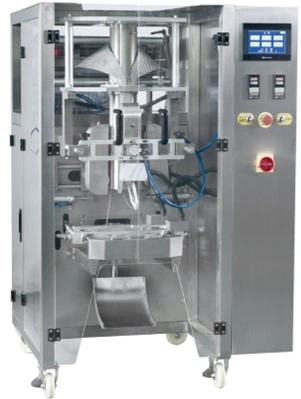
Whether you’re packing food, beverages, chemicals, pharmaceuticals, cosmetics, pet food or industrial products, choosing between manual and automated packaging is one of the biggest decisions your business will make.
For startups and small manufacturers, manual packaging may seem like the obvious choice because of its lower upfront cost. However, as production grows, manual processes often become slower, more expensive and less consistent than automated systems.
Modern packaging machinery helps businesses increase production, reduce waste, improve product quality and lower long-term operating costs.
In this guide, we’ll compare manual vs automated packaging, explain the advantages and disadvantages of each approach, and help you decide when it’s time to invest in packaging machinery.
Manual packaging is the process of packaging products primarily by hand, with little or no automation.
Workers complete packaging tasks such as:
Some businesses use simple hand-operated tools, while others rely entirely on manual labour.
Manual packaging is common among:
Although manual packaging offers flexibility, it also has limitations that become more noticeable as production volumes increase.
Automated packaging uses specialised machinery to perform packaging tasks with minimal human intervention.
Machines can automatically:
Automation can range from a single semi-automatic machine to a fully integrated production line.
Many manufacturers begin with one machine before expanding into complete automated systems as demand grows.
| Feature | Manual Packaging | Automated Packaging |
|---|---|---|
| Labour | High | Low |
| Speed | Slow | High |
| Consistency | Variable | Excellent |
| Accuracy | Depends on operator | Highly accurate |
| Production Capacity | Low | High |
| Downtime | Staff dependent | Minimal with maintenance |
| Packaging Waste | Higher | Lower |
| Hygiene | Operator dependent | Improved |
| Scalability | Limited | Excellent |
| Long-Term Cost | High | Lower over time |
Although manual packaging has a lower initial investment, automation often delivers a much lower cost per packaged product over the life of the equipment.
Manual packaging remains the best option for certain businesses.
The biggest advantage is affordability.
Businesses can begin production without purchasing expensive machinery.
This makes manual packaging attractive for:
Workers can quickly switch between different packaging sizes and products.
This is particularly useful for:
Manual packaging allows frequent product changes without lengthy machine setup.
For businesses producing dozens of product variations every day, manual processes may still be practical.
Employees require less specialised training compared with operating advanced packaging machinery.
Maintenance requirements are also significantly lower.
Despite the lower startup cost, manual packaging creates several challenges.
As production grows, more employees are required.
Labour costs continue increasing while productivity eventually reaches a limit.
Humans cannot match the speed of automated machinery.
This often becomes the bottleneck in manufacturing.
Packaging quality varies between operators.
Common issues include:
Manual filling often produces:
Waste increases operating costs.
Mistakes become more common during repetitive tasks.
Errors can include:
Automation offers significant advantages for growing manufacturers.
Packaging machines can package hundreds or even thousands of products per hour.
This dramatically increases production capacity.
Instead of several workers manually packaging products, one operator can supervise an automated machine.
Businesses often reassign employees to higher-value tasks.
Automated systems deliver consistent:
Consistency improves customer satisfaction while reducing rejected products.
Machines produce stronger, more consistent seals that protect products during transport and storage.
Automation accurately dispenses products and uses packaging materials more efficiently.
This reduces:
Food and pharmaceutical manufacturers benefit from reduced human contact.
Less handling lowers contamination risks and assists with food safety compliance.
Automated systems maintain repeatable packaging quality throughout every production run.
Many systems also integrate inspection equipment for additional quality assurance.
Automation isn’t perfect.
Businesses should consider several factors before investing.
Packaging machinery requires a larger upfront investment.
However, many businesses recover these costs through increased productivity and reduced labour expenses over time.
Employees require training to operate machinery safely and efficiently.
Fortunately, most modern systems are designed with user-friendly controls.
Preventive maintenance is essential to maximise machine performance and minimise downtime.
Routine servicing helps extend equipment lifespan and maintain consistent production.
Very small businesses producing only a handful of products daily may not immediately benefit from automation.
As production increases, however, the return on investment becomes more attractive.
Many businesses continue using manual packaging longer than they should.
Warning signs include:
If several of these issues apply to your business, automation could significantly improve efficiency.
Consider upgrading when:
Automation enables businesses to scale without proportionally increasing labour costs.
Many manufacturers don’t move directly from manual packaging to fully automated production.
Instead, they upgrade gradually.
Suitable for:
Suitable for:
Examples include:
Ideal for:
Modern packaging machinery automates almost every packaging stage.
Suitable for:
Functions include:
Designed for:
They produce attractive pillow packs at high speeds.
Ideal for:
Provide consistent cap application while reducing operator fatigue.
Commonly used for:
Protect products while creating professional retail packaging.
Applications include:
Labour represents one of the largest ongoing costs in manual packaging.
As wages increase, manual operations become more expensive every year.
Automation changes the cost structure by:
Although machinery requires maintenance, the overall cost per packaged unit often decreases substantially over time.
Approximate production speeds vary depending on the product and packaging format.
| Packaging Method | Typical Output |
|---|---|
| Manual | 50–300 packs/hour |
| Semi-Automatic | 300–1,000 packs/hour |
| Fully Automatic | 1,000–10,000+ packs/hour |
Actual production depends on the machine, product type, operator skill and packaging material.
Customers notice packaging quality.
Professional packaging builds trust and strengthens your brand.
Automated systems provide:
This consistency is difficult to achieve with manual processes over extended production runs.
Automation delivers advantages across many sectors.
Efficient packaging systems can help reduce environmental impact by:
Many modern machines are also compatible with recyclable and sustainable packaging materials.
One of the biggest concerns businesses have is the cost of automation.
However, ROI often comes from multiple areas, including:
For growing businesses, these combined benefits can make automation a worthwhile long-term investment.
The best packaging method depends on several factors:
Businesses expecting significant growth should consider equipment that can scale with future demand.
At SA Packaging Machinery, we help businesses transition from manual packaging to efficient automated solutions.
Our range includes equipment for:
Whether you’re upgrading a single process or planning a complete packaging line, our team can recommend equipment that suits your products, production targets and budget.
Manual packaging usually has a lower upfront cost, but automated packaging often becomes more cost-effective over time because it reduces labour costs, improves efficiency and minimises waste.
Businesses should consider automation when demand increases, labour costs rise, packaging quality becomes inconsistent or manual processes limit production capacity.
Yes. Semi-automatic equipment allows businesses to increase production while keeping investment costs lower than a fully automated packaging line.
Food, beverage, pharmaceutical, cosmetic, chemical and pet food manufacturers often see significant improvements in productivity, consistency and hygiene through automation.
No. Automated systems still require operators, quality control personnel and maintenance staff. Automation changes the type of work employees perform rather than replacing every role.
Yes. Packaging machines provide consistent filling, sealing, wrapping and labelling, resulting in a more professional product presentation and fewer packaging defects.
If your business is spending too much time and money on manual packaging, investing in the right packaging machinery can improve productivity, reduce costs and support future growth.
Whether you need a single machine or a complete automated packaging line, SA Packaging Machinery can help you find the ideal solution for your products and production requirements.