
Choosing between a Flow Wrap machine and a Horizontal Form Fill Seal (HFFS) machine can significantly impact production efficiency, packaging quality and long-term operating costs. Although the terms are often used interchangeably, they do not always describe exactly the same type of packaging equipment.
This guide explains the differences between Flow Wrap and HFFS machines, how each technology works, where they are used, and how to determine which solution is best suited to your production line.
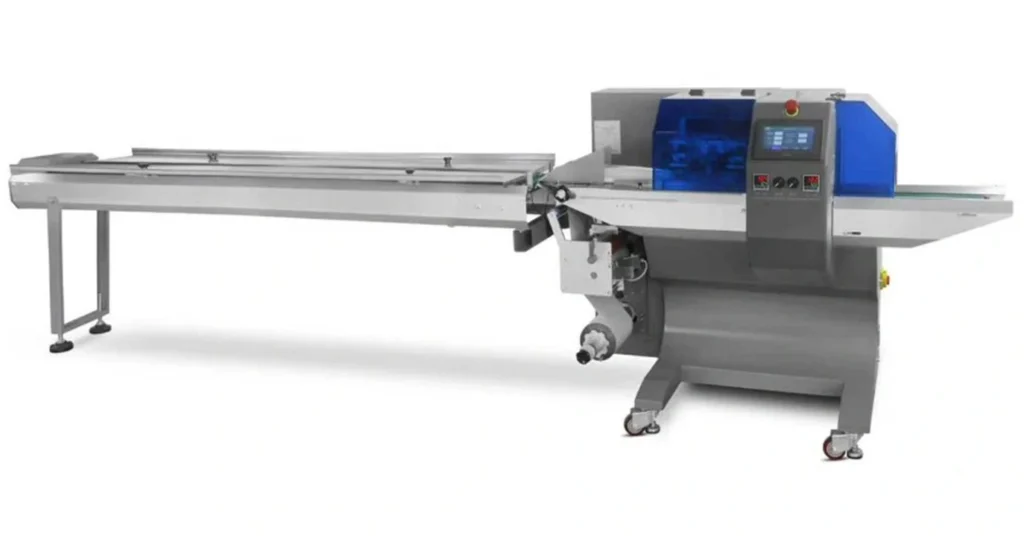
A Flow Wrap Machine is a packaging system designed to wrap products in a continuous roll of film. The product moves horizontally through the machine while the film forms around it, creating a sealed package.
Flow wrapping is commonly used for:
The machine creates a tight and visually appealing package using a fin seal underneath the product and end seals on both sides.
The packaging process typically includes:
Flow wrap systems are ideal for businesses requiring:
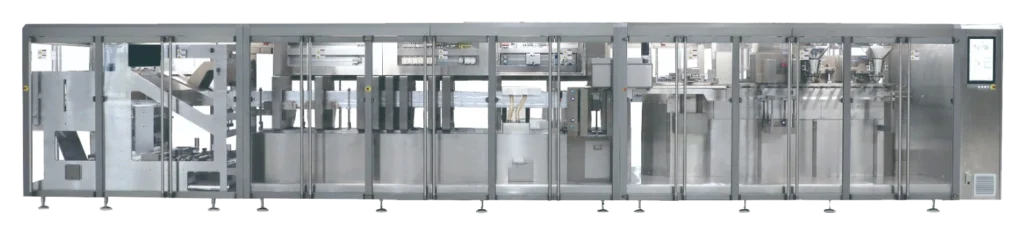
A Horizontal Form Fill Seal (HFFS) Machine is a broader packaging category that forms the package, fills it with product, and seals it horizontally in one automated process.
In many cases, flow wrap machines are considered a type of HFFS machine. However, modern HFFS systems often include more advanced automation, product handling, and customizable packaging configurations.
Horizontal Form Fill Seal machines are widely used in industries such as:
The HFFS process generally includes:
These systems are designed for continuous automated packaging with precise control over:
If you’re new to this technology, read our guide on How HFFS Machines Work to understand the complete packaging process from film unwinding to final sealing.
| Feature | Flow Wrap | HFFS |
|---|---|---|
|
Machine type |
Specific packaging machine |
Packaging machine category |
|
Product feed |
Horizontal |
Horizontal |
|
Package styles |
Pillow packs |
Pillow packs, MAP, vacuum, custom pouches |
|
Best for |
Uniform products |
Broader product range |
|
Automation |
High |
High to advanced |
|
Industries |
Food, retail |
Food, pharma, cosmetics, industrial |
One of the biggest differences between a Flow Wrap machine and an HFFS machine is the variety of packaging styles they can produce.
Flow wrap machines are primarily designed to create pillow packs, where a single sheet of film is wrapped around the product and sealed along the back and both ends. This packaging style is ideal for products with a consistent shape and size, such as biscuits, chocolate bars, bakery items and medical products.
Horizontal Form Fill Seal (HFFS) machines can also produce pillow packs, but many modern systems offer far greater flexibility. Depending on the machine configuration, HFFS equipment can produce modified atmosphere packaging (MAP), vacuum packs, resealable packs, gusseted pouches and other custom packaging formats.
If your production requires only standard pillow packaging, a Flow Wrap machine may be sufficient. However, businesses looking for greater packaging versatility often benefit from an HFFS solution.
The products being packaged play a significant role in determining which machine is the better choice.
Flow wrap machines perform best with products that have a uniform shape and can be fed consistently through the machine. These commonly include:
HFFS machines can package many of the same products while also accommodating more complex applications, including:
Manufacturers producing a wider variety of products often choose HFFS machinery for its increased adaptability.
Both Flow Wrap and HFFS machines are designed for high-speed automated packaging, making them suitable for medium- to high-volume production environments.
Flow wrap machines excel in continuous production where products are uniform and require minimal changeovers. Their simple packaging process enables efficient, reliable output for dedicated product lines.
Modern HFFS machines also achieve high production speeds while offering greater flexibility. Advanced servo-driven systems can quickly adapt to different product sizes, packaging materials and sealing requirements with minimal downtime.
For manufacturers producing multiple product variations, the ability to switch between packaging formats efficiently may be just as valuable as maximum production speed.
Automation is a key benefit of both packaging technologies.
Flow wrap machines automate the wrapping, sealing and cutting process, significantly reducing manual labour while improving packaging consistency and throughput.
HFFS machines offer similar automation capabilities but can also integrate with a broader range of production equipment, including:
These integrations make HFFS systems well suited to manufacturers seeking fully automated packaging lines. Businesses comparing packaging technologies may also find our guide on HFFS vs VFFS helpful.
Machine flexibility becomes increasingly important as production requirements evolve.
Flow wrap machines are typically configured for specific product sizes and packaging formats. While adjustments can be made, they are generally best suited to consistent production runs with limited variation.
HFFS machines are designed to accommodate a wider range of products, packaging materials and pouch styles. Many models support rapid recipe changes through programmable controls, reducing setup times when switching between different products.
Businesses planning to expand their product range or introduce new packaging formats may find the additional flexibility of an HFFS machine provides greater long-term value.
Available factory space is another practical consideration when selecting packaging equipment.
Flow wrap machines often have a compact footprint, making them an excellent option for production facilities where space is limited. Their streamlined design allows them to integrate easily into existing production lines.
HFFS systems vary considerably in size depending on their configuration and level of automation. Machines integrated with feeding systems, inspection equipment or additional packaging modules require more floor space but can deliver greater production efficiency and automation.
When evaluating packaging equipment, manufacturers should consider not only the machine footprint but also future expansion requirements and production line layout.
The initial purchase price represents only part of the total investment in a packaging machine.
Flow wrap machines generally offer lower equipment complexity and can provide an economical solution for manufacturers with straightforward packaging requirements and consistent product ranges.
HFFS machines may involve a higher initial investment due to their advanced features and increased flexibility. However, many businesses benefit from lower long-term operating costs through improved efficiency, reduced manual intervention, faster product changeovers and the ability to package a wider variety of products using a single machine. Read our guide on HFFS Machine Costs in South Africa to understand the factors that influence machine pricing and long-term value.
When comparing solutions, it is important to evaluate the total cost of ownership rather than focusing solely on the purchase price.
Routine maintenance is essential for maintaining reliable packaging performance and minimising downtime.
Flow wrap machines typically require regular inspection of sealing jaws, cutting systems, film tracking components and conveyor mechanisms. Preventative maintenance helps maintain consistent seal quality and extends machine lifespan.
HFFS machines require similar maintenance practices while also incorporating additional components such as servo motors, sensors and automated control systems. Regular servicing, software updates and scheduled inspections help ensure optimal performance and maximise equipment reliability.
Choosing a machine that is well supported with local technical service, spare parts and preventative maintenance programmes can significantly reduce long-term operating costs and production interruptions. Preventative servicing is essential for reliable production. Read our HFFS Machine Maintenance Guide for recommended maintenance schedules and best practices.
| Step | Flow Wrap | HFFS |
|---|---|---|
| Film unwinds | ✓ | ✓ |
| Film forms around product | ✓ | ✓ |
| Product inserted | ✓ | ✓ |
| Longitudinal seal | ✓ | ✓ |
| End seal | ✓ | ✓ |
| Cutting | ✓ | ✓ |
| Advanced sealing options | Limited | More extensive |
Although there are important differences between Flow Wrap and HFFS technology, both offer significant advantages for manufacturers seeking efficient automated packaging solutions.
Both machine types:
Ultimately, the right choice depends less on whether the machine is described as a Flow Wrap or HFFS system and more on your product characteristics, packaging requirements, production volumes and future business goals.
One of the most common questions in the packaging industry is whether a Flow Wrap machine and a Horizontal Form Fill Seal (HFFS) machine are the same. The short answer is yes and no.
A Flow Wrap machine is technically a type of Horizontal Form Fill Seal (HFFS) machine. Both machines operate using the same basic packaging process: a continuous roll of flexible film is formed around a product, sealed along the length, sealed at each end, and cut into individual packs.
The confusion comes from how the terms are used in different industries. Many manufacturers and packaging professionals use “Flow Wrapper” to describe machines designed specifically for wrapping individual solid products such as biscuits, chocolate bars, soap, bakery items, stationery, hardware, and medical products. The term “HFFS”, on the other hand, is often used as the broader category that includes flow wrappers as well as more specialised horizontal packaging systems.
In practical terms, if you are packaging individual products in pillow packs, you are almost certainly using a Flow Wrap machine, which is itself an HFFS machine. However, some HFFS systems are designed for more advanced applications, including modified atmosphere packaging (MAP), tray packaging, multi-product packs, and customised sealing configurations.
Understanding this distinction makes it easier to choose the right packaging solution. If your application involves high-speed wrapping of individual products, a Flow Wrap machine is typically the best choice. If your packaging process requires greater flexibility, specialised feeding systems, or advanced packaging features, a more sophisticated HFFS system may be the better option.
The right packaging machine depends on your products, production goals, packaging requirements and future business growth. While Flow Wrap and HFFS machines share many similarities, each solution is better suited to specific applications.
A Flow Wrap machine is often the best choice when your production line focuses on wrapping consistent products at high speed using a standard pillow pack format.
A Flow Wrap machine may be the right solution if you:
Flow wrap machines are ideal for manufacturers seeking an efficient, dependable solution for high-volume packaging where simplicity and speed are the primary priorities.
An HFFS machine is often the better option when your production line requires greater flexibility, multiple packaging formats or the ability to package a wide range of products.
An HFFS machine may be the right solution if you:
For manufacturers looking to maximise long-term flexibility and production efficiency, HFFS systems often provide greater adaptability than dedicated Flow Wrap equipment.
These packaging systems are commonly used across various industries:
| Industry | Common Applications |
|---|---|
| Food & Beverage | Snacks, biscuits, frozen foods |
| Pharmaceutical | Medical devices, test kits |
| Cosmetics | Soap bars, beauty products |
| Retail | Stationery, household products |
| Industrial | Hardware, components, tools |
Explore more HFFS Machine Applications across food, pharmaceutical, cosmetic and industrial manufacturing.
Investing in automated packaging machinery offers several benefits:
Businesses in South Africa are increasingly adopting automated packaging technologies to remain competitive and improve production scalability. Learn more about the Benefits of HFFS Machines for improving production efficiency and reducing manual labour.
Every production line has unique packaging requirements. Our packaging specialists can recommend the most suitable solution based on your:
Contact SA Packaging Machinery today for expert advice and a tailored packaging solution.
Flow wrap machines are generally considered a type of Horizontal Form Fill Seal machine, but HFFS systems can include more advanced packaging capabilities and automation features.
Flow wrap machines are commonly used for snacks, bakery items, soaps, medical products, hardware, stationery, and retail products.
Vertical Form Fill Seal (VFFS) machines package products vertically and are commonly used for loose products such as powders and granules. Horizontal Form Fill Seal (HFFS) machines package products horizontally and are ideal for solid or individually handled items.
Flow wrap machines are often preferred for extremely high-speed packaging of uniform products.
Yes. Many advanced Horizontal Form Fill Seal systems are designed to accommodate irregular product shapes and delicate items.
While flow wrap machines are technically a form of Horizontal Form Fill Seal technology, modern HFFS systems often provide greater flexibility, automation and packaging options. The best choice depends on your products, production volumes, packaging format and future growth plans.
If you’re unsure which solution is right for your operation, our team can assess your packaging requirements and recommend the most suitable machine for your application.