
Liquid, powder and multi-lane machines that form, fill and seal sachets and stick packs from roll film.
Key Takeaways
Powders and granules such as sugar, coffee and protein powder fill cleanly into a narrow stick pack.
Sauces, condiments, creams, lotions and liquid medicines are easier to fill and seal in a flat sachet, which also gives more room for print.
The forming set and the doser change with the format; the type of machine does not.
In the stick pack vs sachet choice, your product decides first. Stick packs are long, narrow tubes that suit free-flowing powders and granules such as sugar, coffee, protein and electrolyte powders. Sachets are flat packs sealed on three or four sides, and they take liquids, gels and creams as well as powders, with more space for branding. Stick packs use less film per dose and run well on multi-lane machines, so they suit high volumes of dry single-serve products. Both formats are formed, filled and sealed from roll film on the same family of machines: see our sachet filling machines.
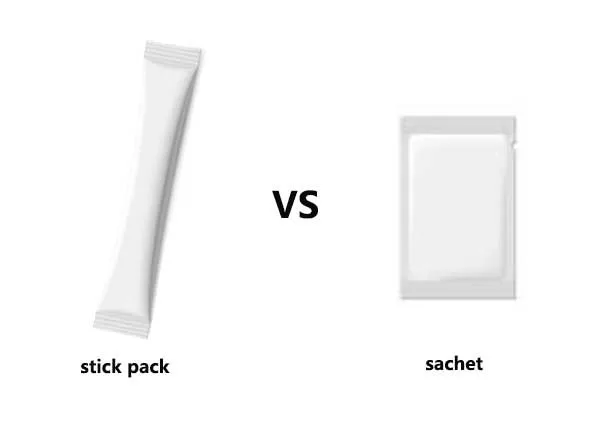
A stick pack is a long, narrow tube of film sealed down its length and across both ends. A sachet is a flat pack, square or rectangular, sealed on three or four sides. The shape changes how the pack is filled, how much film it uses and how much space there is for print.
A stick pack is easy to tear open and pour, so it suits single doses that are tipped into a drink or onto food, such as sugar, instant coffee and supplements. A sachet has a larger flat face, so it carries more branding, instructions and product information, and it can hold creams, gels and liquids as well as powders.
Stick packs are compact and pack tightly into a carton. Sachets take more film and more space for the same dose, but they come in more sizes and shapes.
Stick packs suit dry, free-flowing products, while sachets suit almost any product, including liquids, gels and creams. By industry, the choice usually falls this way:
A stick pack can take a thin liquid on the right machine, but a narrow tube is hard to fill and seal cleanly with a viscous product, so gels and creams belong in sachets. The table compares the two formats by product type.
| Product type | Stick pack | Sachet |
|---|---|---|
|
Powders |
Excellent |
Excellent |
|
Granules |
Excellent |
Excellent |
|
Thin liquids |
Limited, depending on the machine |
Excellent |
|
Gels and creams |
Not ideal |
Excellent |
Stick packs and sachets are both formed, filled and sealed from roll film on a form-fill-seal machine. The forming set decides the pack shape and the doser is matched to the product, so the format changes how the machine is configured rather than the type of machine. These are the machines we supply for each.
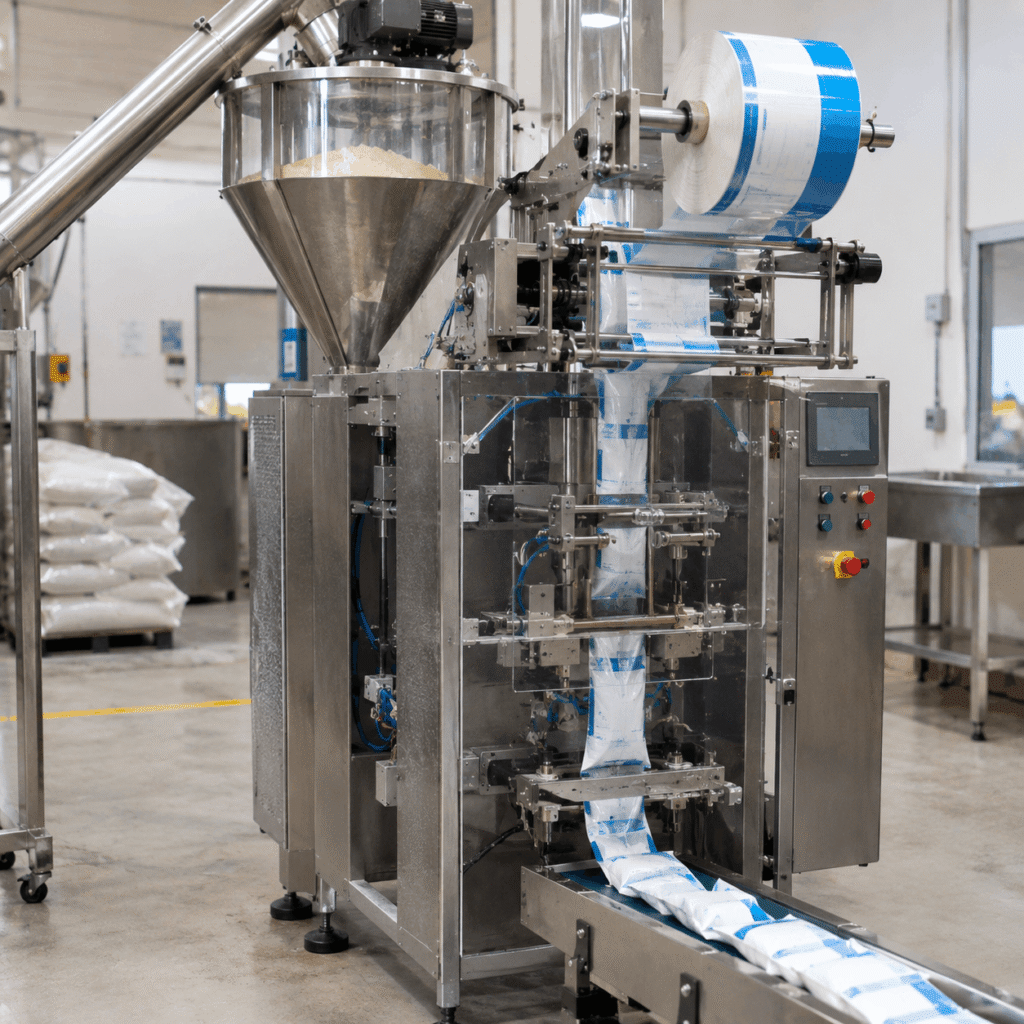
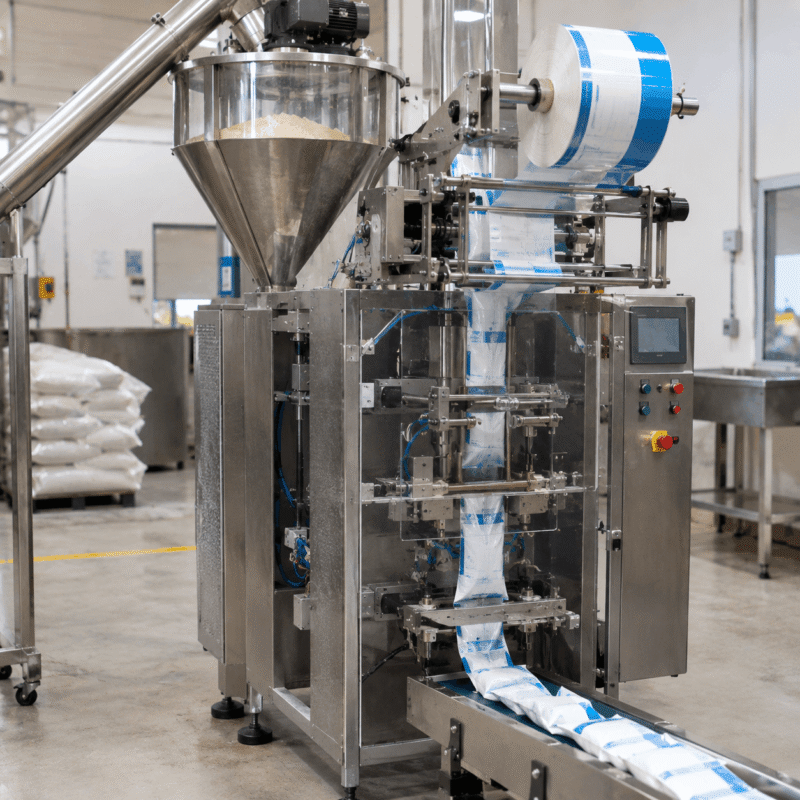
A vertical form-fill-seal (VFFS) machine with an auger filler makes 3-side seal powder sachets. With a cup filler, it doses free-flowing granules such as sugar into sachets and sticks.
Machine page: Vertical form-fill-seal packaging machine
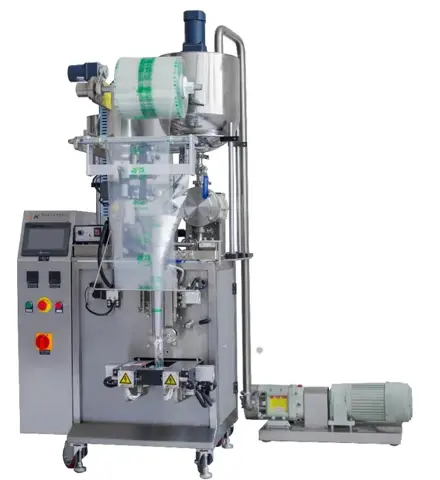
A VFFS machine with a dosing pump fills liquids, gels and creams into flat and pillow sachets. Thick gels are fed to the dosing pump by an infeed pump.
Machine page: Sachet filling machines

A multi-lane machine forms several stick packs or sachets side by side in each cycle, for high volumes of single-serve packs such as coffee and sugar sticks.
Machine page: Multi-lane sachet and stick pack machines
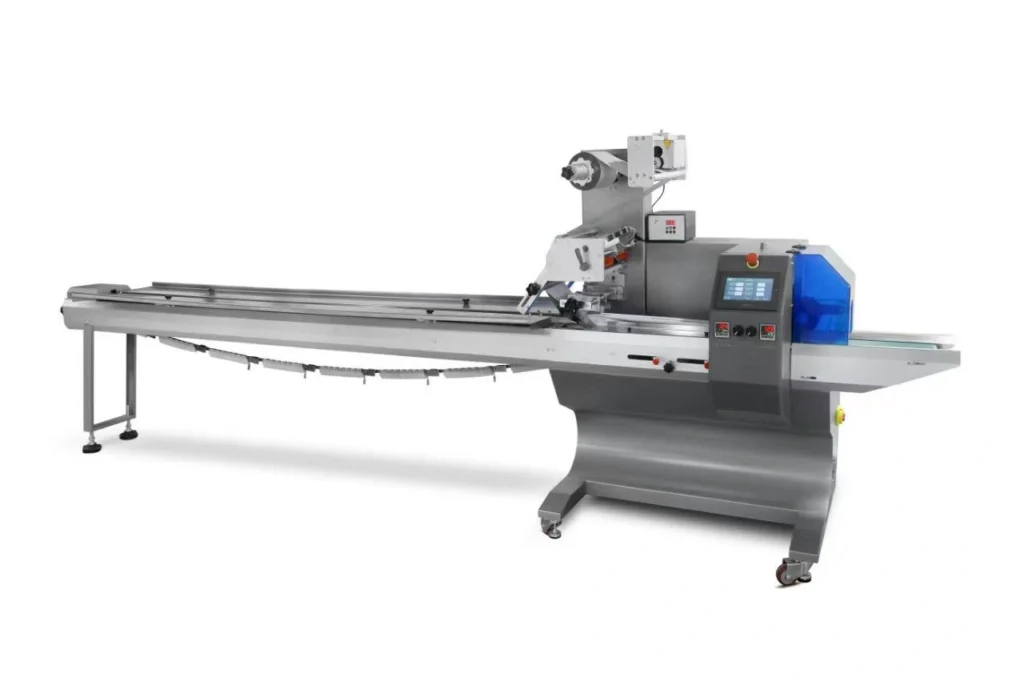
A horizontal form-fill-seal (HFFS) machine makes flat and shaped sachets, and can add a bottom gusset so the pack stands.
Machine page: Horizontal form-fill-seal packaging machine
Related guides: the step-by-step sachet filling process and form fill seal vs sachet machines.
A stick pack costs less to run on film. Its narrow width uses less film per dose, and the compact pack takes less space in cartons, storage and transport, which lowers cost on high-volume powder products.
A sachet uses more film for the same dose and takes more space. It earns that back where you need the larger print area, or where the product is a liquid, gel or cream that a stick pack cannot handle well.
Output depends on the machine more than the format. Stick packs run well on multi-lane machines, which form several packs in each cycle, and sachets run on single-lane or multi-lane machines. What a machine costs depends on its configuration; see packaging machine cost in South Africa.
| Feature | Stick pack | Sachet |
|---|---|---|
|
Shape |
Long, narrow tube |
Flat, square or rectangular |
|
Film per dose |
Less |
More |
|
Print space |
A narrow strip |
Large front and back panels |
|
Best for |
Powders, granules and drink mixes |
Powders, liquids, creams and gels |
|
Example uses |
Instant coffee, sugar, supplements |
Cosmetics, condiments, pharmaceuticals |
|
Carrying |
Compact and easy to pour |
Portable but bulkier |
A sachet is better for branding. Its larger front and back panels carry nutritional information, multi-language labelling, instructions and promotional design. A stick pack has a sleek look but only a narrow strip to print on.
On sustainability, a stick pack uses less film, so there is less packaging waste per dose, although its narrow shape can make recycling harder in some areas. A sachet uses more film, but it can be made in recyclable or compostable versions, which suits brands with sustainability targets.
Choose stick packs for dry, free-flowing single doses at high volume, and sachets for liquids, gels, creams or products that need more print space. Both are made on the same family of machines, so start with our sachet filling machines to see the configurations we supply. To discuss your product, request a quote or send us a sample for a trial at our Riversands showroom.
Yes, for thin liquids on the right machine. A narrow stick pack is hard to fill and seal cleanly with a viscous product, so gels, creams and thick sauces go into flat sachets instead.
A form-fill-seal machine can run more than one pack shape when it has a second set of change parts. The forming shoulder, sealing jaws and cutting knife set the width and shape of the pack, so tell us both formats when you ask for a quote and the machine is specified for them.
It depends on the product. A producer with liquids or sauces starts with sachets, while a powder business may suit stick packs. Volume then decides whether a single-lane or multi-lane machine makes sense.
Send us your product and the pack format you have in mind, and we will recommend the stick pack or sachet machine that suits it and trial it on your product.